
Building Information Modeling is widely adopted across the AEC United States firms, yet one of its highest-potential applications, four-dimensional construction scheduling (4D BIM), remains limited to basic visualization use. A gap persists between the documented theoretical benefits of 4D BIM and its practical impact, driven by manual coordination processes that demand time incompatible with the dynamic decision-making pace of concurrent engineering. Direct automation through artificial intelligence introduces an additional challenge, as language models produce inconsistent outputs when handling construction sequencing logic. This paper presents a framework developed to eliminate these barriers, enabling 4D BIM to function as an active production control tool during early planning and construction phases. A pilot test demonstrated that the proposed approach reduces the cycle time of a TimeLiner schedule iteration by 76.3%, primarily by eliminating non-value-adding procedural activities from the process, reducing work in process (WIP) accumulation and variability in the 4D update cycle.
Keywords: Building Information Modeling, 4D BIM, construction scheduling, artificial intelligence, natural language processing, construction automation, project production management

Juan Diego Delgado is a Civil Engineer and Stanford-certified VDC specialist currently pursuing a Masters degree in Construction Management at the University of Houston, where he also serves as a Research Assistant. His expertise spans 4D BIM, ISO 19650 workflows, Tekla Structures, Revit MEP, Navisworks, and Lean Construction, applied across structur ...
Building Information Modeling (BIM) and its 4D extension are widely deployed planning tools across the AEC sector, having been adopted by over 80% of major U.S. AEC firms as early as 2009 [1]. The implementation of 4D BIM significantly enhances construction efficiency by facilitating the visualization of construction sequences, which improves logistical decision-making and project coordination compared to conventional manual scheduling approaches[2], [3]. However, there is a gap between the theoretical benefits of 4D BIM and its actual use within dynamic planning environments that has been consistently documented in the literature [3], [4], [5]. The conventional 4D BIM process requires considerable manual effort: planners must interpret project documents, define activities, establish logical sequences, and manually link model elements to schedule data [2]. To understand this problem, we must analyze how the 4D modeling process works. The BIM Project Execution Planning Guide v3 from Penn State [6], which has been introduced as the official standard in the USA through the NBIMS-US [7] further states that
"A 4D model is connected to a schedule, and is therefore only as good as the schedule to which it is linked."
[6] This dependency exposes the core structural deficiency of the traditional process: any decision made during a planning meeting that alters scope, sequence, or duration cannot be reflected in the 4D model until the schedule is manually revised in the scheduling software, re-exported, re-linked in the 4D tool, and a new simulation is produced. Each iteration of this cycle constitutes a work-in-process (WIP) event: an engineering decision held in suspension while awaiting 4D confirmation, compounded by high variability in manual execution time that makes production control response unpredictable. This is particularly damaging in the context of Integrated Concurrent Engineering (ICE) sessions, in which all project stakeholders simultaneously develop interdependent models and analyses in an open forum [1]. Within an ICE session, scheduling decisions are made interactively and concurrently. The speed constraint is not limited to early-phase. During the construction phase, project teams rely on lookahead schedules to coordinate crews, subcontractors, and material deliveries in weekly or biweekly planning meetings. These sessions require rapid evaluation of alternative sequencing scenarios against current field conditions. Under the traditional 4D BIM process, the latency of the manual update cycle makes real-time scenario comparison in these meetings impractical
The research community has responded to these limitations with a growing body of work applying artificial intelligence and natural language processing to construction scheduling, spanning automated activity extraction, semantic duration estimation, BIM-integrated optimization, and dynamic schedule management [8], [9], [10], [11], [12]. Yet none of these advances has addressed the structural bottleneck identified in the Penn State BIM PxP Guide: the sequential, multi-tool dependency that prevents a 4D model from being updated at the speed of a planning conversation. In addition to that According to the Microsoft Research study, delegating editing work to LLMs corrupts documents: across 52 professional domains, current frontier models degrade 25% of document content after just 20 interactions [13], so AI as an emerging tool alone will be not enough for the teams to overcome this gap.
This paper addresses two interconnected questions: whether a hybrid architecture that restricts the language model to reasoning tasks while delegating all output generation to a deterministic engine can produce reliable 4D BIM outputs from natural language instructions, and to what extent such an architecture reduces the iteration cycle time compared to the conventional manual process. To answer them, we present an AI-powered, deterministic framework designed to eliminate both the process inefficiencies of traditional 4D modeling and the reliability risks of generative AI. By processing natural language commands issued during live planning sessions, the framework automatically generates updated schedule activities, estimates durations, and re-links them to BIM elements. This replaces the traditional, hours-long multi-tool dependency with an instantaneous process capable of providing the immediate visual confirmation required during dynamic Integrated Concurrent Engineering (ICE) sessions. Crucially, to prevent the hallucination and content degradation risks associated with frontier LLMs, our methodology restricts the AI strictly to data extraction and intent recognition, delegating all output generation to a deterministic Python-based engine. The result is a real-time decision-support tool that is both agile enough for live conversations and mathematically reliable. The result is a production control instrument that reduces the cycle time of the 4D update process enabling 4D BIM to function as an effective production control tool within the timeframe of a live planning session.
4D BIM, by integrating the temporal dimension into the information model, facilitates the validation of activity sequences and logistical decision-making in early stages of project planning [3], [5]. However, the conventional 4D BIM creation process is largely manual, slow, and prone to error [2]. Under the traditional process, planners must define activities, estimate durations, and manually map tasks to model elements, a process whose static nature limits real-time adaptability [4]. Standardized frameworks such as the Penn State BIM Project Execution Planning (PxP) Guide codify this process through the designated model use "Author 4D Model" [6].
Recent developments have demonstrated how AI can automate planning process and optimize construction schedules [9], a trend confirmed by bibliometric analyses of BIM adoption in scheduling [14]. In this line, genetic algorithm (GA)-based frameworks have been applied to optimize schedule crashing and resource allocation [11] while other approaches integrate ant colony optimization (ACOR) with discrete-event simulation (DES) to dynamically recalculate activity durations under uncertainty [12]. In parallel, semantic matching techniques have enabled the linking of BIM model elements to construction activities without full human intervention [8].
The integration of Natural Language Processing (NLP) with 4D BIM has been identified as a transformative opportunity for improving human-computer interaction in construction automation [10]. NLP transformer models, specifically Sentence-BERT (SBERT), have demonstrated the capacity to extract logical dependencies between activities and estimate durations through semantic similarity with historical productivity data [8]; more broadly, recent reviews highlight NLP's potential to bridge unstructured textual data with 4D scheduling process [10]. Furthermore, LLM-based multiagent frameworks can translate natural language descriptions into executable commands for BIM model creation [15].
Despite these advances, a critical gap persists: the development of a direct, bidirectional, real-time control interface remains constrained by the challenge of aligning semantic interpretation with structured BIM model databases [5]. As a result, 4D BIM has largely been employed as a passive visualization tool, with its planning benefits remaining unrealized due to adoption barriers, particularly during active planning sessions [3]. In addition to that its use has frequently been restricted to non-interactive simulations to communicate an established schedule to stakeholders or support project presentations [2], [4].
It is known that to move beyond visual representation and become a dynamic, interactive planning engine, the field must overcome the rigidity of traditional desktop-based BIM platforms [16]. This reflects a broader call to transform 4D BIM from a static project deliverable into a truly evaluative and adaptive planning mechanism [12].
It is worth noting that platforms such as Alice Technologies already apply AI to generate and optimize construction schedules from 3D models or existing P6/MS Project files, producing 4D scenario variations that help teams identify more efficient sequences before a planning session begins. [17]. While these represent significant advances in schedule generation and optimization, they operate upstream of the problem addressed in this paper: their 4D output functions as a pre-session review layer, not as a real-time interface responsive to decisions that emerge during an active session. What this paper pursues is a natural language interaction layer integrated into the existing tools and processes already used by practitioners that allows a practitioner to issue a sequencing instruction in plain language and have the schedule and 4D model updated in real time, as the conversation unfolds, without interrupting the planning session to execute a manual update process.
This study is classified as applied research with a constructive orientation, as its primary objective is the design and development of a technological artifact to solve a documented problem in construction practice. The research procedure was organized into six stages. In the first stage, a structured literature review was conducted to examine existing approaches to AI and NLP integration in 4D BIM and construction scheduling, establishing the current state of knowledge and identifying the gap that motivates this work. In the second stage, the conventional 4D BIM process was analyzed using the Penn State BIM Project Execution Planning Guide, Version 3.0, Appendix B-17 as the reference baseline, from which structural bottlenecks were systematically documented. In the third stage, an optimized process architecture was configured, redefining the sequence of operations to eliminate the manual dependencies and iterative loops identified in the baseline process.
In the fourth stage, the proposed architecture was implemented as a functional prototype using Python and Flask as the web framework, the Anthropic Claude API as the AI reasoning engine, and Pandas for structured data processing. The interface was developed in plain HTML and JavaScript, allowing engineers to upload project files, submit natural language instructions, and download production-ready outputs directly from a local web application running on localhost. In the fifth stage, the prototype was tested using simplified example data designed to represent a typical construction scenario. Performance was evaluated qualitatively through direct observation and screen capture of the end-to-end execution. The Penn State baseline process was compared against the proposed and tested process, and operational differences were summarized in a structured comparison table (Table 1). In the sixth stage, conclusions were drawn from the analysis of the pilot test findings, the observed operational differences between the traditional and proposed process, and the timing comparison data, which measured total execution time from the moment the instruction was issued to the completion of the 4D simulation in Navisworks.
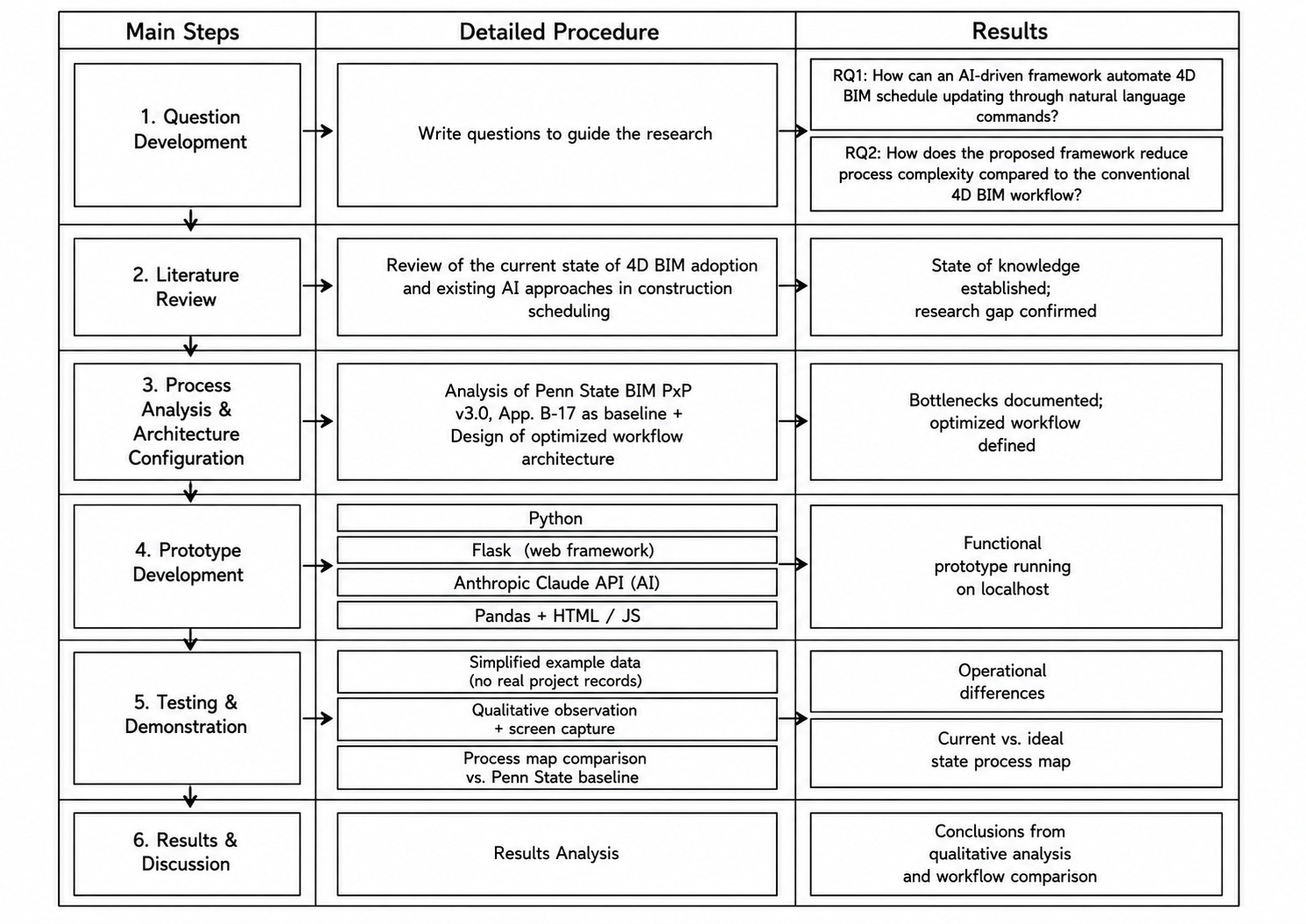
The initial step in the development process was to comprehend the current state of the 4D execution process and pinpoint the areas contributing to the problem defined in the introduction. To establish a baseline, the Appendix B-17 of the Penn State BIM Project Execution Planning Guide was chosen as the reference baseline.
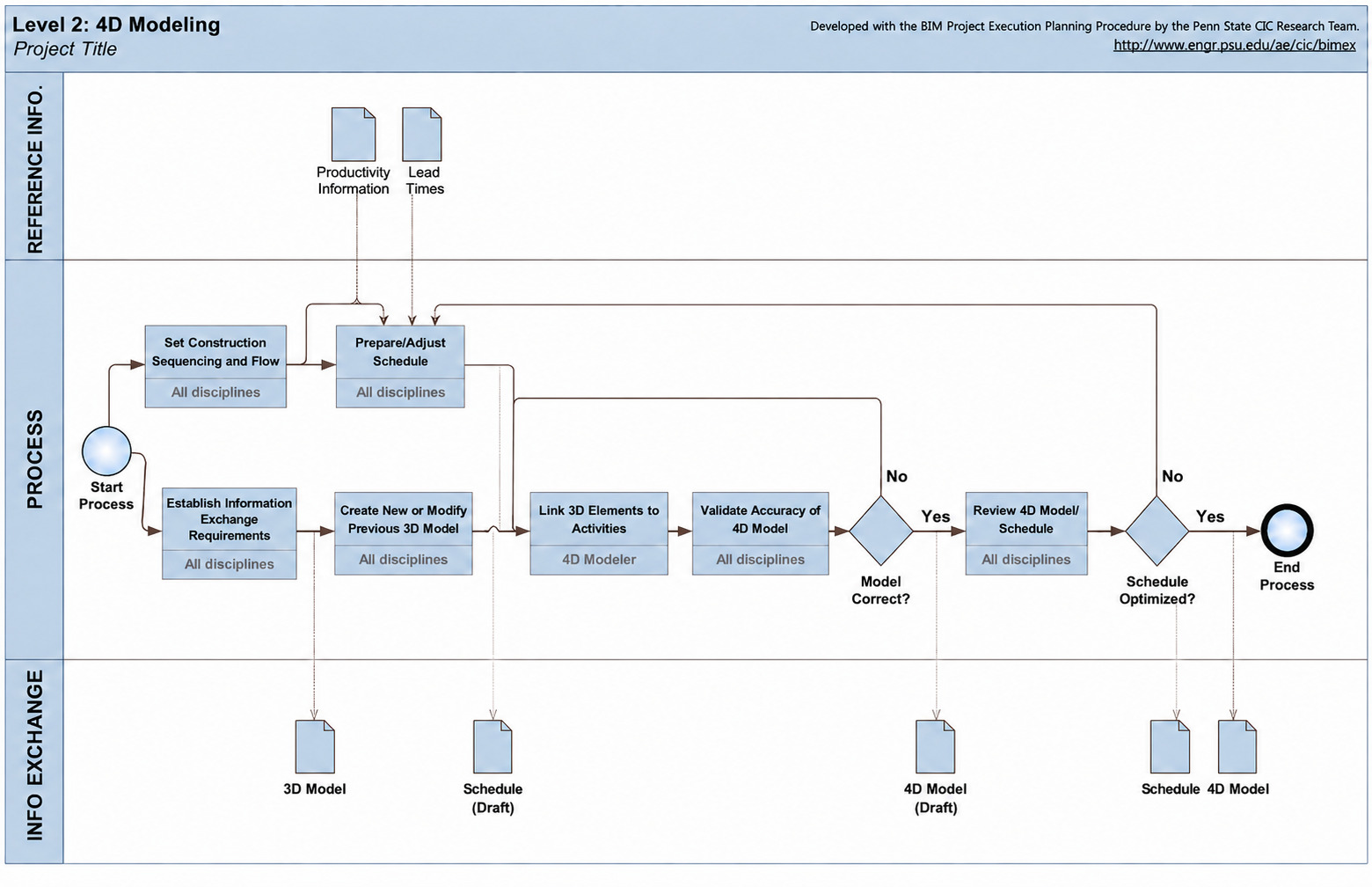
Four bottlenecks were identified as the focus for the base architecture of the solution:
These findings are shown highlighted in red in Fig. 3, locating them in the specific element of Level 2 4D Modeling Template from Penn State BIM Execution Planning Guide, version 3.0.
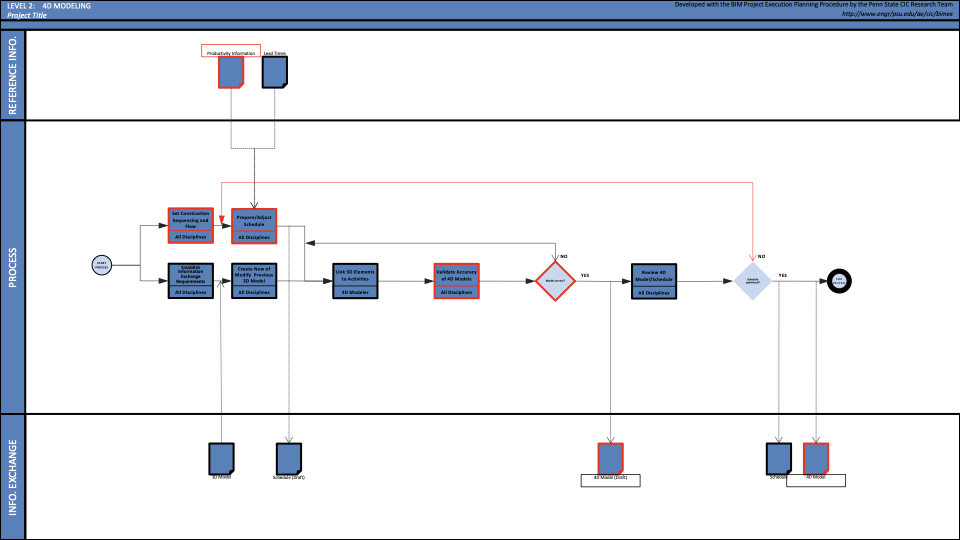
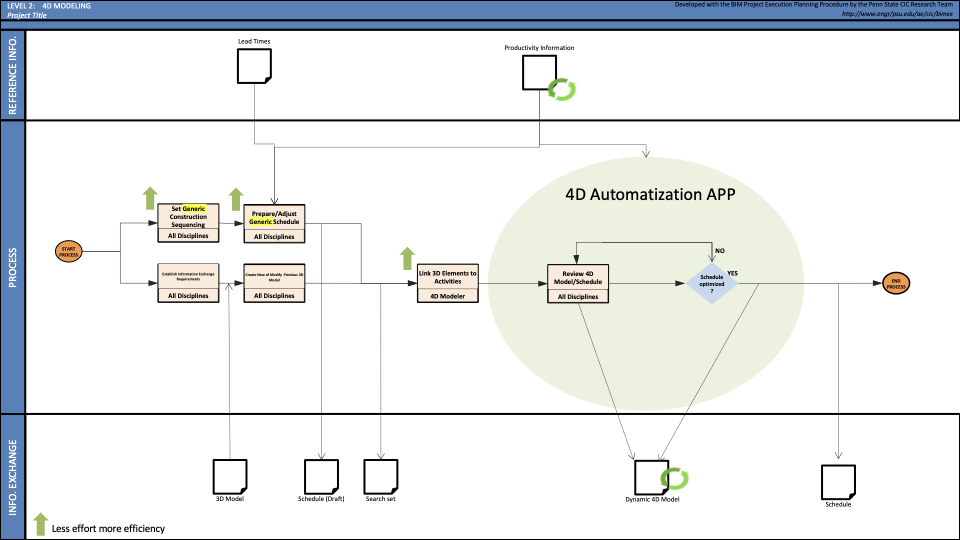
The first and second bottlenecks were approached by integrating both validation gates in one unified process of schedule validation, that consists in the automatic review of the new schedules in 4D in the same meeting directly after the optimizations were identified with the 4D model. This unified process is marked in green in the Fig. 3. The third bottleneck was approached as a consequence of the dynamic new interaction with the 4D model because the changes in the proposed process are directly generated as a consequence of reviewing the 4D being updated in real time; the schedule becomes the final output instead of the 4D model. The fourth one was approached by defining the integration of the production date not just in the first draft of the schedule but also as an input for the 4D automation app and specifically defining it as a connection with updatable database sources such as any known platforms for production data recompilation.
Furthermore, the changes generated a less efforted flow because of the new logic of 4D using AI. Needing less detail in the first construction sequence, the first proposed schedule and in linking activities with 3D elements. Those impacts are identified in Fig, 4 with green arrows going up because of the increase in efficiency doing those activities.
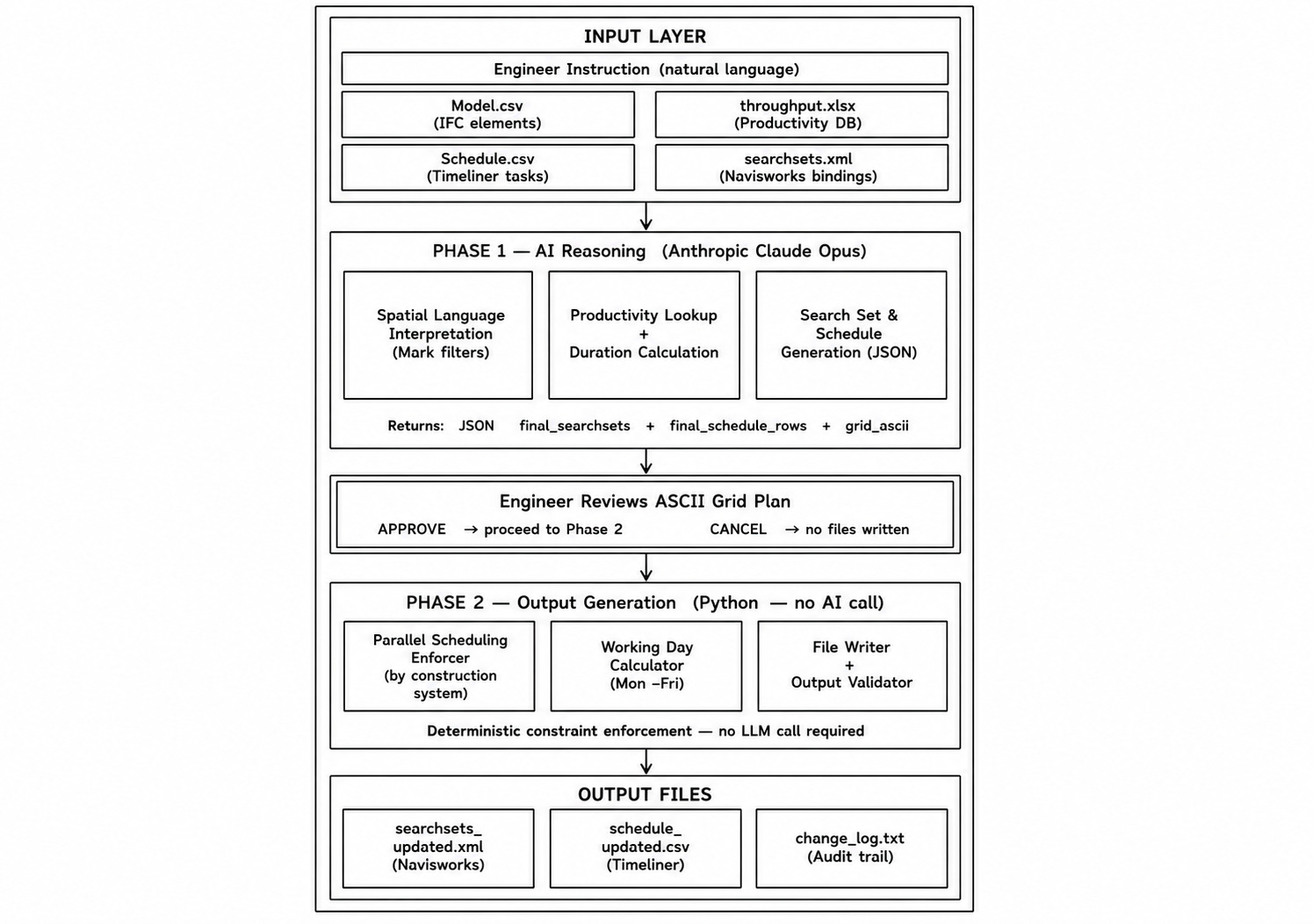
The system is built around a two-phase, human-in-the-loop architecture that deliberately separates two types of computation: tasks that require language understanding and spatial reasoning are delegated to an AI model, while tasks that require mathematical precision and rule enforcement are handled by deterministic Python logic. The prototype was implemented as a local web application using Python and Flask as the server framework, Pandas for structured data processing, and a plain HTML and JavaScript interface.
The system accepts four structured input files alongside a natural language instruction. The model element table (Model.csv) provides the IFC element inventory with family types, quantities, and grid position marks. The construction schedule (Schedule.csv) contains the current Navisworks Timeliner task list with synchronization IDs and planned dates. The search sets file (searchsets.xml) defines the element-to-task bindings that Navisworks uses to link model elements to schedule activities. The productivity database (throughput.xlsx) maps construction systems to daily output rates. Together, these four files give the agent the complete project context needed to process any schedule modification instruction.
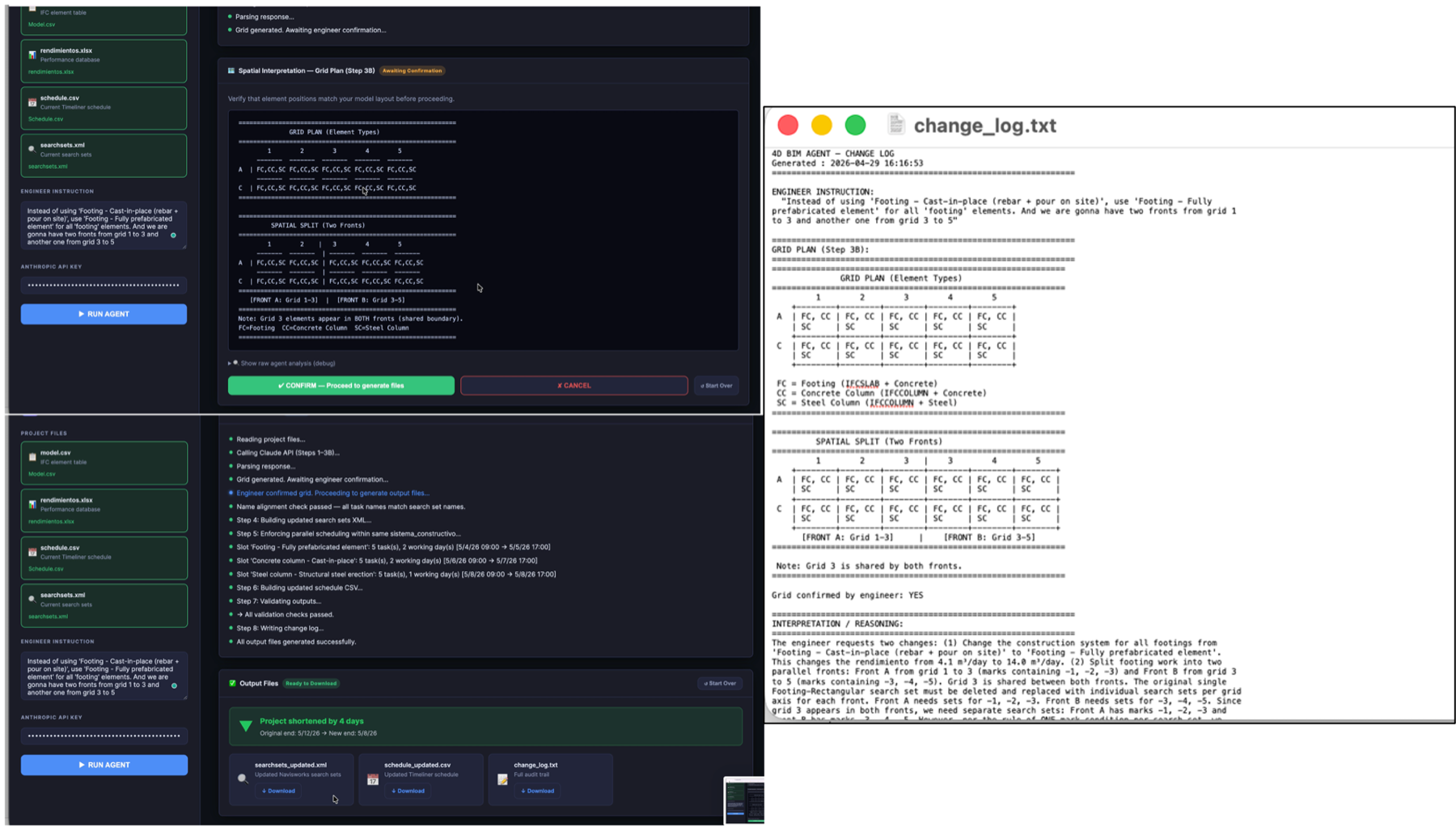
In Phase 1, all four files and the instruction are assembled into a structured prompt and sent to the Anthropic Claude API (claude opus 4.6) in a single call. The AI is responsible exclusively for tasks that require language understanding and contextual reasoning: interpreting the spatial intent of the instruction, translating expressions such as "left side" or "axis A" into Navisworks Mark filter conditions (equals, contains, not_equals) based on the structural grid; identifying which construction system applies; and generating a proposed list of updated search sets and schedule rows. To make this reasoning transparent and verifiable, the model also generates a text representation of the structural axis grid that shows which elements were selected and how the spatial instruction was interpreted. The engineer reads this grid directly in the interface and either approves or cancels before any file is touched.
Upon confirmation, Phase 2 executes entirely in Python without any additional AI call. Critically, Python independently recalculates and overridesall task durations using ROUNDUP(total quantity / daily output rate), correcting any value the model may have approximated. A parallel scheduling enforcer then groups tasks by construction system, calculates group duration from the aggregate quantity across the group, assigns identical start and end dates to all tasks within a group, and sequences groups consecutively using working-day arithmetic (Monday through Friday). A final validation layer verifies that every search set has exactly one corresponding schedule task and vice versa before the files are written.
The three output files produced are searchsets_updated.xml (Navisworks), schedule_updated.csv (Timeliner), and change_log.txt (full audit trail including instruction, AI reasoning, grid, calculations, and validation report).
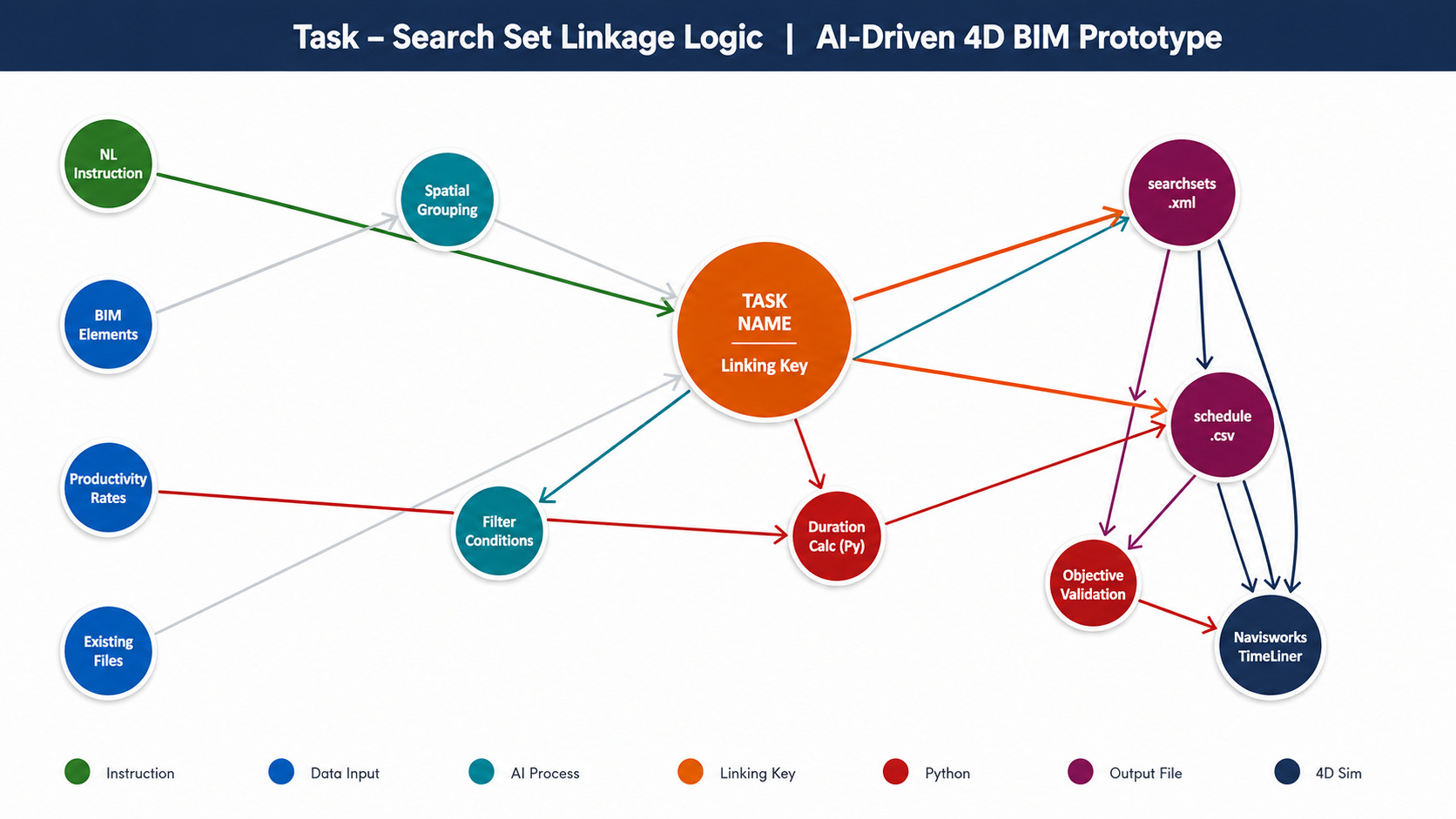
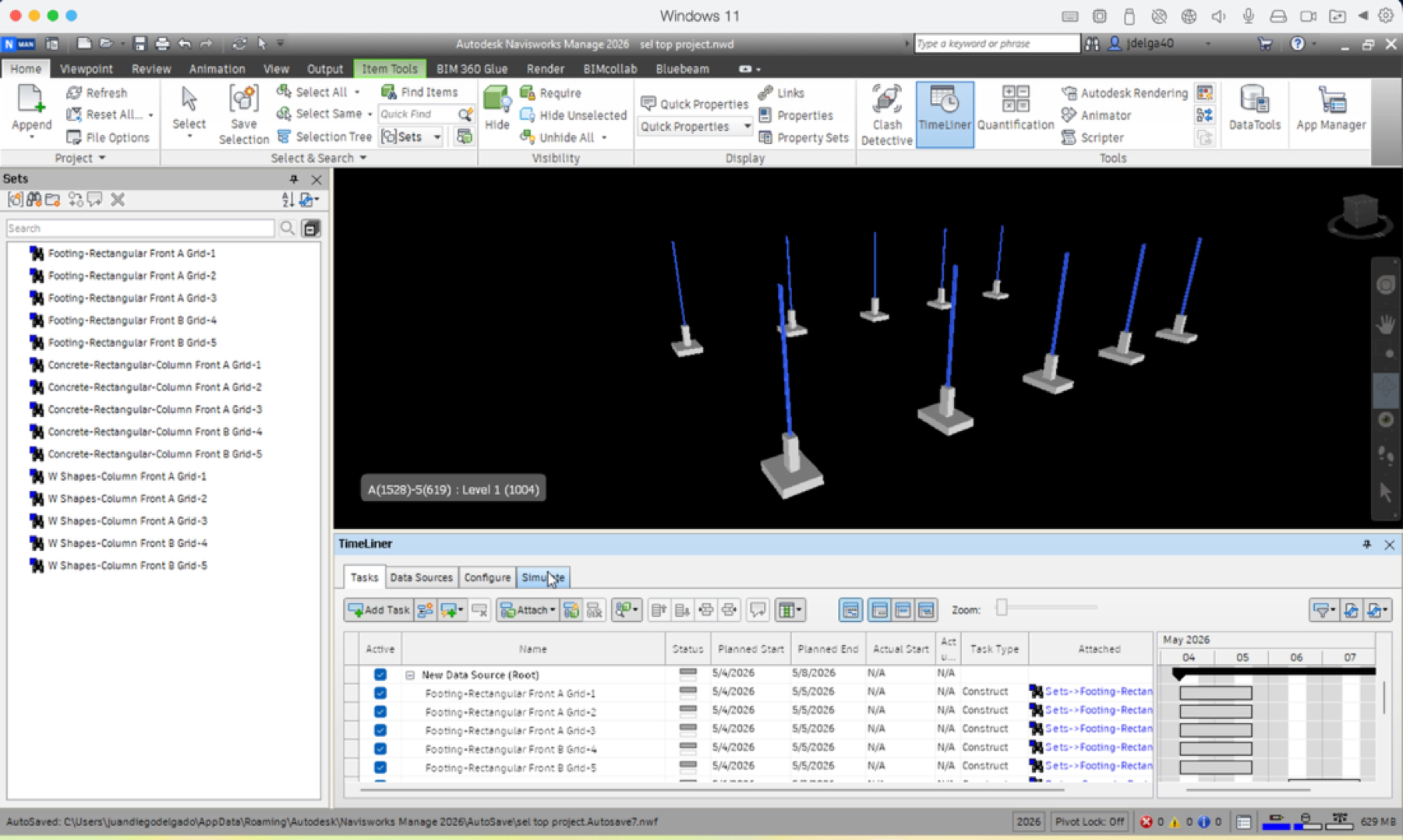
The mechanism that connects all components of the prototype is the task name, which functions as the shared key between both output files. As illustrated in Fig. 6. During Phase 1, the AI agent reads the element data and groups objects by the combination of constructive system, structural axis, and floor level, generating a unique task name for each group. This name is simultaneously written as the searchset nameattribute in the XML file and as the task name field in the schedule CSV. The AI also derives Navisworks-compatible filter conditions from the element attributes, which define the precise selection criteria for each search set. In Phase 2, Python uses the productivity rates file to independently calculate task durations and applies the parallel scheduling logic before writing both files. The bijective validation step then confirms that the mapping between search set names and task names is exact and complete in both directions. When the generated files are imported into Navisworks, TimeLiner resolves the 4D simulation by matching each task in the schedule to the search set that shares its name, selecting the corresponding model elements automatically.
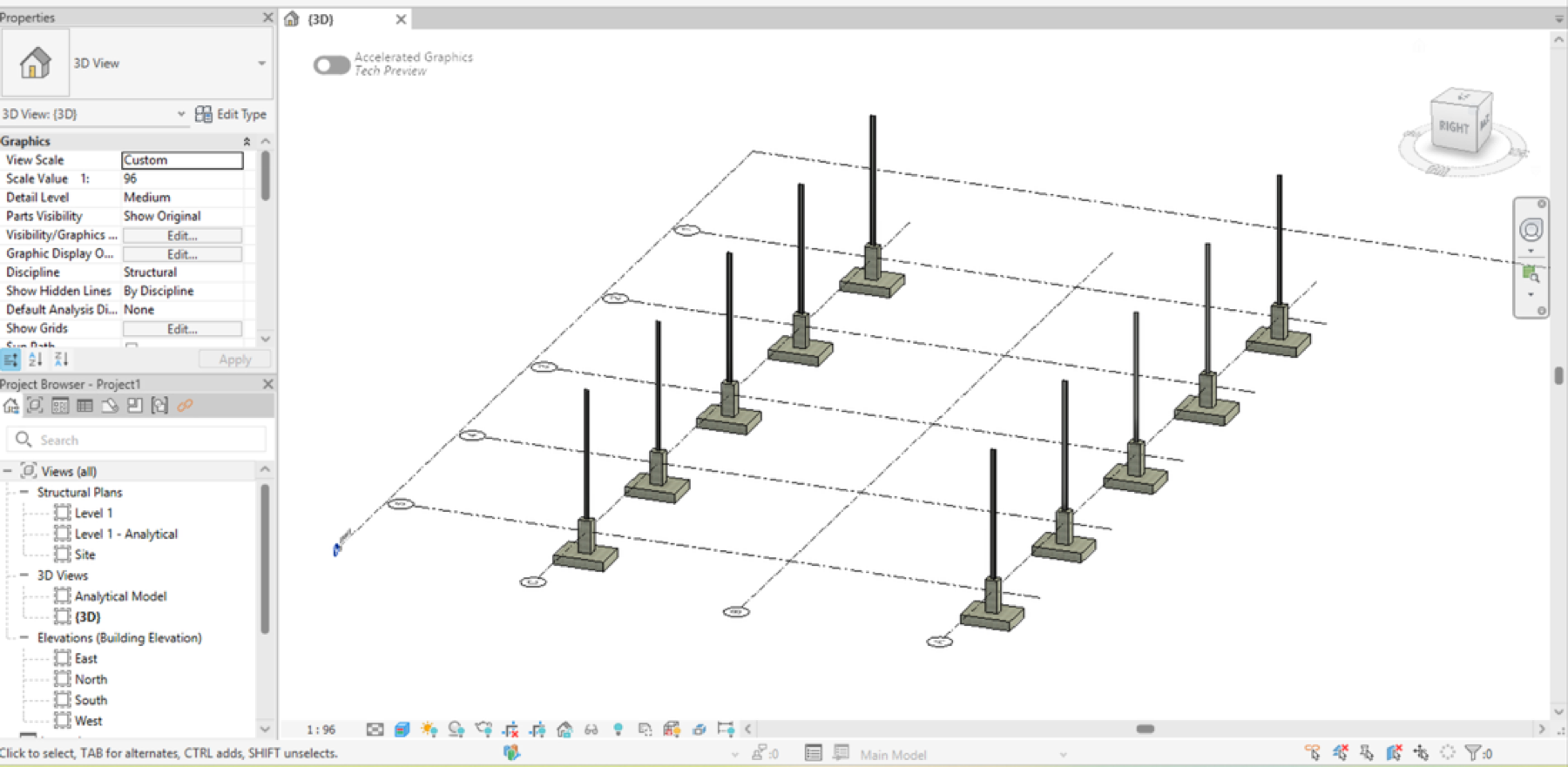
The test environment was initiated by authoring a simplified structural building model in Autodesk Revit incorporating the constructive systems to be scheduled: spread footings, pedestals, and metal columns, organized across structural axes. Each element was assigned the parameter data required by the agent for spatial interpretation Family and type, volume, weight and mark (contains the grid location of each element) Fig. 7 shows the completed model used as the basis for all prototype trials.
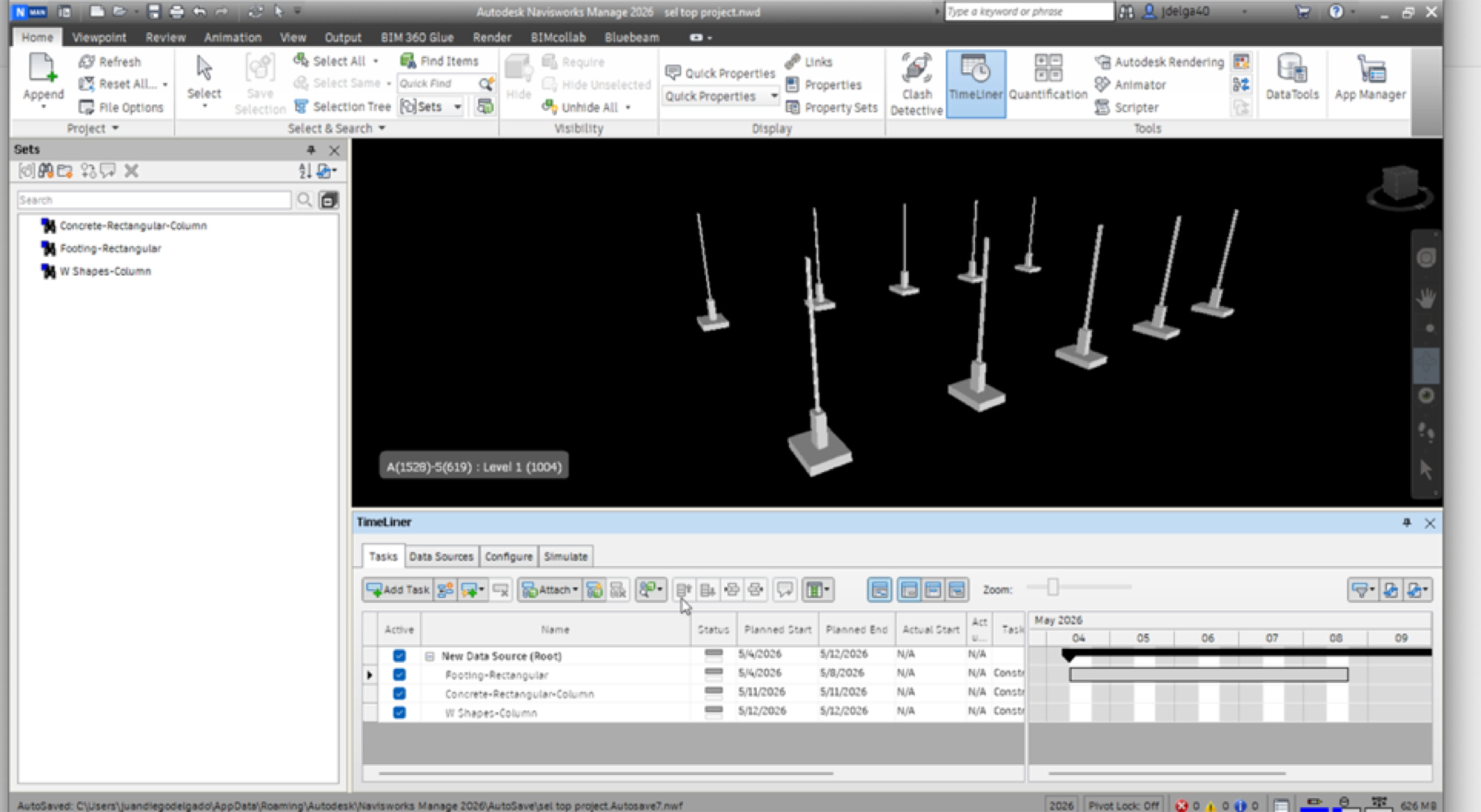
With the Revit model appended into Autodesk Navisworks, an initial simplified schedule was manually configured in the TimeLiner interface as the starting state for tool testing. Fig. 8 shows the initial TimeLiner schedule as loaded prior to any prototype execution.
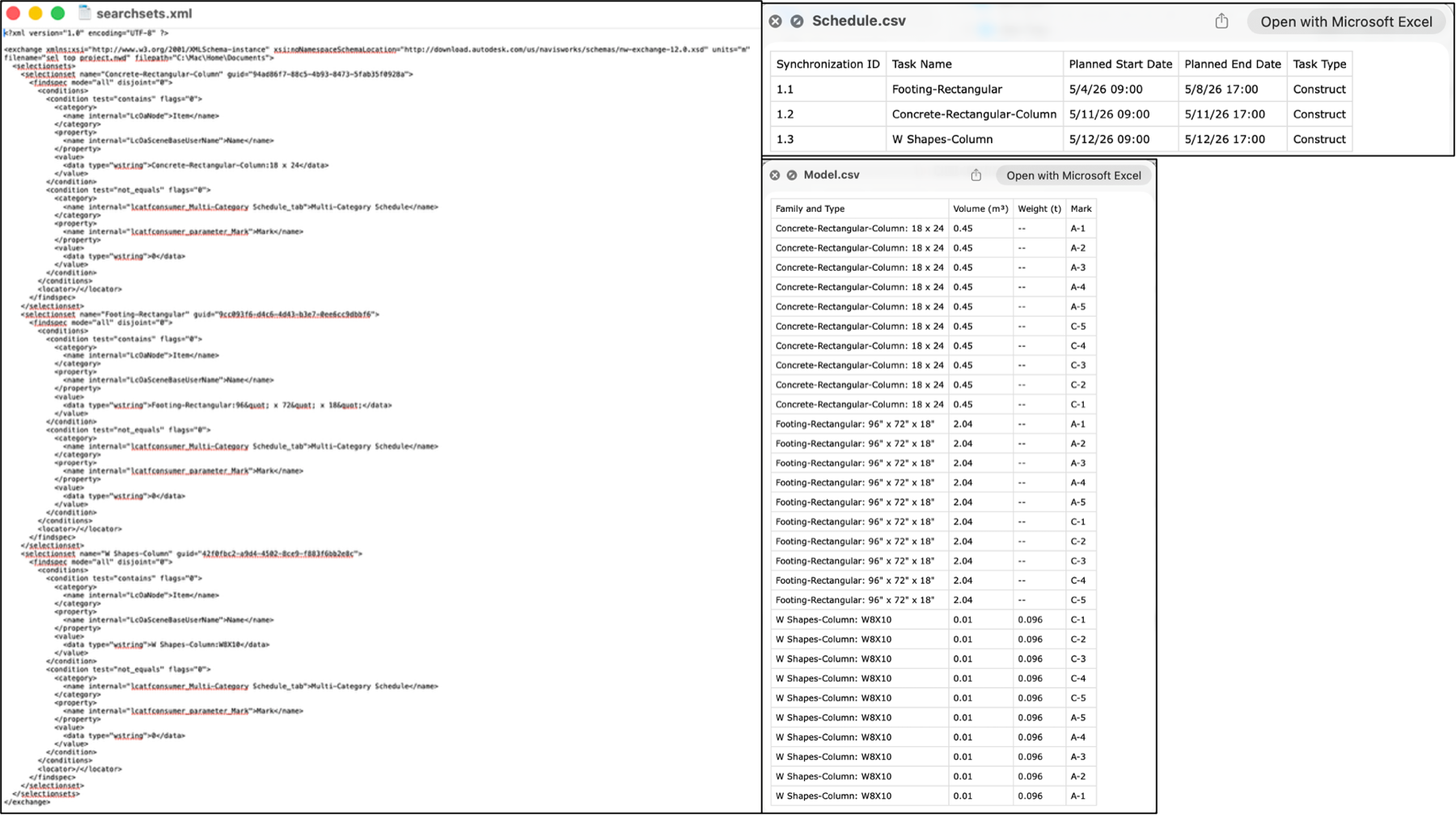
The three system inputs were extracted from the initial NWD file and the corresponding Revit model. These inputs consisted of the search set document, a CSV file containing all required model parameters, and the baseline schedule, as shown in Figure 9.
To validate the system's capabilities, a pilot test was conducted to simulate a real-time engineering change scenario. As illustrated in Figure 10, the user interface (UI) captures the complete automated process initiated by a natural language instruction from the engineer. The application interprets the spatial reconfiguration and updates the schedule, outputting a project duration reduction. Concurrently, a standardized change log (change_log.txt) is automatically generated to ensure process traceability.
Finally, the practical validation of the generated outputs was verified by importing the updated files into Autodesk Navisworks. As demonstrated in Figure 11, the newly structured XML search sets and the updated CSV baseline schedule achieve a perfect match within the TimeLiner module. Because the naming conventions and parameters align seamlessly, the 4D BIM simulation is generated automatically.
As detailed in Table 1, the proposed methodology transitions the 4D BIM process from a sequential visual validation procedure to an integrated computational framework. By replacing fragmented, manual iteration cycles with an algorithmic loop, the prototype alters how sequence adjustment and element linking are structurally executed. Consequently, the output hierarchy is inverted: the 4D simulation functions as the computational environment through which a revised construction schedule is generated. While rigorous statistical validation of time and effort reduction in real-world projects is pending for future research, this initial pilot demonstrates the technical feasibility of a centralized execution mechanism. To scale this framework, the continuous integration of synchronized, relational production databases remains a core technical requirement.
Table 1. Comparison between the traditional 4D modeling process and the proposed automated approach
| Feature / Aspect | Traditional 4D Process | Proposed Automated Process |
|---|---|---|
| Effort & Process Execution | High manual effort required to establish sequencing, adjust schedules, and individually link 3D elements to tasks. | Reduced manual effort through generic initial setups; linking and sequencing are streamlined by the 4D Automatization APP. |
| Iteration & Feedback Loops | Disconnected and manual rework loops. Validation failures require returning to separate, prior stages to adjust the schedule. | Elimination of manual silos. The optimization loop occurs continuously within the automated app environment. |
| Perspective on 4D Output | The 4D model is treated as the final, static visual deliverable. | The 4D model acts as a dynamic computation environment where the optimized schedule is the primary output. |
| Data Synchronization | Relies on isolated, static reference documents | Requires synchronized production databases to feed the app, allowing replication across early planning and construction phases. |
To evaluate the technical feasibility and operational stability of the proposed prototype, a pilot experimental setup was designed focusing specifically on the Iteration Cycle. In construction production control, the ability to rapidly process engineering modifications is a critical requirement. To isolate the execution efficiency of the algorithmic process, the initial project setup (baseline schedule, 3D geometry, and primary search sets) was established as a controlled constant in both the traditional manual scenario and the automated prototype scenario.
The complete schedule adjustment cycle was executed once under each condition, applying the same natural language instruction to the same baseline model. The instruction required reorganizing footing and pedestal installation into two simultaneous spatial fronts, a task that encompasses interpreting the engineering directive, modifying schedule parameters, generating updated spatial search sets, and synchronizing the revised outputs within the Navisworks TimeLiner module. Total cycle time was measured from the moment the instruction was issued to the moment the updated 4D simulation was complete. It is important to note that the findings from this initial pilot serve as an exemplification of the process architecture. They are not intended to be extrapolated as generalized industry metrics without further large-scale statistical validation.
The execution metrics of this experimental setup are presented in Table 2, which records the total cycle time under each condition and quantifies the absolute time reduction, providing a direct comparison between the traditional process and the automated prototype.
Table 02. Cycle Time Comparison: Traditional Process vs. Automated Prototype
| Metric | Traditional (min) | Prototype (min) | Δ Reduction |
|---|---|---|---|
| Total Cycle Time | 20.55 | 4.87 | −15.7 min (76.3% faster) |
The difference between the proposed process and the traditional one was of 15.7 min in favor of the proposed approach. The majority of elapsed time was concentrated in non-value-adding activities: locating and cross-referencing the required project files, reviewing and interpreting productivity rate documentation, performing manual quantity takeoffs and duration calculations, verifying the correct transcription of data into the scheduling software, and confirming the accurate linkage between schedule tasks and their corresponding model elements in Navisworks. These activities are procedural in nature and do not require engineering judgment, yet they collectively represent the dominant share of the total cycle time. However, it is important to acknowledge that the traditional process retains a meaningful advantage in construction logic flexibility. A skilled practitioner operating manually can identify and implement more nuanced construction sequencing alternatives, interleaving activities across phases and spatial fronts in ways that the current prototype cannot reproduce due to the architectural constraints described in the following section.
This 15.7-minute reduction represents a cycle time (CT) compression in the production control loop. By Little’s Law (CT = WIP / TH), operating at the same frequency of engineering changes, this compression reduces the work-in-process (WIP) of unresolved decisions waiting for 4D confirmation. The elimination of procedural, non-judgment activities also reduce variability in the update cycle, making production control response times more predictable. A shorter update cycle enables the planning team to defer scheduling commitments closer to the Last Responsible Moment (LRM), improving decision quality by allowing more information to be incorporated before a commitment is made. The framework therefore addresses both the mean and the variance of the production control iteration cycle, which are the two parameters that most directly determine the utility of 4D BIM as a live production control instrument.
The 4.87-minute cycle time also enables a class of application that the traditional process cannot support: real-time lookahead schedule evaluation during construction-phase planning meetings. In weekly lookahead sessions, where production teams coordinate 3 to 6 weeks of upcoming work, the traditional 20.55-minute update cycle would consume the majority of the available decision window to evaluate a single alternative sequence. At 4.87 minutes per iteration, a planning team can visually evaluate four or more sequencing scenarios within the same window, expanding the production control decision space and allowing teams to respond to field conditions, subcontractor constraints, and material deliveries with visual confirmation before committing to a course of action.
While the initial pilot test successfully demonstrates the technical feasibility of the proposed automated process, it was developed solely as an exemplification of the process. The findings represent a controlled execution, and the quantitative cycle time reductions cannot be extrapolated. At the same time the prototype operates under specific scope limitations: it was designed strictly around the BIM elements present in the pilot model, lacks complex scheduling logic such as holiday calendars, and has not yet been tested on large-scale projects. Additional constraints arise from two independent sources. The sequential scheduling enforcer between construction phases was implemented to correct observed AI errors during development, as the reasoning model produced inconsistent results when handling activity interrelationships. The search set generation approach, on the other hand, reflects a platform limitation: Navisworks does not support more than two OR conditions within a single search set definition, which forces the system to generate one search set per structural axis rather than a single consolidated set, producing a more granular schedule structure than a planner would typically create manually. The path forward is to encoding broader construction logic rules and providing the system with explicit context about activity interdependencies so that a wider range of valid scenarios can be handled with the same level of deterministic control.
To move beyond future research must focus on the following key areas:
This paper presented an AI-driven framework for automating the 4D BIM schedule updating cycle, addressing the fragmented and manual nature of current industry practice. The prototype demonstrates that a two-phase architecture, combining large language model reasoning with deterministic constraint enforcement, can process a natural language engineering instruction and deliver synchronized output files ready for direct use in Autodesk Navisworks TimeLiner without requiring manual file manipulation or cross-referencing of project documents.
The pilot test confirms the technical feasibility of the proposed approach. The automated prototype completed the full iteration cycle in 4.87 minutes compared to 20.55 minutes under the traditional process, a reduction of 76.3%. The analysis of elapsed time indicates that the majority of the time savings derives from eliminating non-value-adding procedural activities: locating and cross-referencing project files, performing manual quantity takeoffs and duration calculations, and verifying the correct linkage between schedule tasks and model elements in Navisworks. These activities are procedural in nature and do not require engineering judgment, yet they collectively represent the dominant share of the traditional cycle time.
The results also reveal an important inversion in the role of the 4D model. In the traditional process, the 4D simulation is treated as the final static visual deliverable. In the proposed framework, the 4D model functions as the computational environment through which a revised construction schedule is generated, making the optimized schedule the primary output. This shift redefines how 4D BIM can contribute to active construction production control rather than serving exclusively as a visualization tool.
From a Project Production Management perspective, the framework reduces cycle time in the production control loop, decreases the WIP of unresolved scheduling decisions, and enables planning teams to make commitments closer to the Last Responsible Moment (LRM) by providing faster feedback on the spatial and temporal consequences of engineering changes. Furthermore, the 4.87-minute cycle time positions the framework for direct application in construction-phase lookahead planning. In weekly meetings where production teams evaluate 3- to 6-week rolling schedules against field conditions, the prototype’s iteration speed enables visual comparison of multiple sequencing alternatives within a single session
At the same time, the prototype operates under architectural constraints that bound its current applicability. The sequential scheduling enforcer between construction phases was implemented to correct inconsistent behavior observed in the reasoning model when handling activity interrelationships, and the one-search-set-per-axis structure reflects a platform limitation in Navisworks that restricts OR conditions within a single search set definition to a maximum of two. A skilled practitioner operating manually retains a meaningful advantage in construction logic flexibility, as nuanced sequencing alternatives that interleave activities across phases and spatial fronts remain outside the current prototype's scope.
Future work must address three areas to move toward a production-ready tool: expanding the system's operational scope to process a wider taxonomy of BIM elements and complex scheduling parameters; deploying the prototype across diverse engineering teams on real construction projects to collect empirical execution data; and conducting rigorous statistical analysis of those results to establish validated, generalizable performance metrics for the automated methodology.