
The massive, planned investments by AI companies for Data Centers will require very large amounts of matching reliable and low-carbon power. With power grids constrained and plans to transition to clean energy, nuclear power is being actively considered for this role. Large nuclear power plants are currently very costly and are slow to construct. AI Data Center developers are looking to new smaller reactor designs, some based on advanced technology to speed up delivery and reduce the costs of nuclear power.
The options for small power reactors are reviewed together with the many issues to be considered to pair nuclear power with AI Data Centers. A preliminary assessment of the issues offers some potential solutions, but it will require further multi-disciplinary work. AI Data Center demand represents the business opportunity and is a once in a lifetime challenge to restructure and to rejuvenate the nuclear industry weakened by 30 years of decline, resulting from the almost complete absence of demand for new power stations.
Keywords – AI Data Center, Small nuclear, Advanced nuclear.

Tony Roulstone established and teaches on the Nuclear Energy Masters programme in the Department of Engineering at the University of Cambridge. His research interests are the economics and safety of nuclear power with a focus on Small Modular Reactors. He is leading several SMR research projects in the UK. Also, he is involved with projects on the in ...
The recent development and the explosive growth of AI could prove to be the defining story of the 21st century. AI is becoming used for everything that we buy, sell and do, as it enhances, accelerates and replaces simple and complex tasks across all sectors of the economy. This ubiquity is fueling the demand for huge new Data Centers. These Data Centers will require large quantities of power to be delivered very quickly - within a few years. Whilst most current Data Centers consume only a few 10-100 MW, the planned AI Data Centers, built with modules of 100-200 MWe, when complete can be rated at a GW, or more. The AI power demand problem has two parts: connecting to the Grid which is proving to be very slow and providing new dedicated clean power.
The AI Hyperscalers – Meta, Microsoft, Google, Amazon etc.- are seeking over 100 GW of electrical power in the US alone by 2030 [Goldman Sachs (2025)], which will account for 50% of the power growth up to 2030 and will be more than 10% of total US demand in 2030 [IAE (2025)]. Beyond 2030, proposal for AI Data Center power in 2035 are up to 200 GWe. AI Data Center investments by 2030 are estimated to be $700 bn in US and globally $6.7 tr [McKinsey (2025)].
Many current AI Data Centers and most of those being planned are powered by fossil fuels, usually open cycle gas turbines because local Grid supplies are not available. The exceptions are planned connections to existing nuclear power plants that have been closed or are planned to be closed. For example, Microsoft have signed a 20-year Power Purchase Agreement with Constellation Energy to restart Three-Mile Island Unit 1 [Investing (2026)]. Amazon have acquired a Data Center campus directly adjacent to Talen Energy's Susquehanna nuclear plant in Pennsylvania with PPA for power excluding a connection to the Grid. [Ibid].
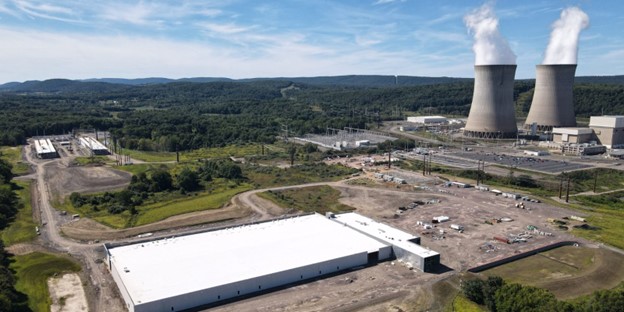
There are over 400 power reactors in 30 countries, generating about 10% of world electricity. These reactors have over 18,000 reactor years of operating history. For many years the issues of public acceptability and the disposal of nuclear waste have dogged the industry. Now the positive features of nuclear power are being appreciated widely and being championed by the technology sector. These are:
There is a need to recognize the reality of nuclear industry in the West after a 30-year gap in construction. A small number of new power projects have been completed using the latest designs which employ well-proven light-water reactor technology. All have fared badly.
The two AP1000 Westinghouse reactors at Vogtle in Georgia were completed in 2024 after more than 14 years, $22bn (150%) over budget [Wikipedia Vogtle (2026]]. French EPR reactors (1,650 MW each) built in France, Finland and UK are even more over budget and many years late. There will be improvements in cost and schedule as others of the same designs are built. Also, similar designs built in China together with earlier GW-sized designs in Korea and UAE [Wikipedia Barakah (2026)] have shown that constructors with current know-how and experienced teams of technicians can deliver a mature large reactor at much lower levels of cost. There are new US efforts to build large reactors for AI, for example: Fermi America [WNN (2025a)] plans for an 11-GW Data Center Park in Amarillo, Texas that includes large nuclear plus gas power supplies. The US Government is supporting these types of initiative right now with $17.5bn funding for long-lead items [DOE (2026)] for large reactors – AP1000.
Nevertheless, at least in West where energy projects depend on private funding, the construction cost and scale of these large GW size reactors are:
How will this poor record of construction performance be changed? Replication of large reactor designs such as AP1000 and EPR should lead to some improvement. They are so large, so complicated. They are designed to be constructed almost wholly on-site, where productivity is low, such that improvements will be limited, making them not suitable for the AI Data Center requirement.
Many smaller reactors (power rating less than 500 MWe – micro-reactors are units smaller than 50 MWe) are being designed to address these issues. Many use modular design concepts either to provide power in increments, or they use modular methods of off-site construction – hence the name Small or Advanced Modular Reactors. Some (SMRs) use the tried and tested light-water reactor technology. Advanced designs use of different types of liquid and gas coolants. These are the Advanced Modular Reactors (AMRs). Both types are now being selected by the AI companies to provide their future sources of power
These new designs have been stimulated and funded mostly by private capital, which has transformed the number and choice of reactor designs being investigated. There are over 120 SMR and AMR projects [WNA SMR Tracker (2026}] being developed or pursued globally. These include every type of established and new technology and there are projects in every part of the world, except Australia, which has a long-term ban on nuclear development. Many of these SMR projects are in the US and Europe, with some of leading SMRs being demonstrated now in China.
Advanced design projects that started in the US earlier have been accelerated by the Presidential Executive Orders of May 2025 [WNN (2025b)], which mandated simpler safety and planning regulations, together with investment by the US DoE promoting early demonstration of new designs. This is in three stages:
Also, some near-term commercial projects (Kairos - Natrium and X-energy with Dow) have benefited from matching funding for construction from US DoE and $17.5bn has been pledged by DoE towards long lead items for commercial power plants in US.
How are these new SMR and AMR designs different and why will they be cheaper and more attractive for AI Data Centers?
Our work at Cambridge [Roulstone, Lloyd & Lyons (2020)] focused on improving the way in which SMR nuclear construction is done rather than new reactor technology. Light water reactors were used for the analysis. The smaller size of SMRs together with an increased numbers of units made a different construction and supply chain strategy possible. The economy of ‘multiples’, as used in all manufacturing sectors, was set against the economies of ‘scale’, which is common in conventional nuclear design where bigger is better.
We found SMRs built conventionally, will be just as, or more expensive than large (GWe) units. The economies of scale make smaller designs more expensive. Making use of production engineering strategies that promote improved productivity and shorter timescales, it is possible to construct early production units at capital costs below those of a large reactor such as a next-of-a-kind Westinghouse 1.1 GW PWR. Further, with a sizeable order book, a continuous schedule of builds, production learning and lower financing costs during construction because of the shorter build schedule, energy costs could well be competitive with other low-carbon sources of energy. Our production engineering approach employed three broad strategies
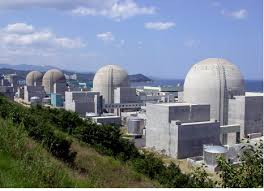
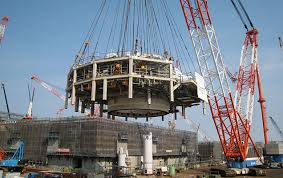
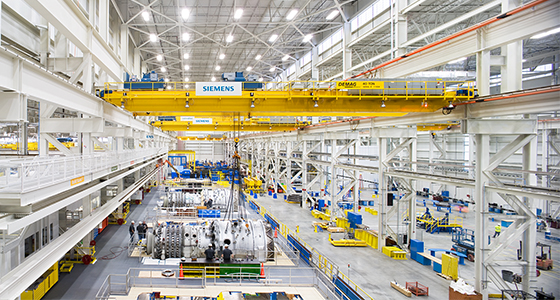
Sector wide data on production learning shows that cost improvement from results from production learning - doubling volumes reduces labour costs by 15-20%, a factor that is constant for every doubling of volume. Only in the nuclear sector are the production learning rates less than 5%. This is due to two factors: firstly, the continuous changes in designs and in supply chain between projects; secondly, the long gaps between reactor projects, during which improvement lessons and practices are forgotten. While there will be limits to the amount of fabrication and construction that be transferred to factories, analysis of the transport and economic issues indicates that up to 60% of on-site construction work can be transferred to factories, with on-site manufacture remaining as an option, if less desirable.
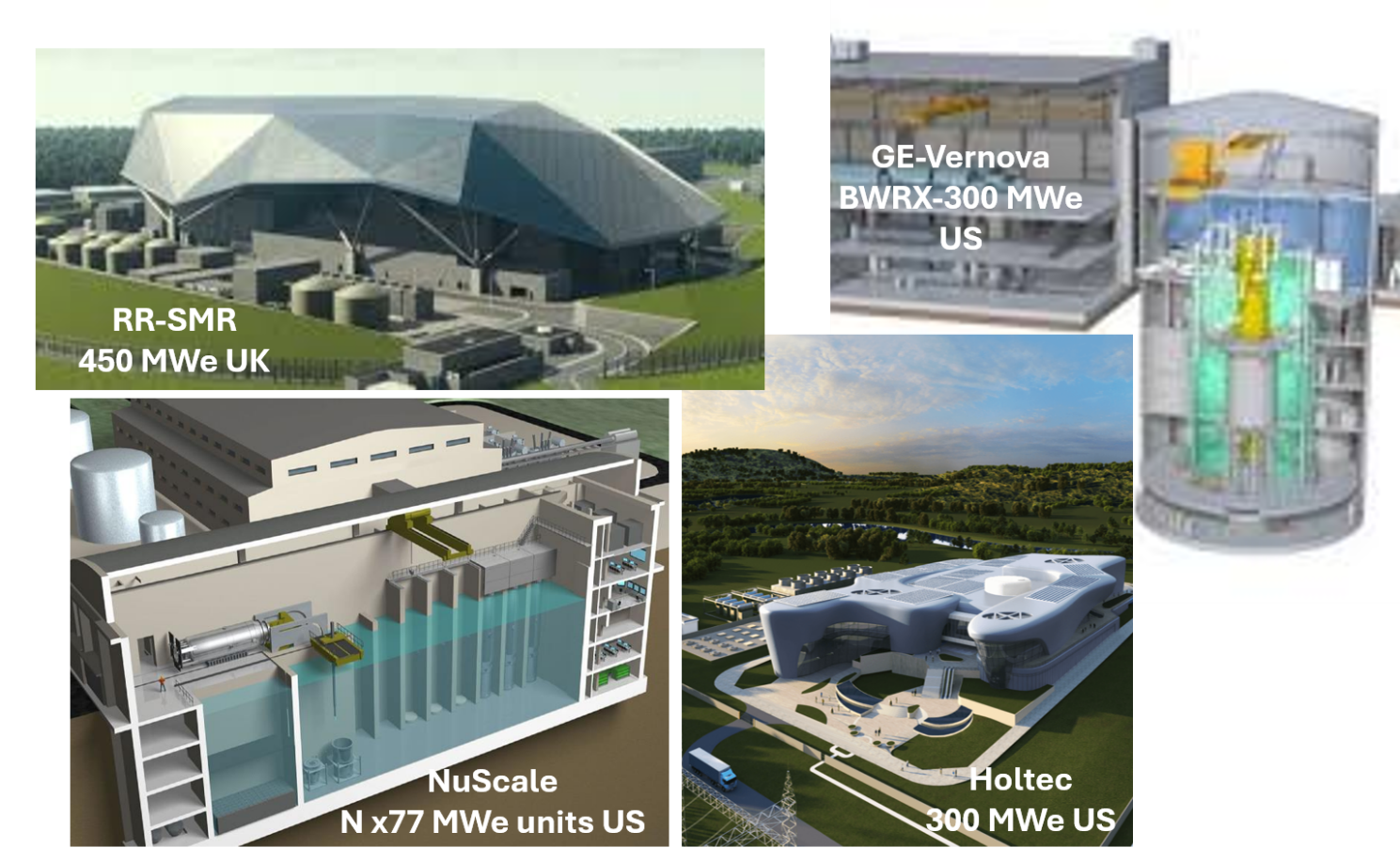
There are many credible designers of light water reactors but only a small number of vendors have active SMR projects - which include:
The key issue for all SMR vendors is building the volume and sequence of the order book to make the overall program affordable and to allow flow of manufacture, the key to progressive cost reduction. The conditions for volume production of these SMRs which is an order book of about 20 units, look likely to be fulfilled for some vendors.
There are many Advanced Modular Reactor (AMR, sometimes called Generation IV) design concepts with differing objectives and unique features. AMRs seek advantage over conventional light water-cooled reactors through either better use fuel and/or with simpler more cost-effective designs. AMRs can be classified by the type of coolant: gas - carbon dioxide or helium: liquid metal – sodium or lead/bismuth; molten salt – mixtures of fluoride, chloride or nitrate salts.
Most AMRs designs have moderators to slow neutrons so that they operate in a manner similar to water-cooled reactors, though they require higher levels of fuel enrichments in the range 10-15% (High Assay Low Enrichment Uranium – HALEU fuel) compared with 5% for existing reactors. Liquid metal-cooled and some molten salt-cooled designs don’t have moderators which allows them to convert uranium or thorium fuel into fissile elements for future use in reactors i.e. breeding. These fast neutron systems require even higher levels enrichment (15-20%).
Each type of AMR has been built and operated before, but have differing levels of maturity:
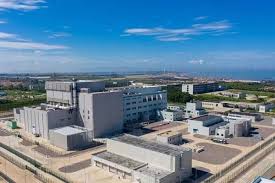
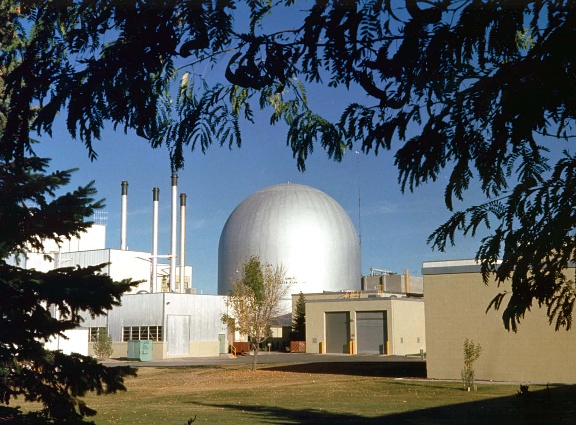
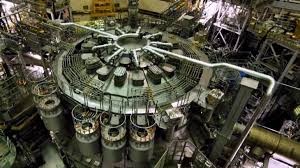
Though there are many different SMR/AMR technologies they are all part of the revolution in the nuclear industry to reduce costs and accelerate delivery, by changing from one project at a time to sequential project-like delivery of program of units.
AI Data Centers have high (up to 1 GW per site) and variable power demands. They require reliable, clean and dedicated supplies not dependant on the Grid. The options for providing these are limited to gas turbines, or nuclear power. While current Data Center projects are using gas turbines, this will become less acceptable in the future and the Hyperscalers wish to be seen as climate sensitive. SMRs are closer in power to the requirement of AI Data Centers - 100-200 MW at a time, and they could be delivered much more quickly and potentially at lower cost. The question is how quickly? US Government and INL are seeking to use this opportunity to press for new urgency in the nuclear industry and to facilitate SMRs and AMRs meeting the AI demands for power.
Whilst, SMRs could provide the power needs of AI, there are many questions (see Washington Post) to be answered before nuclear power and Data Centers are successfully paired, and before this can be done at the scale and speed required. Some of these questions are common to all projects, some are industry wide, others depend on the specific design of nuclear reactor. Others relate to the process of rejuvenation of the nuclear industry, finding the increases in manpower and skills to design, build and operate these reactors.
“Some plans to quickly cash in on AI’s insatiable appetite for electricity are confronting the realities of - physics, supply chains, energy markets and labor shortages”
Washington Post April 26
A high level of review of the main issues facing nuclear-powered AI data Centers covers: finance, engineering and safety, fuel supply, construction and supply chain, manning and operations - see Annex A. It describes each issue, provides some context and gives some suggestions about possible solutions. A few examples will illustrate the range of issues.
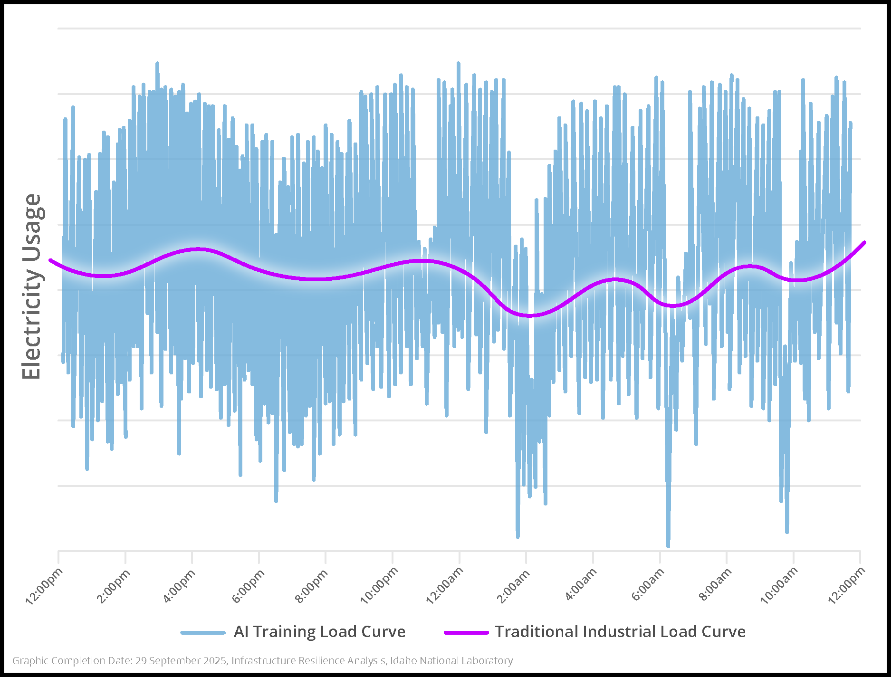
We know that the speeds of response of all types of fossil fuel and of nuclear power generators are in range of 5-10% of rated power per minute - much slower than variation in AI demand which could be much more 100% per second. The speed of response of nuclear reactors are:
To develop engineered solutions there needs to be better information about demand profiles of total data center. It is recognised that these issues will have been experienced by the nuclear AI data centers being built close to existing nuclear plants in Pennsylvania. Nevertheless, whether power is provided from fossil fuels or nuclear, the power system will require short-term (less than 15 mins) fluctuations to be covered by more responsive battery and inverter systems. Their control response versus the Data Center demand is to be verified by modelling etc. Battery power systems can be sized to compensate for short-term power variations and where the specific design of SMR or AMRs has a slower response capability, larger batteries capacities and inverter control systems will be required.
Further issues to be considered: Frequency response of control scheme where the plant is Behind-the-Meter or not connected to the Grid and the need for stabilisers/spinning inertia to stabilise the system. Also, the reactor system should plan for the effects of reactivity compensation, resulting from frequent power changes.
AI Data Center developments provide a huge opportunity for nuclear power, as large as the global build out of nuclear in the 1970 and 1980s. SMRs with either proven light water technology, or the emerging advanced technologies could provide the power for much of this new demand. The financial, technical and industrial issues to couple nuclear power plants to Data Centers are many and will require a broad whole systems approach.
AI Data Centers represent a welcome but daunting challenge for an industry weakened by 30 years of low demand and with an aging workforce. These challenges can be overcome by strategic and systematic analysis across the different disciplines and a series of clear action plans to close the gaps.
This challenge is being driven along both by the need for large amounts of clean energy and by President Trump’s Executive Orders of 2025 which provided both the impetus and the framework for rapid development and deployment of new nuclear technologies.
SMRs and AMRs are the vehicle for this transformation and rejuvenation of the industry. SMRs are different from large reactors in both scale and strategy. They are fundamentally about modernising the industry: From one project at a time, to sequential product-like delivery.
How will the nuclear industry measure up to these challenges and capture the opportunity? It will be successful only by taking a whole system approach - not by focusing on one issue over another – not just the reactor, or the power profile, or the fuel, or the supply chain, or the workforce, or finance – but all of these viewed as a system.
| Question | Issue | Possible Solutions |
| 1. How can nuclear power meet AI data center power demand profile? | Speed of response of power generator are generally in range of 10% of power per minute. Speed of response of nuclear reactor could be: • PWR up to 10% per minute, • BWR probably less able especially with natural circulation (BWRX-300) • Lower power change rates for HTGR especially at low power • Fast reactors less stable than LWRs • Frequent power change will require reactivity compensation. Economics of nuclear power plant is made worse by low average power because of its high fixed costs. | Better understand the demand profile of total data center – GPUs etc; cooling; domestic loads – these issues will have been experienced by the nuclear AI data centers being built using existing nuclear plants in Pennsylvania and Washington State. Whether power is from CCGT or nuclear it is likely that short-term (<15 mins) fluctuations will need to be covered by BESS – verify control response. Size BESS to compensate for short term power fluctuations, noting that BESS capacity/duration likely to be longer for AMRs. Consider the frequency response of control scheme BTM and the need for stabilisers/spinning inertia. Plan for power reactivity compensation. Consider nuclear economics in the light of mean power demand profile. Plan to operate SMR/AMRs at high power factor. |
| 2. Are SMRs financeable? | Nuclear power financed over +30 years to amortise high capital costs – also nuclear plants designed for 40-60 years operation – whereas competitiveness of AI GPUs have a technology lifetime of less than 10 years. This miss-match of investment/return horizons between the Data Center and the nuclear power unit means funding and of PPAs durations will not match. No SMR/AMRs have been built hence construction risk is high and unknown. AMRs currently have both higher technical and construction risks. | Grid connection timescales can be constraining for AI Data Center projects, hence BTM solutions, if a longer-term connection to the Grid is put in place, together with a take or pay option/contract for the period beyond the expected life of the AI Data Center, nuclear units could both provide grid supply and have secure funding for the balance of their operating lifetime. SMRs should be able to offer firm prices and assured build schedules once several have been built. Where AI Data Centers are the first or early projects, risk will be higher and likely much of this will be passed to client. |
| 3. Can SMR operate safely Behind the Meter? | Grid connection timescales can be constraining for AI Data Center projects, hence BTM solutions, For safety reasons, commercial reactors require always-on dependable power supply of up 10% of output for safe operation – usually provided by grid connections. It is noteworthy that nuclear-powered ships/submarines operate safely with a combination of self-power, batteries and DG back-up | A range of solutions might be possible including more substantial and BESS with more capacity, diesel generators, back-up OCGTs etc. The normal nuclear practice has been for safety reasons - one or more separate grid connections to provide assured power, together with back-up diesel generators. It may be possible to avoid any grid connection for SMRs by analysis of onsite power supplies, otherwise a lower power grid connection to provide assured supply for safety functions ~10% of nominal unit capacity. Find a way to meet safety regulations without a grid connection like nuclear-powered shipping. |
| 4. How to align plans/schedules of AI Data Centers v longer SMR(GEN3)/ AMR(GEN4) development & deployment timescales? | Onerous safety regulation and planning requirement for nuclear power plants take longer than AI data center. Construction duration of nuclear power plants is long and uncertain. AMR(Gen4) technologies less mature and will require pilot or technology demonstrators before mass roll-out – though could be simpler and cheaper to build? • High temperature gas-cooled reactors much studied but operating experience on last five decades (from UK, Germany, US and China) is a few tens of reactor years. • Liquid-metal cooled prototype reactors built in US, France, UK and Russia but except for Russia, discontinued three decades ago. Collective operating experience ~500 reactor years with most of this being Russian BN600/800 experience. • Molten salt-cooled reactors most immature with no consensus of type: fast or moderated; coolant: fluoride or chloride; fuel form: dissolved in salt or contained. Very operating experience, limited to ORML experiments is 1960s and more recent Chinese TMSR. | Both US and UK (not sure about how active rest of Europe is) have reviewed their approach to safety regulation and planning – with the aim of being less bureaucratic more outcome focused. US NRC appears to be operating on much shorter timescales. In UK Fingleton review was positive but pressure to be maintained on Govt and ONR that they come through on the proposals. Planning changes are part of wider planning law changes. SMRs if built like large reactors will also be slow and expensive. SMRs are about a fundamental change to production approach – standardisation, modularisation, learning and flow – need to be demonstrated on early projects. Need a realistic view required of maturity of Gen 4 technologies, what they need to demonstrate for secure and high availability power, together with the timescales of prototype and production units, and their most likely construction schedules. Prototype and demonstrator reactors are being planned in the US and in Europe. President Trump’s Exec Orders have provided a route and a framework for more rapid development and deployment of AMRs in the US. More than 100 design or development projects for SMRs are being deployed world-wide. |
| 5. How to cut construction timescales to align with AI Data Center needs? | Conventional reactor builds take 8-12 years and are very inefficient in their use of labour, in part because the crafting of very high-quality nuclear systems from basic materials in a congested and poorly equipped construction site, is fraught with problems and delays. The ‘one project at time’ methodology with the inherent delays, is built into nuclear construction experience/culture. | SMRs as a class are about fundamental change to the production approach – standardisation design and construction methods, modularisation of sub-units, learning and production flow. Improved performance needs to be demonstrated on early projects. Product-like standardisation at a detailed level, with repetition of design are both fundamental to shorter and more predictable build schedules. Transfer of large quantities of work from sites to factories together with automation can radically improve labour productivity and cut construction timescales. |
| 6. How to ensure nuclear supply chains are ready? | In both US and Western Europe supply chain very limited due to lack of orders for last 30 years. Key nuclear qualified items: • Fuel (see also below HALEU) • Vessels, pumps & valves • Reactor instrumentation | Existing production routes for LWR SMR fuel but expansion to challenge LEU enrichment capacity in the context of the closure of Russia/Kazah route. The lack of HALEU enrichment and production facilities recognised in US and UK with plans for ~10 MTU HALEU production by early 2030s in UK & US. Need to think bigger for AMRs. Invest in vessel, pump and valve manufacture to secure supply chains – program of upgrading non-nuclear facilities. Invest in reactor instrumentation designers and manufacturers to secure supply chains – program of upgrading non-nuclear suppliers. |
| 7. HALEU fuel availability? | AMRs use HALEU fuel (enrichment 5-20%) which will require a rapid growth in enrichment capability in both US and Europe, with new and/or much expanded production facilities. Most AMRs will require TRISO fuel, which has been made only at lab-scale and at very high cost – 10 times LWR fuel cost. | Existing production routes for LWR SMRs but expansion to challenge LEU enrichment capacity with the closure of Russia/Kazah routes. The lack of HALEU enrichment and production facilities recognised in US and UK with plans for ~10 MTU HALEU production in both US & UK by early 2030s. Need to think bigger for program of AMRs. Demonstrate cost effective MTU quantity TRISO production – US plants are being built. |
| 8. How to develop nuclear power plant operators for AI Data Centers? | The power plant operator is the safety licensee – existing nuclear operators: • Have consolidated as industry lacked growth – limited number of options • Their lack of experience of SMRs • Limited operating and engineering manpower for rapid expansion of nuclear AI data centers | Limited number of experienced nuclear operators who need to be attracted into SMRs for AI Data Centers, by involving them in early project development with exposure to the specific new technical and operating needs. Nuclear operators to expand their staffing to meet Data Center needs and timescales. |
| 9. Making skilled construction resources available? | Nuclear construction is much more complex and time consuming than conventional power and skills have run-down due to lack of activity over much of last 30 years: • Number and experience of architect-engineer organisations • Lack of experience of product/project standardisation • Number of nuclear experienced project planners Number of experienced/capable technicians – welding, electrical, quality etc. | Engage competent architect-engineer organisations in projects at an early stage – tasked with stretch targets improvements in process, cut build schedules and radically improve labour productivity. Transfer knowledge/experience of standardisation from sectors than produce low rate, complex engineered products with high-quality requirements, to nuclear. Transfer of high proportion of construction work from site to factory manufacture (by design for modular construction and assembly) together with production flow and automation can radically improve labour productivity and improve quality, National programs of development of key trade skills are required, also ensuring technician, planners etc are incentivised to more form project to project. |
| 10. Where to store the spent fuel & nuclear waste and who pays for its protection? | During the plants lifetime it will create spent fuel and nuclear waste. Once the spent fuel has cooled how will it be stored? What to do with intermediate nuclear waste? Nuclear waste needs to be looked after for many years, in some cases much longer. | Policy in the US and the UK is onsite fuel cooling followed by an extended period of on-site storage. Therefore, the nuclear site will be a licenced for decades beyond the operating period of the reactors. Similarly, intermediate nuclear waste needs to be stored on site. Though national nuclear waste strategies outside Finland and Sweden ave not extended to long-term repositories and disposal, the cost of spent fuel is the responsibility of the operator. This cost though apparently large, amounts to 2-3% of the energy revenue because of the very large amount of energy generated and the relative simplicity and safety of long-term waste storage. |
| 11. Where can SMRs be sited and how close to AI Data Centers? | Nuclear siting requirements limit the locations for nuclear power plants to be away from major centers of population, military and industrial sites etc. Emergency planning zones may inhibit near-by location of nuclear power plants to Data Centers. | In densely populated countries such as UK, this issue is important, but a national study of sites for lower rated SMRs found many sites across England and Wales that met the then current rules. The rules were written decades ago when nuclear power was less developed. Currently nuclear power plants are located remotely, with emergency planning zones (EPZ) being 10s miles. SMRs power lower public risks because of their smaller radioactive inventory and their high level of safety. NuScale has successfully argued in US that its EPZ should extend only to the site boundary. |
| 12. Do AI Data Center sites have adequate cooling for data center and reactor needs? | Large reactors are sited either on major rivers or close to the sea. SMRs being smaller have lower cooling needs but multiple SMRs on a site may require similar quantities of cooling water. Data Centers also have high cooling water needs which should be considered at the same time as the reactor cooling needs | Natural and forced draft cooling towers can reduce the cooling water requirements, but this issue can be a site feasibility matter. |
| 13. How to meet the nuclear security requirements? | Host countries specify security requirements including on-site and back-up security staffing. The use by AMRs of HALEU fuel will bring further safeguard requirements. | US security manning rules are explicit and are based per reactor. There should be scope for reductions for a site with several or many reactors, though the use of HALEU fuel and storage of HALEU fuel waste may well lead to more security requirements and costs. |
| 14. How to meet the emergency response requirements for SMRs? | Host countries have emergency response and exclusion zone that cover large areas well outside the site boundary. | Areas for evacuation and emergency response predate the accidents at Chernobyl and Fukushima. Analysis of these events showed that the previous response of evacuation was not the best. There is need for revision of the emergency response requirements. Also, there should scope for relaxation of emergency response/exclusion rules for SMRs in a similar way to NuScale has successfully argued in the US. |