
The selection of an appropriate project delivery method constitutes a foundational strategic decision that dictates the trajectory, risk profile, commercial alignment, and ultimate success of major capital projects. Historically, the global engineering and construction sectors have relied heavily on deterministic selection frameworks—such as those pioneered by the Construction Industry Institute (CII) and multi-criteria decision-making models like the Analytical Hierarchy Process (AHP)-to align organizational constraints with commercial contracting structures. While these methodologies provide robust, empirically validated heuristics for navigating traditional delivery configurations (e.g., Design-Bid-Build, Design-Build, Construction Management at Risk), they frequently fail to address the underlying physical realities of project execution. This comprehensive research report establishes a definitive synthesis of traditional delivery selection models with the emerging, scientifically grounded paradigm of Project Production Management (PPM) and Operations Science (OS). By re-conceptualizing the capital project not merely as a sequence of administrative contracts, but as a complex, temporary production system, the analysis demonstrates that optimal delivery selection must extend far beyond commercial risk transference. True project success necessitates the integration of Production System Optimization (PSO), Project Production Control (PPC), and Supply Flow Control (SFC). The findings indicate that while commercial contracting strategy establishes the behavioral boundaries of project teams, the definitive determinants of project success reside in the rigorous, mathematical management of capacity, variability, cycle times, and work-in-process (WIP) across the entirety of the project delivery lifecycle.
Keywords: Project Delivery Method, Project Production Management, Operations Science, Contracting Strategy, Analytical Hierarchy Process, Work-in-Process (WIP), Project Production Control, Construction Management, Capital Projects.

Víctor have more than 25 years of experience in project and contract management in the AECO industry. He is a Civil Engineer with an MBA from CENTRUM PUCP and holds the PMP certification from PMI, APEC Engineer, Project Manager NEC 4 ECC. He is an expert in PMO and Collaborative Contracts, having successfully led implementations in various projects. ...
The global engineering and construction industry is currently navigating an unprecedented era of capital expenditure. Driven by the demands of digital transformation, rapid urbanization, and a global energy transition, the sector anticipates a capital spending surge of twelve to fifteen trillion dollars over the next five years (CII, 1999; Al Khalil, 2002). Concurrently, the industry is confronted by critical shortages of skilled labor, engineers, and essential equipment, with material lead times extending dramatically (CII, 1999). Within this high-stakes environment, chronic cost overruns, schedule delays, and systemic execution inefficiencies have persisted as defining characteristics of capital project delivery for over a century (CII, 2003; Fischer et al., 2021).
For decades, the predominant response to these systemic failures has been the implementation of increasingly stringent administrative protocols, the deployment of complex risk-shifting commercial contracts, and the reliance on advanced lagging-indicator tracking mechanisms, collectively categorized as conventional Project Controls (CII, 2003; Shenoy, 2017). These methodologies are predicated on the assumption that transferring financial and schedule risk into the depths of the supply chain mathematically equates to the mitigation of operational risk (Shenoy & Zabelle, 2016). However, this approach invariably disintegrates collaborative organizations, fragments critical knowledge transfer, and generates adversarial commercial environments where the administration of subcontracts completely supersedes the active management of physical production (Shenoy & Zabelle, 2016; Hopp & Spearman, 2011).
To rectify these deep-seated systemic vulnerabilities, the discipline of Project Production Management (PPM) has emerged, spearheaded by the Project Production Institute (PPI). Project Production Management adapts the rigorous, mathematically proven principles of Operations Science—historically utilized in manufacturing environments via frameworks like Factory Physics—to the dynamic, non-repetitive environments of capital project delivery (Zhang & Fischer, 2025; PPI, n.d.). Operations Science categorically refutes the traditional "Iron Triangle" of project management by demonstrating that a project is fundamentally a temporary production system governed by the immutable laws of physics (Zhang & Fischer, 2025; Sanvido & Konchar, 1998; Fischer et al., 2021).
This exhaustive report examines the proper selection of project delivery methods by bridging two historically distinct disciplines. It first details the empirical, deterministic selection frameworks provided by the Construction Industry Institute (CII) and multi-criteria decision-making models. It subsequently pivots to analyze the profound limitations of these traditional frameworks when evaluated through the lens of Operations Science. Finally, it provides a unified, comprehensive methodology for selecting and structuring a project delivery method that explicitly enables Project Production Management, ensuring predictable, high-value outcomes in complex capital asset delivery.
A project delivery system defines the fundamental relationships, roles, responsibilities, and commercial obligations of project team members, alongside the precise sequence of activities required to conceptualize, engineer, procure, and construct a facility (CII, 1999; CII, 2003). The selection of this system dictates the structural integration of the facility team, which typically comprises the facility owner, the architect or engineering firm, the primary constructor, and various specialty subcontractors or suppliers (CII, 1999; CII, 2003).
Historically, the United States commercial and industrial construction sectors have recognized three primary delivery configurations. These foundational systems have been extensively analyzed by the research community to document quantitative performance differences (Sanvido & Konchar, 1998; CII, 1999).
The Design-Bid-Build (DBB) method represents the traditional, serial sequence of project execution (Sanvido & Konchar, 1998; CII, 1999). Under this configuration, the facility owner contracts separately with a design firm to produce complete, exhaustively detailed construction documents (Sanvido & Konchar, 1998; CII, 1999). Following the absolute completion of the design phase, the owner or the owner's agent solicits fixed-price bids from a pool of construction contractors (Sanvido & Konchar, 1998). While DBB offers the illusion of absolute cost certainty and strict owner control over the design intent, it is highly susceptible to adversarial relationships, extended project durations due to the inability to overlap phases, and poor constructability integration resulting from the total segregation of the designer and the builder (Sanvido & Konchar, 1998; CII, 1999).
The Design-Build (DB) method consolidates responsibility by requiring the owner to contract with a single, unified entity responsible for both comprehensive design and physical construction services (Sanvido & Konchar, 1998; CII, 1999). By establishing a single point of contractual responsibility, the DB method fundamentally eliminates the traditional adversarial divide between engineering and construction (Sanvido & Konchar, 1998). This facilitates concurrent engineering, allowing construction to commence while detailed design is still underway, thereby significantly reducing overall delivery speed (Sanvido & Konchar, 1998). The DB configuration is highly effective for projects possessing clearly defined scopes, standard or repetitive designs, and aggressive time-to-market commercial constraints (Sanvido & Konchar, 1998).
The Construction Management at Risk (CMR) method serves as a structural bridge between the segregated DBB and the consolidated DB approaches. The owner maintains separate contracts with the designer and the constructor, but the constructor (acting as the Construction Manager) is engaged very early during the conceptual design phase (Sanvido & Konchar, 1998; CII, 1999). This early engagement allows the constructor to provide critical constructability reviews, value engineering analyses, and highly accurate preliminary cost estimates (Sanvido & Konchar, 1998; CII, 1999). The CMR typically assumes the financial risk of construction performance, frequently under a Guaranteed Maximum Price (GMP) commercial arrangement, bridging the gap between design and construction without forcing the owner to relinquish their direct contractual relationship with the architectural or engineering team (Sanvido & Konchar, 1998; CII, 1999).
As capital projects have grown exponentially in technological complexity, scale, and geographic distribution, the foundational binary choices have proven structurally insufficient. Recognizing this complexity, the Construction Industry Institute (CII) expanded these classifications into twelve distinct Project Delivery and Contract Strategy (PDCS) alternatives, providing owners with highly nuanced structural and commercial options, each mapped to specific default compensation approaches (CII, 2003).
| PDCS Classification | Operational Sequence and Contractual Description | Default Compensation Approaches |
|---|---|---|
| PDCS 1: Traditional DBB | Serial sequence; procurement begins post-design; owner contracts separately with designer and constructor. (CII, 2003) | Designer: Firm Price; Constructor: Competitive Lump Sum. (CII, 2003) |
| PDCS 2: Traditional w/ Early Procurement | Serial sequence; procurement begins during design; owner holds separate contracts for design, construction, and key supply. (CII, 2003) | Designer: Cost Reimbursable + Fee; Constructor/Supplier: Competitive Lump Sum. (CII, 2003) |
| PDCS 3: Traditional w/ PM (Agent) | Serial sequence; Project Manager acts as owner's surrogate from feasibility to operations. (CII, 2003) | Designer/PM: Negotiated Lump Sum; Constructor: Competitive Lump Sum. (CII, 2003) |
| PDCS 4: Traditional w/ CM (Agent) | Serial sequence; Construction Manager acts as administrative agent without assuming construction risk. (CII, 2003) | Designer/CM: Negotiated Lump Sum; Constructor: Competitive Lump Sum. (CII, 2003) |
| PDCS 5: Early Procurement + CM | Serial sequence; early supplier engagement combined with an agency Construction Manager overseeing execution. (CII, 2003) | Designer/CM: Negotiated Lump Sum; Constructor/Supplier: Competitive Lump Sum. (CII, 2003) |
| PDCS 6: CM @ Risk | Overlapped sequence; constructor provides pre-construction input and executes at financial risk. (CII, 2003) | Designer: Firm Price; Constructor (CM): Guaranteed Maximum Price (GMP). (CII, 2003) |
| PDCS 7: Design-Build / EPC | Overlapped sequence; a single entity executes comprehensive design, procurement, and construction. (CII, 2003) | Design-Builder: Competitive Lump Sum. (CII, 2003) |
| PDCS 8: Multiple Design-Build | Overlapped sequence; owner utilizes multiple DB entities (e.g., isolating process engineering from facility construction). (CII, 2003) | Design-Builders: Competitive Lump Sum. (CII, 2003) |
| PDCS 9: Parallel Primes | Overlapped sequence; owner acts as the master integrator, coordinating separate designers and multiple direct constructors. (CII, 2003) | Designer: Firm Price; Constructors: Competitive Lump Sum. (CII, 2003) |
| PDCS 10: Staged Development | Multi-stage serial sequence; distinct sequential contracts for successive project stages; PM agent assists. (CII, 2003) | Designer: Reimbursable + Fee; Constructor: Negotiated Lump Sum. (CII, 2003) |
| PDCS 11: Turnkey | Overlapped sequence; a single contractor executes all phases, including commissioning and final handover. (CII, 2003) | Turnkey Contractor: Competitive Lump Sum. (CII, 2003) |
| PDCS 12: Fast Track | Overlapped sequence; owner manages separate design and construction contracts concurrently to accelerate schedule. (CII, 2003) | Designer/Constructor: Cost Reimbursable + Fee. (CII, 2003) |
These classifications underscore the immense structural diversity available to project owners. The default compensation approaches—ranging from Firm Price and Competitive Lump Sum to Cost Reimbursable plus Fee and Guaranteed Maximum Price (GMP)—establish the initial risk allocation (CII, 2003). However, selecting the optimum system from this expansive taxonomy requires rigorous, data-driven evaluative frameworks that successfully map specific organizational objectives to empirical performance data.
To transition delivery selection from subjective preference to empirical science, the Construction Industry Institute compiled and analyzed a comprehensive database of 351 general building projects constructed in the United States (CII, 1999). This massive dataset permitted the first statistically significant, empirical comparison of the Design-Build, Construction Management at Risk, and Design-Bid-Build delivery systems (CII, 1999).
The statistical regression models applied to this dataset revealed profound, quantitative differences in project outcomes based exclusively on the delivery system employed (CII, 1999). The findings established that, on a broad statistical average, the Design-Build methodology fundamentally outperforms both Construction Management at Risk and Design-Bid-Build across the primary domains of cost predictability and schedule velocity (CII, 1999).
| Performance Metric | DB vs. CMR Average Difference | CMR vs. DBB Average Difference | DB vs. DBB Average Difference | Statistical Certainty (Level of Variation Explained) |
|---|---|---|---|---|
| Unit Cost | 4.5% less | 1.5% less | 6.0% less | 99% (CII, 1999) |
| Construction Speed | 7.0% faster | 6.0% faster | 12.0% faster | 89% (CII, 1999) |
| Delivery Speed | 23.0% faster | 13.0% faster | 33.0% faster | 87% (CII, 1999) |
| Cost Growth | 12.6% less | 7.8% greater | 5.2% less | 24% (CII, 1999) |
| Schedule Growth | 2.2% less | 9.2% less | 11.4% less | 24% (CII, 1999) |
The certainty levels associated with these findings are particularly noteworthy. For Unit Cost, the statistical model explains 99% of the variation, allowing project owners to isolate the explicit financial effect of the project delivery system with absolute statistical confidence (CII, 1999). Construction speed, defined as the rate at which a facility is constructed (measured in square feet per month), and Delivery speed, which encompasses the entire duration from design start to substantial completion, also exhibit high statistical certainty (89% and 87%, respectively) (CII, 1999). Conversely, the lower certainty values for cost and schedule growth (24%) indicate the presence of external variables outside the delivery method that influence scope creep and schedule extension (CII, 1999).
The CII System Selector Matrix further stratifies these performance metrics by specific facility classifications, acknowledging that optimal delivery strategies fluctuate based on the technological and spatial requirements of the asset (CII, 1999). The facility classifications encompass Light Industrial, Multi-story Dwelling, Simple Office, Complex Office, Heavy Industrial, and High Technology environments (CII, 1999).
For instance, in High Technology environments—such as micro-electronic clean rooms, pharmaceutical processing facilities, and research laboratories requiring strict environmental and particulate controls—the Design-Build method significantly outperforms Design-Bid-Build in terms of absolute unit cost (CII, 1999). Furthermore, for Heavy Industrial projects featuring intense mechanical controls and massive process equipment loads, both DB and CMR drastically outperform DBB in construction speed, reflecting the necessity for concurrent engineering and early constructor involvement to manage complex spatial routing (CII, 1999).
Quality metrics, encompassing Turnover Quality (the difficulty of facility startup and frequency of callbacks), System Quality (the performance of mechanical, electrical, and plumbing systems alongside architectural envelopes), and Equipment Quality (process equipment performance and layout), were also evaluated (CII, 1999). While quality is inherently more subjective—measured via post-completion client surveys—the empirical data indicates that Design-Bid-Build consistently offered the lowest overall quality scores, whereas DB and CMR provided marginally superior, yet statistically significant, quality outcomes (CII, 1999).
While empirical averages provide an indispensable baseline, project owners must invariably contextualize delivery selection within the unique constraints of their specific organizations. The Analytical Hierarchy Process (AHP), a robust multi-criteria decision-making framework developed by Saaty, offers a highly structured mathematical methodology tailored for resolving unstructured capital project decisions (Al Khalil, 2002).
As detailed by Al Khalil (2002), the AHP models the selection problem through a comprehensive five-level hierarchy. The apex of the hierarchy (Level 1) represents the ultimate goal: Selecting the Appropriate Project Delivery Method (Al Khalil, 2002). The second level fractures this goal into three major strategic categories: Project Characteristics, Owner's Needs, and Owner's Preferences (Al Khalil, 2002).
Level 3 delineates the specific subcategories within these strategic pillars (Al Khalil, 2002):
The mathematical engine of the AHP relies on rigorous pairwise comparisons utilizing a defined 1-to-9 rating scale (Al Khalil, 2002).
| Weight | Definition | Operational Application (Al Khalil, 2002) |
|---|---|---|
| 1 | Equal importance | Two factors contribute equally to the objective. |
| 3 | Weak importance | Experience slightly favors one factor over another. |
| 5 | Strong importance | Experience strongly favors one factor over another. |
| 7 | Very strong importance | One factor is strongly favored; dominance demonstrated in practice. |
| 9 | Absolute importance | Evidence favoring one factor is of the highest possible order of affirmation. |
| Reciprocals | Inverse comparison | Used when factor “j” is compared back to factor “i”. |
By executing these pairwise comparisons across the hierarchy, the owner generates normalized priority vectors (Al Khalil, 2002). For instance, if an owner determines that Project Characteristics hold a weight of 4 against Owner's Needs, and a weight of 6 against Owner's Preferences, the resulting normalized priority value for Project Characteristics dominates the matrix (Al Khalil, 2002). Through mathematical aggregation, the alternative delivery methods (DB, DBB, CM) receive a final priority ranking, ensuring that the selected method is quantitatively locked to the owner's strategic profile (Al Khalil, 2002).
Synthesizing empirical data with multi-criteria modeling, CII Implementation Resource 165-2 introduces a sophisticated, factor-based decision support tool (CII, 2003). This methodology requires project teams to evaluate up to six critical selection factors out of a comprehensive list of twenty, assigning preference scores that generate an aggregate suitability rating across all twelve PDCS alternatives (CII, 2003).
These twenty selection factors act as the diagnostic interface between the owner's strategic intent and the structural realities of the delivery system (CII, 2003). The effectiveness of each PDCS is scored from 0 to 100 for every single factor, representing a massive matrix of operational capabilities (CII, 2003).
Financial and temporal constraints remain the primary drivers of delivery selection. The effectiveness values demonstrate profound structural disparities in how delivery systems handle cost and schedule pressures (CII, 2003).
| Selection Factor | PDCS 1 (Traditional) | PDCS 6 (CM @ Risk) | PDCS 7 (Design-Build) | PDCS 11 (Turnkey) | PDCS 12 (Fast Track) |
|---|---|---|---|---|---|
| 1: Control Cost Growth | 80 | 60 | 90 | 100 | 40 |
| 2: Ensure Lowest Cost | 90 | 40 | 80 | 80 | 40 |
| 3: Delay Expenditure Rate | 100 | 40 | 10 | 0 | 100 |
| 4: Facilitate Early Cost Est. | 0 | 70 | 90 | 100 | 60 |
| 6: Control Time Growth | 20 | 70 | 90 | 100 | 80 |
| 7: Ensure Shortest Schedule | 0 | 80 | 100 | 100 | 100 |
Factor 1 emphasizes the necessity of completing the project within the originally appropriated budget (CII, 2003). PDCS 11 (Turnkey) achieves a perfect effectiveness score of 100, as single-source coordination inherently suppresses budget creep (CII, 2003). Conversely, PDCS 12 (Fast Track) scores a mere 40, as overlapping distinct design and construction contracts without a unified point of responsibility historically leads to significant scope gaps and change orders (CII, 2003).
Factor 3 is critical for governmental or highly leveraged projects where cash flow is constrained by phased appropriations (CII, 2003). Here, PDCS 1 (Traditional DBB) and PDCS 12 achieve scores of 100 because the deliberate serialization of phases, or the separation of contracts, allows the owner to delay physical expenditures until specific funding gates are cleared (CII, 2003). Design-Build (PDCS 7) scores poorly (10) as it necessitates massive, rapid capital outlays to fund concurrent engineering and procurement (CII, 2003).
Factor 7 targets the absolute necessity for the shortest reasonable schedule, vital for securing first-to-market commercial advantages (CII, 2003). PDCS 7, 11, and 12 all achieve perfect effectiveness scores of 100, as overlapping the sequence of design, procurement, and construction completely eliminates the protracted competitive bidding phase required by PDCS 1 (which scores a 0) (CII, 2003).
The stability of the project scope and the physical conditions of the execution environment dictate the required flexibility of the delivery method (CII, 2003).
| Selection Factor | PDCS 1 (Traditional) | PDCS 4 (CM Agent) | PDCS 7 (Design-Build) | PDCS 9 (Parallel Primes) | PDCS 12 (Fast Track) |
|---|---|---|---|---|---|
| 9: Ease Change Incorporation | 100 | 100 | 10 | 20 | 70 |
| 10: Capitalize on Low Changes | 0 | 0 | 90 | 80 | 30 |
| 11: Protect Confidentiality | 90 | 70 | 0 | 100 | 80 |
| 13: Maximize Owner Control | 90 | 80 | 10 | 90 | 100 |
Factor 9 is paramount when a project interacts heavily with existing facilities or relies on fluctuating production forecasts, necessitating continuous changes to the design scope (CII, 2003). Traditional DBB (PDCS 1) and CM arrangements (PDCS 4) provide maximum flexibility (scoring 100) because the sequential phasing allows the owner to finalize all permutations before locking in a construction price (CII, 2003). Single-source Design-Build (PDCS 7) scores a dismal 10 because requesting changes after awarding a lump-sum DB contract inevitably triggers severe claims for structural impact and schedule disruption (CII, 2003).
Factor 11 highlights the critical nature of intellectual property and process confidentiality (CII, 2003). If an owner is constructing a facility utilizing highly proprietary manufacturing technology, utilizing an EPC Design-Build contract requires exposing the entirety of the intellectual property to the bidding entities (CII, 2003). Consequently, PDCS 7 scores 0 for confidentiality. Conversely, Parallel Primes (PDCS 9) scores 100 because the owner serves as the master integrator, disseminating only fragmented technical packages to multiple prime contractors, ensuring no single entity comprehends the holistic proprietary process (CII, 2003).
The final spectrum of factors evaluates the owner's internal resource capacity and the technological novelty of the project (CII, 2003).
| Selection Factor | PDCS 1 (Traditional) | PDCS 7 (Design-Build) | PDCS 9 (Parallel Primes) | PDCS 11 (Turnkey) | PDCS 12 (Fast Track) |
|---|---|---|---|---|---|
| 17: Capitalize on Defined Scope | 0 | 100 | 80 | 100 | 60 |
| 18: Utilize Poorly Defined Scope | 100 | 0 | 20 | 0 | 40 |
| 19: Minimize Contracted Parties | 70 | 90 | 0 | 100 | 70 |
| 20: Coordinate Complexity | 70 | 100 | 0 | 90 | 80 |
Factor 20 addresses the necessity to efficiently manage highly complex, innovative, or non-standard engineering (CII, 2003). Design-Build (PDCS 7) and Turnkey (PDCS 11) excel in this domain (scoring 100 and 90, respectively) because centralizing design and construction under a single corporate entity facilitates out-of-the-box thinking, mitigates coordination friction, and enables proprietary technological synergies (CII, 2003). Parallel Primes (PDCS 9) fails entirely (scoring 0) as the extreme fragmentation of contracts multiplies interface risks exponentially when dealing with unproven innovations (CII, 2003).
To demonstrate the practical application of this deterministic methodology, the CII evaluates two distinct capital projects possessing diametrically opposed strategic objectives (CII, 2003).
The first case study involves the construction of a $32 million, 35-megawatt cogeneration facility within the heavily congested footprint of an existing, operational oil refinery (CII, 2003). The project required the installation of a Gas Turbine Generator (GTG) and a Heat Recovery Steam Generator (HRSG), both constituting exceptionally long-lead procurement items (CII, 2003). The owner mandated a strict 18-month schedule from conceptual engineering to mechanical completion to mitigate immediate environmental emissions compliance issues (CII, 2003).
The project team identified four dominant selection factors (CII, 2003):
Processing these weighted variables through the PDCS algorithm generated the highest suitability rating for PDCS 12 (Fast Track) (CII, 2003). While PDCS 7 (Design-Build) would theoretically provide the absolute fastest schedule, it fundamentally failed to accommodate the owner's profound need for continuous change incorporation (Factor 9) and direct operational control (Factor 13) (CII, 2003). The team ultimately selected PDCS 12, deploying Cost Reimbursable plus Fee compensation mechanisms for both the designer and the constructor (CII, 2003). This commercial structure permitted the immediate procurement of the GTG and HRSG despite low levels of initial design definition, drastically accelerating the schedule while preserving the owner's authority to direct complex operational tie-ins dynamically (CII, 2003).
Conversely, the United States General Services Administration (GSA) required the construction of a 205,000-square-foot Federal Courthouse (CII, 2003). Operating within the rigid confines of governmental appropriations, the GSA mandated strict adherence to fixed budgets and sequential funding releases (CII, 2003).
The GSA identified five dominant selection factors (CII, 2003):
The algorithm identified PDCS 1 (Traditional DBB) as the mathematically highest-rated alternative, closely followed by PDCS 4 (Traditional with CM Agent) (CII, 2003). Acknowledging historical institutional success with construction managers, the GSA selected PDCS 4 (CII, 2003). They deployed a Firm Price contract for the designer and the CM Agent to lock in administrative costs, and a Competitive Lump Sum contract for the primary constructor, ensuring absolute cost certainty and a delayed expenditure profile that perfectly matched congressional funding realities (CII, 2003).
While the CII System Selector Matrix, the AHP methodology, and the 20-Factor Decision Tool provide exceptionally rigorous frameworks for aligning organizational constraints with commercial structures, the Project Production Institute argues that these deterministic models are fundamentally constrained by "Era 2 thinking" (PPI, n.d.). This paradigm incorrectly treats project delivery as a purely administrative and commercial exercise, rather than a dynamic operational system (PPI, n.d.; Shenoy, 2017).
Despite over a century of refining these delivery configurations and deploying increasingly complex risk-shifting contracts, the engineering and construction industries have entirely failed to eradicate the systemic plagues of cost overruns and schedule delays (Fischer et al., 2021; Shenoy & Zabelle, 2016).
A pervasive and deeply entrenched misconception in capital asset delivery is the belief that commercial contracting strategy equates to operational project control (Fischer et al., 2021; Shenoy, 2017). Deeply held industry dogmas drive facility owners toward specific transactional contracts—most notably EPC Lump Sum—under the flawed assumption that transferring holistic financial risk to a general contractor mathematically guarantees a predictable outcome (Al Khalil, 2002; Fischer et al., 2021).
However, as Fischer, Hartung, and Massih articulate in their seminal analysis, "Does Contracting Strategy Matter?", a contract does not alter the physical physics of the work that must be executed (Fischer et al., 2021). Attempting to solve chronic execution failures exclusively through commercial risk transference is fundamentally flawed (Fischer et al., 2021; Shenoy, 2017). Shifting risk deeply into the supply chain invariably leads to the disintegration of collaborative knowledge, replacing the proactive management of physical production with the adversarial, defensive administration of subcontracts (Shenoy & Zabelle, 2016).
Under transactional agreements like EPC Lump Sum, the owner's posture is relegated to an analytical and monitoring role (Shenoy, 2017). The contractor assumes complete responsibility for the outcome, and the owner is forced to intervene only when a catastrophic risk is identified in a monthly report (Shenoy, 2017). This dynamic structurally isolates the owner from the actual production system, blinding them to emerging inefficiencies until lagging indicators—such as Earned Value Management (EVM) metrics—trigger a commercial dispute (PPI, n.d.; Shenoy, 2017). Consequently, while contracting strategy is vital for establishing legal boundaries, it cannot solve the underlying physics of project failure; in many instances, adversarial lump-sum structures actively exacerbate shortcomings by incentivizing contractors to optimize their discrete commercial silos at the direct expense of the overall project flow (Fischer et al., 2021; Shenoy, 2017).
Conventional Project Management focuses almost exclusively on the "who," the "what," and the "when" of a project, utilizing deterministic scheduling (e.g., the Critical Path Method) and exhaustive Project Controls reporting (CII, 2003; Fischer et al., 2021; Shenoy, 2017). This administrative focus forms the foundation for contracting, reporting, and coordination, yet completely ignores the "how"-the actual, physical mechanics of production that generate tangible value (Fischer et al., 2021; Shenoy, 2017).
Industry studies routinely expose the devastating consequences of ignoring the underlying production system. A seminal BSRIA study analyzing mechanical, electrical, and plumbing installations revealed that over 50% of construction labor could be saved simply by eliminating avoidable systemic delays and achieving best-practice task productivity (Shenoy & Zabelle, 2016). Concurrently, widespread empirical tracking indicates that only about 50% of the tasks planned for a given week on a typical construction site are actually completed (Shenoy & Zabelle, 2016). Furthermore, a 2007 study by WRAP calculated that up to 15% of all materials delivered to construction sites end up entirely wasted (Shenoy & Zabelle, 2016). When stochastic variability strikes an operating site, conventional project controls act strictly as lagging autopsies rather than prescriptive remedies.
Even contemporary delivery innovations such as modularization, offsite assembly, and Advanced Work Packaging (AWP) frequently fall short of their promised returns when deployed within conventional frameworks (CII, 2003; PPI, n.d.). If modularization is executed within a conventional "push" management system, it simply shifts the physical location of the bottleneck from the remote job site to the fabrication yard, introducing massive new logistics and supply chain vulnerabilities without addressing the root cause of the delay (CII, 2003; Hopp & Spearman, 2011). Similarly, Workface planning attempts to solve profound production issues by treating them strictly as a labor utilization problem, actively violating fundamental production laws by ignoring the necessity of reliable handoffs and holistic system capacities (CII, 2003; Hopp & Spearman, 2011).
To bridge the chasm between administrative oversight and operational reality, the Project Production Institute advocates a fundamental, industry-wide paradigm shift: viewing, modeling, and managing every capital project as a complex, temporary production system (Zhang & Fischer, 2025; PPI, n.d.). Project Production Management adapts the theories, principles, and methods of Operations Science (OS)—historically utilized in highly controlled manufacturing environments via frameworks like Factory Physics and the Toyota Production System—to the dynamic, non-repetitive environments of construction and engineering (PPI, n.d.; Shenoy & Zabelle, 2016).
Operations Science dictates that any production system, whether manufacturing semiconductor microchips or constructing a billion-dollar civil infrastructure asset, is governed by the absolute mathematical relationships between three primary levers: Capacity, Inventory, and Time, all operating under the constant, degrading presence of Variability (Zhang & Fischer, 2025; Hopp & Spearman, 2011).
In the context of a capital project, inventory is not merely stockpiled steel or concrete; it is defined as Work-in-Process (WIP) (Zhang & Fischer, 2025; Fischer et al., 2021). WIP encompasses unreviewed engineering submittals, partially installed prefabricated modules, open requests for information (RFIs), and incomplete code inspections (Zhang & Fischer, 2025). Capacity encompasses the labor, heavy equipment, and spatial footprint available to perform the work (Fischer et al., 2021). Variability represents the stochastic fluctuations inherent in execution: unpredictable weather disruptions, delayed global material deliveries, or iterative changes in design scope (Zhang & Fischer, 2025).
The foundational relationship between these elements is definitively captured by Little’s Law:
Throughput = {Work-In-Process (WIP)} / {Cycle Time}. Conversely formulated to isolate duration:
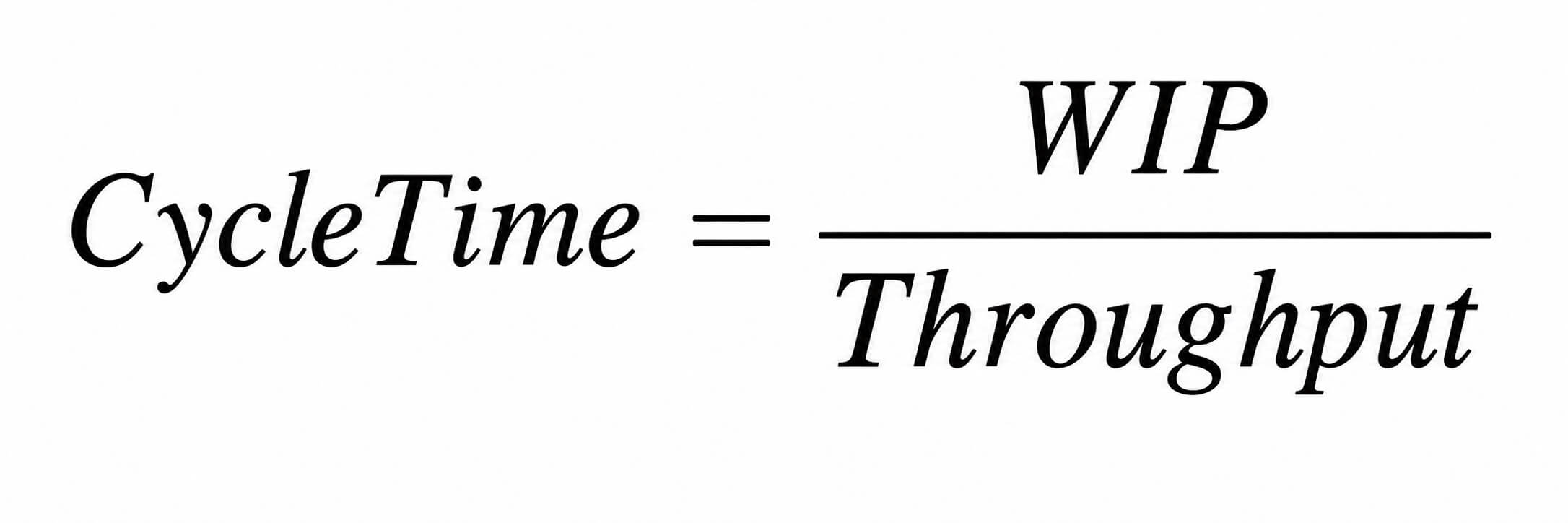
(Zhang & Fischer, 2025; Hopp & Spearman, 2011).
Conventional project management fundamentally misunderstands this physical relationship. Traditional planners and schedulers attempt to maximize the utilization of capacity, operating under the assumption that ensuring every trade worker and engineering resource is 100% busy equates to maximum efficiency. However, Operations Science proves mathematically that as utilization approaches 100% in any system containing variability, cycle times degrade exponentially, approaching infinity (Hopp & Spearman, 2011). Pushing more work into the system (increasing WIP) without simultaneously increasing throughput capacity leads directly to massive physical congestion, crippling delays, and massive cost overruns.
The tangible, catastrophic impact of ignoring Operations Science on administrative project delivery processes was explicitly demonstrated in a landmark joint study conducted by Stanford University’s Center for Integrated Facility Engineering (CIFE) and Mortenson Construction on the $1.3 billion Gaylord Pacific Hotel project (Zhang & Fischer, 2025). The study rigorously analyzed the submittal process—a notorious, persistent bottleneck in commercial construction delivery.
Initially, submittal cycle times on the project were severely delayed, threatening the critical path (Zhang & Fischer, 2025). A conventional project controls analysis would reflexively blame slow reviewers, either the subcontractors generating the documents or the designers reviewing them. However, data analytics revealed a startling truth: subcontractors submitted 69% of all documents on time, and general contractors reviewed 80% of them early or on time (Zhang & Fischer, 2025). The root cause of the delay was not individual human performance, but systemic overload (Zhang & Fischer, 2025).
The general contractor's review queue contained a staggering 440 open submittals out of a total of 913, while operations science modeling indicated the absolute optimal WIP level for that specific system was merely 30 (Zhang & Fischer, 2025). Applying Little's Law, the digital model predicted that carrying 90 open submittals would mathematically yield 50-day cycle times (Zhang & Fischer, 2025).1 Actual recorded cycle times were 35 days, indicating the project team was artificially suppressing the cycle time through massive, unsustainable overtime—a phenomenon known as "heroic effort" (Zhang & Fischer, 2025).
By restructuring the delivery of submittals from a schedule-driven "push" batching system to a "pull-based" release system that strictly capped WIP at approximately 30 submittals, cycle times could theoretically be reduced to 20 days without adding a single unit of additional review capacity (Zhang & Fischer, 2025). This study proves that simply adding capacity (hiring more personnel) does not solve structural bottlenecks; it merely shifts the bottleneck downstream to the architect (Zhang & Fischer, 2025). True production control requires actively and mathematically managing the volume of work allowed to enter the system (Zhang & Fischer, 2025).
Recently, the industry has begun embracing Advanced Project Delivery (APD), a methodology that systematically eliminates barriers to performance by harmonizing Integrated Project Delivery (IPD), Advanced Work Packaging (AWP), Lean Construction, and Project Production Management (PPM) into a single execution framework (PTAG, n.d.). Capital projects utilizing APD consistently outperform traditional peer projects by up to 30% regarding cost adherence, schedule execution, and overall predictability (PTAG, n.d.). To fully leverage this integration, experts advise owners to shift away from treating each project as an isolated, transactional event. Instead, adopting a "portfolio contracting approach" encourages contractors to co-invest across micro-portfolios of projects, driving a continuous learning curve and institutionalizing operational science principles across the supply chain (Fischer, n.d.).
The successful integration of Project Production Management demands a clear, operational distinction between traditional administrative Project Controls and true Project Production Control (PPC) (Shenoy, 2017).
Project Controls are fundamentally financial and schedule-based tracking mechanisms. They rely on historical estimating, critical path scheduling, and Earned Value Management to inform stakeholders of past performance and forecast future final outcomes (Shenoy, 2017; PPI, n.d.). They are inherently lagging, descriptive indicators (PPI, n.d.).
Project Production Control, conversely, is a real-time, forward-looking, prescriptive discipline. PPC physically maps the production system, optimizes spatial routing, and dynamically controls WIP to match the actual flow requirements of the project site (Shenoy, 2017; Fischer et al., 2021). PPC focuses on identifying immediate barriers to progress, highlighting capacity constraints before they manifest as delays, and ensuring absolute reliability in handoffs between trades (Fischer et al., 2021). This approach directly operationalizes Lean Construction concepts—such as the Last Planner System—enhancing them with the quantitative, mathematical rigor of Operations Science to eliminate waste (muda, mura, muri) and generate continuous flow (Sanvido & Konchar, 1998; Hopp & Spearman, 2011; Shenoy & Zabelle, 2016).
The realization that capital projects are governed entirely by the physics of Operations Science radically alters the approach to selecting a project delivery method. The primary objective of the delivery method and its accompanying commercial contract is no longer merely to shift financial risk away from the owner; rather, it is to establish a structural and commercial environment that inherently incentivizes and legally enables the optimization of the production system (Fischer et al., 2021; Shenoy, 2017).
To achieve radically superior project performance-encompassing minimized unproductive capital, absolute schedule predictability, and reduced carbon footprints-owners must seamlessly implement the triad of Project Production Management: Production System Optimization (PSO), Project Production Control (PPC), and Supply Flow Control (SFC) (Shenoy, 2017; PPI, n.d.).
The contracting strategy must pull the facility owner and the general contractor together as a combined, highly integrated force (Shenoy, 2017). As noted by Fischer, Hartung, and Massih, an owner who intends to actively participate in the project's outcome and manage production must utilize commercial strategies that permit early intervention and the continuous, joint design of the production system (CII, 2003; Shenoy, 2017).
Consequently, highly adversarial, zero-sum models like competitive EPC Lump Sum (which rigorously enforce the traditional Design-Bid-Build boundary and score terribly on ease of change incorporation) create insurmountable structural barriers to PPM (CII, 2003; Shenoy, 2017). They lock the contractor into a fixed price based on speculative assumptions made prior to the actual design of the production system, forcing the contractor to hide schedule float, batch materials inefficiently to secure volume discounts, and resist collaborative workflow optimization simply to protect their fragile profit margins (Shenoy & Zabelle, 2016; Fischer et al., 2021).
Conversely, collaborative delivery methods provide the structural flexibility required for PPM (Sanvido & Konchar, 1998):
CII Implementation Resource 165-2 establishes that every project delivery method comprises multiple specific owner-contractor relationships, each requiring a tailored compensation approach (CII, 2003). The selection of these compensation mechanisms must directly reflect the level of information available at the time of award and the desired allocation of operational production control (CII, 2003).
The ultimate realization of a carefully selected, highly collaborative delivery method is the deployment of advanced technology to govern the production system in real time. Project Production Management relies heavily on Computer-Aided Production Engineering (CAPE) (PPI, n.d.). CAPE involves the application of sophisticated digital tools, including 4D visualization, the Internet of Things (IoT), and Artificial Intelligence (AI) / Machine Learning (ML), to define, engineer, and optimize complex production processes (PPI, n.d.).
When a collaborative delivery method (such as Progressive Design-Build or IPD) is utilized, the integrated project team can develop a comprehensive Digital Twin of the project production system (Zhang & Fischer, 2025). This is not merely a static 3D architectural model used for clash detection, but a dynamic, operational twin that simulates cycle times, calculates optimal WIP limits based on Little’s Law, and identifies physical constraints before site execution even begins (Zhang & Fischer, 2025).
Artificial Intelligence, when applied to a rigorously defined collaborative delivery structure, shifts from automating discrete, low-value administrative tasks to enabling true production control. AI can be utilized to detect upcoming submittal or material overloads, predict weather-based or supply-chain variability, and recommend dynamic capacity adjustments automatically (Zhang & Fischer, 2025). The integration of these technologies ensures that the selected delivery method functions not merely as a static legal framework, but as a dynamic operating system for the successful execution of the capital asset (Shenoy & Zabelle, 2016).
The proper selection of a project delivery method is arguably the most consequential strategic decision made during the lifecycle of a capital asset. For decades, the engineering and construction industries have relied on robust, deterministic empirical frameworks—such as the CII System Selector Matrix, the Analytical Hierarchy Process (AHP), and the 20-Factor Decision Support Tool—to successfully align organizational constraints with structural delivery models like Design-Bid-Build, Design-Build, and Construction Management at Risk.
However, as the scale, technological complexity, and financial magnitude of capital infrastructure exponentially increase, traditional selection paradigms predicated solely on commercial risk transference and lagging administrative project controls have proven fundamentally inadequate. Shifting risk deep into the supply chain via transactional, lump-sum contracting strategies does not alter the physical realities of construction; it merely obscures operational inefficiencies, destroys collaboration, and hides bottlenecks until they manifest as catastrophic cost and schedule overruns.
To achieve sustainable, predictable project outcomes, facility owners and industry practitioners must embrace a paradigmatic shift toward Project Production Management (PPM). By recognizing that a capital project is a complex, temporary production system governed by the immutable mathematical laws of Operations Science, decision-makers can fundamentally re-evaluate the purpose of the delivery method.
The selected project delivery method and its accompanying compensation approaches must be explicitly designed to enable Production System Optimization (PSO), Project Production Control (PPC), and Supply Flow Control (SFC). Collaborative structural models such as Progressive Design-Build, parallel primes, heavily integrated construction management structures, and broader portfolio-contracting environments provide the necessary commercial flexibility. They allow integrated, high-performing teams to apply Little’s Law, manage Work-in-Process (WIP), optimize labor and equipment capacity, and mitigate stochastic variability in real-time.
Ultimately, contracting strategy and delivery selection do matter, but not as mechanisms of legal evasion or risk shedding. They matter immensely because they establish the architectural and commercial boundaries within which the project's true physics will operate. By integrating traditional delivery selection frameworks with the scientific rigor of Operations Science and advanced digital technologies, capital project leaders can finally transition from the illusion of administrative tracking to the reality of dynamic production control, delivering the world's most critical infrastructure faster, safer, and at a significantly lower cost.
Al Khalil, M. I. (2002). Selecting the appropriate project delivery method using AHP. International Journal of Project Management, 20(6), 469-474.
Construction Industry Institute. (1999). Project delivery system selection workbook (Implementation Resource 133-2).
Construction Industry Institute. (2003). Owner's tool for project delivery and contract strategy selection (Implementation Resource 165-2, 2nd ed.).
Fischer, G. (n.d.). Why the construction industry needs to transform. Project Production Institute.
Fischer, G., Hartung, J., & Massih, P. (2021). Does contracting strategy matter? The Journal of Project Production Management, 5.
Hopp, W. J., & Spearman, M. L. (2011). Factory physics (3rd ed.). Waveland Press.
PTAG. (n.d.). Advanced Project Delivery (APD). Retrieved from https://ptaginc.com/advanced-project-delivery-apd/
Project Production Institute. (n.d.). Measuring what matters: Operations science as a foundation for modern KPIs in capital projects.
Sanvido, V. E., & Konchar, M. D. (1998). Project delivery systems: CM @ Risk, Design-Build, Design-Bid-Build (CII Research Report 133-11). Construction Industry Institute.
Shenoy, R. (2017). PPI position paper: Defining “production system” from an operations science and project production management perspective. Project Production Institute.
Shenoy, R., & Zabelle, T. (2016). New era of project delivery – Project as production system. Journal of Project Production Management, 1(1), 13-24.
Zhang, B., & Fischer, M. (2025). Application of operations science and production management to improve efficiencies and inform AI application in submittal process. 12th Annual PPI Symposium, Stanford University.