
Binsky & Snyder


A fourth-generation mechanical contractor explains why moving work offsite isn’t an easy button, sharing hard-won lessons on production system optimization, the limits of transparency with owners, and why modularization decisions require rigorous engineering, not assumptions.
As a fourth-generation mechanical contractor, Bob Snyder has learned firsthand that moving work offsite is not the easy button the industry wants it to be. The decision of where to fabricate, what to modularize, and when to ship requires rigorous production system thinking that considers engineering, manufacturing, and installation as one integrated system, not three separate silos.
The path forward requires treating engineering and production engineering as one discipline, starting with strict milestone definitions and pulling back from there, not pushing arbitrary schedules forward and hoping capacity buffers absorb the chaos.
[00:00:00] Gary Fischer, PE: Welcome Bob. We’re gonna have a really interesting conversation with Bob and myself on how to optimize mechanical production systems for complex projects. My Bob is a owner of mechanical construction company called Bensky and Snyder. As a fourth generation owner, Bob has worked and been involved in a mechanical contracting industry since his youth, so he’s literally grown up in the industry.
[00:00:25] Gary Fischer, PE: His experience spans really all aspects of the business. Sales estimating, project controls, management, engineering, drafting, purchasing it, and financial management. He’s done it all and now he’s transforming his company with project production management. So welcome Bob. I’m looking forward to this conversation.
[00:00:45] Gary Fischer, PE: So on data center and power generation projects and such as SMRs and MMRs big civil projects, we’re seeing a lot of design work and investment to move work offsite. I know you’ve recently got some really good experience with this. I’d like you to know what insights can you provide for those contemplating moving work off site?
[00:01:09] Gary Fischer, PE: Is it the easy button that many people perceive it to be?
[00:01:15] Robert Snyder, Jr.: It’s I think the industry thank you by the way. I appreciate the opportunity to speak and listening to Roberto and Todd this morning I, I whipped up a quick example. So there is no easy button when it comes to making that decision.
[00:01:33] Robert Snyder, Jr.: It’s really a production system optimization issue, and studying the production system and creating a production system around either little pieces of your projects or the entire project really, is the only way to decide. And the end of the day, the the production system that we really operate under is the entire system.
[00:01:57] Robert Snyder, Jr.: Many think that it’s just a manufacturing question. Do you just do this offsite? And how do you create a manufacturing production system around that? Others think that it’s the install, we have to control our install. And then what you end up looking at is, and what we’re finding is that the engineering.
[00:02:16] Robert Snyder, Jr.: Of the systems and actually doing real production engineering as early as possible tends to be their largest bottleneck. So we look at our system now, we look at really engineering. Through the installation. Each one of those buckets actually matters. And when you look at optimization, you actually have to look at all those systems working as one.
[00:02:37] Robert Snyder, Jr.: So if I could, I’d like to share a quick example. I need to share my screen at one point here. Okay. Now this is this example. I’m gonna drop way down even, to a lesser level than Todd’s building out back. This is a, I have a real problem. We have to relocate our offices. And we thought we had four months and we have one month.
[00:03:02] Robert Snyder, Jr.: And that one month started about two weeks ago, three weeks ago. Financially it makes complete sense to do that. It’s about 15,000 square feet. We did have an office space to move into, but it was not that out at all. Not enough furniture. We have to do some modifications to walls. But the question becomes is we looked at how do we get people here as fast as possible and operating.
[00:03:28] Robert Snyder, Jr.: We have it equipment, but we have a real furniture issue. Okay, so this is the furniture question. How do we get people furniture, right? So the normal way to do it, we, like Roberto said, you go buy a bunch of furniture. Best case scenario, you go find some new stuff laying around in some other place. The if you wanted to go buy it, it takes eight weeks.
[00:03:51] Robert Snyder, Jr.: All right. If you could find it, best case scenario would be a few weeks, but even then you’re not gonna get what you want. So I’m gonna tell you what we did and if I could just quickly share this. I dunno if you just press the share button. I assume that’s, yeah. You should be able to just, that’s the way to do it.
[00:04:07] Robert Snyder, Jr.: And this will take one minute. There we go. I said what we, okay. Are we good? Yep. So what I said was we’d have a production system issue and a supply chain issue, and let’s actually employ the thinking around. Now we’re not gonna map this and we’re not gonna use inventories and all that, but we’re gonna do some production engineering.
[00:04:26] Robert Snyder, Jr.: We’re gonna figure out what do we do. If we would’ve bought it modular, we would’ve, the cost would’ve about $3,600. The cycle time would’ve been eight weeks, and the customization opportunities of the furniture would be pretty moderate in nature in order to make those dates, I said. Then we started looking at, so what should we do?
[00:04:46] Robert Snyder, Jr.: I said, you know what? Why don’t we look at maybe some onsite, some offsite, let’s look at capacity. Maybe we can utilize some of the capacity from making the tops to this. And what we ended up doing was we bought some bases. We looked online, we found them. We found we accomplished that in a day. They were here in three days.
[00:05:07] Robert Snyder, Jr.: We ended up saying, you know what? It sounds crazy, but we’re gonna go make tops and I’m gonna have a guy make it in his shop and he’s gonna be the same guy who’s gonna put the top on the table so that we can share the capacity across that, and we’re gonna build really custom or semi-custom furniture.
[00:05:24] Robert Snyder, Jr.: And we’re gonna do it in a way using the production system thinking. And this $2,400 for eight in eight days. Really high customization and very low variability because I was gonna only make four pieces per day or five pieces per day. This is really a simple, example, probably kindergarten level, but it’s really the same thing.
[00:05:51] Robert Snyder, Jr.: It is really studying the entire supply chain or the process associated with the production of something, the transformation of something. Okay. And this is what we did. So whether it’s a mere, very complex mechanical project where whether it’s putting pipe in the field, where do you fab on the job?
[00:06:12] Robert Snyder, Jr.: Off the job, modularization the only way to really do this. Is to use production thinking. You gotta start from a milestone with very strict condition satisfaction, and you have to pull it back. And then you’ve gotta apply all these principles. This again, and this I did this morning. Okay. So this is really a live thing that, but that we did, but it’s not it’s exactly the same as we would do with the data center.
[00:06:40] Robert Snyder, Jr.: Yeah. So anyway, thank you for that.
[00:06:45] Gary Fischer, PE: That’s a great simple example. So you use production thinking now to determine what to do on site, what to do offsite and what is, even offsite.
[00:06:57] Robert Snyder, Jr.: Yeah. It’s offsite. It’s, is offsite off. The job is offsite in a building. Next to the job is offsite across the globe.
[00:07:09] Robert Snyder, Jr.: And what is, it a piece of pipe? Is it a assembly of pipe? Is it a skid or a modular piece? It, is a very complex question that unless you do the work to study it, you really just can’t do it. And that’s and unfortunately as a mechanical contractor, on the backside of the production system or normally put in the backside of the production system, we really can’t influence the entire production system. We can only influence our production system. So it becomes a very difficult question. And the constraints that were put under aren’t necessarily faster, better, cheaper. It’s, really, they push us into a spot where you actually have to live in the iron triangle and, we truly believe that doesn’t exist.
[00:07:58] Robert Snyder, Jr.: So it’s a it is a really complex question.
[00:08:02] Gary Fischer, PE: So talk about that a little more. The requirements to get placed gimme an example of that.
[00:08:08] Robert Snyder, Jr.: Usually the conditions the constraints or the milestones were put under, they’re just random milestones that were given based on a schedule that was given to an owner.
[00:08:20] Robert Snyder, Jr.: And those milestones and the sequencing of those milestones weren’t thought out enough. And we are just pushed into a position. You have to have this on the job and this done in this manner, regardless. Of its effect on the, entire production system. So the avail, availability to resequence and actually look at the system itself, it’s become extremely constrained.
[00:08:43] Robert Snyder, Jr.: The adages add more men. Or add more time. And those really are the only two things that the that the owners, or I shouldn’t say that the folks we’re working for are asking for it’s cost, right? It’s money, it’s time and it’s capacity and. In a capacity restricted environment.
[00:09:05] Robert Snyder, Jr.: And when you’re, up against the wall on the schedule, there is no time as a buffer anymore. You have no buffer, and then cost becomes a constraint. You really have no options anymore other than re-looking at the production system and trying to do re-sequencing. They want whip, right?
[00:09:21] Robert Snyder, Jr.: Get more fab on the job. We end up, we want more fab on the project. That adds whip and whip extends cycle time. So it’s really finding that we become incredible victims to the earned value process. Where when, in the earned value world, you get the same credit for putting a bunch of fabrication on a project, whether it works or not, whether it’s a subjective to variability or not as you were doing it, you know the right way.
[00:09:53] Gary Fischer, PE: So what? Talk about the unintended consequences of not getting this right, this decision on what to do, where.
[00:10:03] Robert Snyder, Jr.: I think the biggest piece is just way too much buffering of capacity. So you end up having to have additional capacity, which really ends up being a lot of cost and a lot of waste. It costs a lot more to carry that whip across this, the systems. The other problem is the changes. Our, we do a lot of work in the pharma industry.
[00:10:27] Robert Snyder, Jr.: The changes are incredible. Engineering tends to be lagging, and then what happens is the amount of change becomes substantial. So you put yourself at a tremendous risk on the variability side. Taking, putting pipe in and tearing it out is not something that unfortunately I’m, used to it at this point.
[00:10:48] Robert Snyder, Jr.: That’s pretty, that’s a pretty common thing. Just get it up in the air, put it in there. Don’t worry about it. Let’s get some value out of it from the customer’s perspective, and then we don’t care if you have to tear it out. But they do care because when you’re asked to get paid for it, in the end you don’t all of a sudden the 7,000 reasons why it’s our fault it’s there.
[00:11:08] Robert Snyder, Jr.: But really what it comes down to is just not creating the right. I, we can call it the plan, but really it’s from our perspective really the production system and the design of where you make what, when, and then employing things like supply flow control and really understanding that the work has to be on the job when it has to be on the job.
[00:11:26] Robert Snyder, Jr.: There’s no reason to create artificial buffers unless it makes sense in your production system. And that’s not to say you shouldn’t have two weeks of pipe on the project, right? Or one day. Or one month. But that’s a, that is a real decision that needs to be made based on your system. That’s not just a haphazard easy button type decision.
[00:11:46] Gary Fischer, PE: Yeah. Do you think the owners have any idea what’s really going on in their projects with all this?
[00:11:55] Robert Snyder, Jr.: I, think it’s very difficult to believe that they do, because I don’t know that they have the they actually have the lens, the necessary lens to actually see what’s going on. From the the number of folks that sit between the man, the fellow who’s or the, woman who’s throwing the hammer around or installing the pipe or making the weld and the owner.
[00:12:19] Robert Snyder, Jr.: There’s a lot of folks between that and. I think if you go down to that level and start talking to those folks and find out what the real issues are and you solve those issues, that’s really where it’s I don’t know. I don’t think they really can understand because of the, communication break and then the lack of control and cons and this idea of putting things to control, actually sharing all that stuff.
[00:12:45] Robert Snyder, Jr.: And transparency. And transparency is interesting. We have a project where we’ve made a conscious decision to share everything, which from a contractor perspective is absolutely terrifying. And it’s a fairly large project and I. My philosophy is, you know what? Let’s try something different.
[00:13:03] Robert Snyder, Jr.: Let’s just share it all. Let’s actually build Power BI type dashboards off of some of the softwares reviewing. Let’s show them exactly how many feet of pipe are in the shop. Let’s show the productions. Let’s show the whip, let’s everything and create dashboards and. Okay. Regardless of what you show, it’s still the same story.
[00:13:23] Robert Snyder, Jr.: It’s still it doesn’t it’s, go look at the dashboard. It tells you exactly what we’re doing. Then how come you don’t have 10 more feet on the job? I don’t have 10 more feet on the job because we don’t need 10 more feet on the job. And the last time, 10 more for the job. You tore it.
[00:13:38] Robert Snyder, Jr.: But still to get that whole philosophy through, even up to the owner level is, really, difficult. So I don’t know. I thought that would help and I really did give ’em the hammer to beat me over the head, my team’s over the head I still think that you have to be able to collaborate in that world.
[00:13:58] Robert Snyder, Jr.: Yeah. Yeah.
[00:13:59] Gary Fischer, PE: Wow. That. Yeah, I guess I’m not surprised especially if you’re working for people that don’t really understand your business, don’t understand construction, don’t understand how things are built.
[00:14:11] Robert Snyder, Jr.: Yeah what’s really interesting I’m finding is there’s, they’re starting to get, some of the vernacular has leaked into the administrative world.
[00:14:20] Robert Snyder, Jr.: So we sit in mediums now and they talk about we’re gonna put this in control. Or production control. And I’m like what do you, even mean? Like you’re not, yeah. You don’t even know what it means. And then they go and they do a push plan and last planner, right? That’s my favorite is the pull plan.
[00:14:37] Robert Snyder, Jr.: And I’ve had the opportunity recently to sit on a bunch of pull plan sessions on a project and I raised my hand. I’m like, is this a pull plan or a push plan? Now people have labeled me the push police in these things. ’cause and then of course they tell me, I don’t want, they don’t want me to come to the meetings anymore, but.
[00:14:54] Robert Snyder, Jr.: I don’t know that the fundamentals, I don’t know that PE the folks actually know what a pull plan is and you can have any software in the world. Last planner is not a thing. Every project is last planner. They or touch plan, right? It’s, I’m like, we’re gonna do touch plan. I’m like, what do you think?
[00:15:11] Robert Snyder, Jr.: It’s not really a thing, folks. It’s a tool we use to pull. And I go to a poll plan that is being run, and the first I say is who goes tomorrow? And who goes after that? And who goes after that? And who goes after that? It’s whoa. Wait a minute. It’s a poll plan. First, we need to define the milestone.
[00:15:30] Robert Snyder, Jr.: That could be whatever you want. A milestone is truly just a spot where we have strict rules on condition satisfaction that everybody in the room have to understand. Does that piece of conduit have to be there? Does it not? Does it get tested? Is the wire in it? And when you define that, you create that milestone, and that is not an easy task.
[00:15:50] Robert Snyder, Jr.: It’s not a P six line item, activity 1, 4 7, right? It is a strict rule. And then you pull back from that and then you say, what’s the last thing that we have to do in order to get that done? And it’s completely foreign. Yeah, it’s, there’s so much education and learning that has to happen and it’s, yeah.
[00:16:09] Robert Snyder, Jr.: And I’m not sure from a subcontract position, we really can make that, difference and actually apply enough pressure to do the things that need to be done.
[00:16:21] Gary Fischer, PE: Yeah. Open up the audience. I’m asking all the questions. If you have any questions for Bob now’s your chance. This is the guy that does the real work. He’s on the front lines. He’s making things really happen. He’s making. Decisions on what to do on site, what to do near site, what to do offsite, what to buy, what to make, all those kinds of things.
[00:16:40] Gary Fischer, PE: What I’m hearing, Bob, is you’ve evolved to the point where you wanna start with the production plan. Here’s how we’re gonna produce this project, and then use that to guide. What to do, where, what to buy, what to make, all those kinds, just like you did with your little example you showed us this morning.
[00:16:59] Robert Snyder, Jr.: Yeah, and I think what’s exciting about the data center world and some of those other worlds, they’re so repeatable that you really can start very early and reply things like true production, system optimization discrete simulations, all of those things to those projects. And if you can get to that point.
[00:17:21] Robert Snyder, Jr.: The advantages are really unbelievable.
[00:17:27] Gary Fischer, PE: Yep. I, agree. Huge, potential there. When the work is somewhat repetitive and the first run studies you can do, design, standardization all those kinds of things really enable that. The ability and the practicality of taking things offite and improve performance ultimately.
[00:17:49] Gary Fischer, PE: I gotta, let’s see, I’m watching the questions here. What software technology are you using to supply the dashboard data?
[00:17:59] Robert Snyder, Jr.: We use Power BI mostly for everything. And we probably have seven data sources. We are pulling from AutoCAD and Revit and those things ’cause we have to, we’re pulling from our accounting systems.
[00:18:09] Robert Snyder, Jr.: We have some in-house data that we pull from. And then there’s some of the field data and some of the of that as well. Navis works for Vista. Yeah, I think it’s there’s a whole bunch of data sources we put together and we’re sharing that out. We’ve tied in some other stuff as well which is, interesting.
[00:18:31] Robert Snyder, Jr.: Yeah, but I always say this is not a software issue at all. Yeah. This is a, product project production management issue, and an operation science issue. Everyone always tries to turn into software. Not that’s what the question’s about, but it feels like everyone’s.
[00:18:49] Robert Snyder, Jr.: The questions I get when I show my screen and some of the softwares we’re using is, oh, who made the software? What’s the software? What’s the, I’m like, this isn’t a software issue. This isn’t a software question. This is an operation science question and a production management question.
[00:19:04] Gary Fischer, PE: Yep.
[00:19:04] Gary Fischer, PE: That’s a totally different framework to think about these things. That and, it works. Huh? You’re, a living demonstration of that. Yeah
[00:19:14] Robert Snyder, Jr.: we, built a rack for one of the projects. It was this new Hilti rack system. The rack costs, just the materials cost a hundred thousand. It cost a hundred thousand to build it.
[00:19:22] Robert Snyder, Jr.: It took us eight weeks to put it together. It was about 150 feet long, maybe eight foot by eight foot had maybe three or four tractor trailers of 50 foot pieces. Cost about a quarter million dollars, and there was six pipes on it. What, six pipes, pieces of pipe on it. Six pieces. Six pieces of pipe.
[00:19:42] Robert Snyder, Jr.: The pipe. Why didn’t you do that? The pipe. Because we were told that was the best way to build the job. And we wanna show the owner that we are doing modular fabrication and I’m like, we just spent like $300,000. ’cause you get big cranes. Have to pick that stuff. When we, it took us to install the pipe in the rack.
[00:20:03] Robert Snyder, Jr.: Yeah. Like one week and 30 grand. Yeah. Yeah. And then you had multi tradees. They’re bringing in and everybody’s, all the trades are looking at each other. Why are we doing this? Yeah. This makes no sense. And then of course you find out that the, after that they have trouble holding the rack in the building.
[00:20:22] Robert Snyder, Jr.: ’cause the building steel isn’t strong enough. I mean it’s, just this lack of. I really think it’s engineering and I think this engineering and production, engineering, I really think they just have to come together. It’s really one thing. It’s just engineering.
[00:20:41] Gary Fischer, PE: Yep. I’m with you completely.
[00:20:43] Gary Fischer, PE: That was very insightful. Thank you for freely sharing of your. Stripes on your back there and, the lessons you’ve learned along the way, it’s very, beneficial to our audience. So thank you, and we’re gonna move into our, next topic here.
[00:20:57] Robert Snyder, Jr.: Yep.
[00:20:57] Gary Fischer, PE: Thanks Karen. Thanks
[00:20:58] Robert Snyder, Jr.: everybody. I really appreciate it.

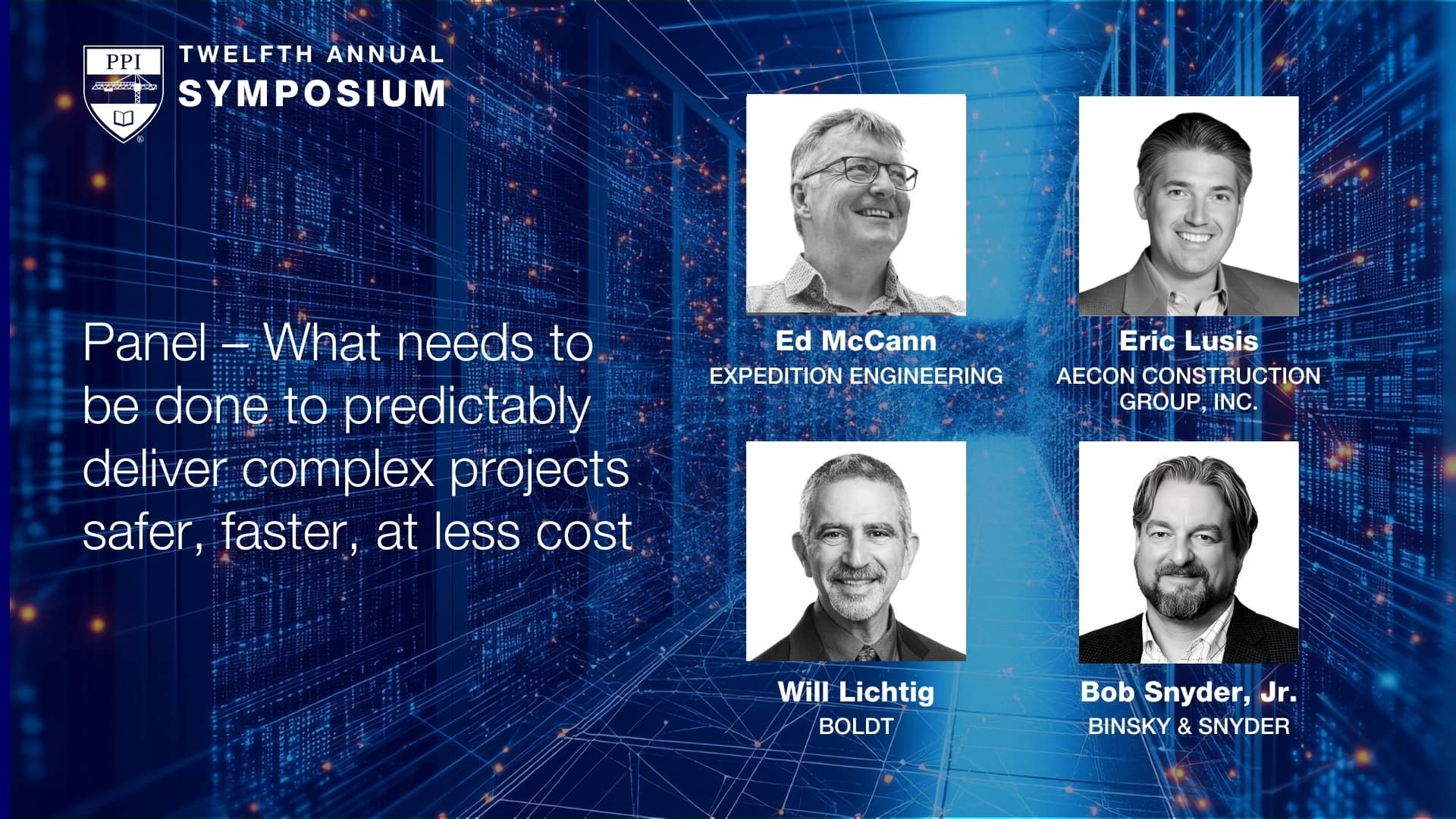
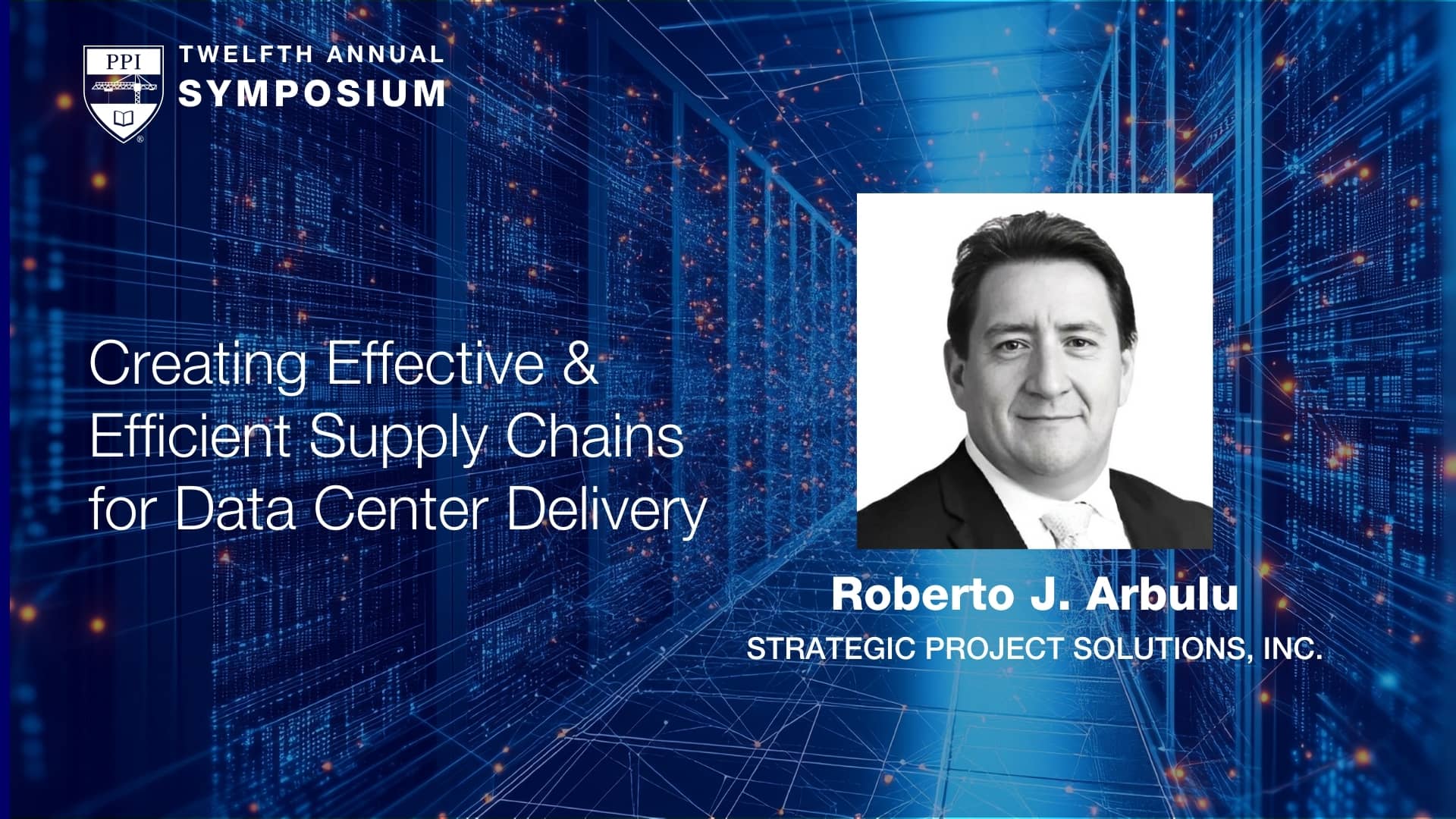
PPI works to increase the value Engineering and Construction provides to the economy and society. PPI researches and disseminates knowledge related to the application of Project Production Management (PPM) and technology for the optimization of complex and critical energy, industrial and civil infrastructure projects.
The Project Production Institute (PPI) exists to enhance the value Engineering and Construction provides to the economy and society. We are working to:
1) Make PPM the dominant paradigm for the delivery of capital projects,
2) Have project professionals use PPM principles, methods and tools in their everyday work,
3) Create a thriving market for PPM services and tools,
4) Fund and advance global PPM research, development and education (higher and trade), and
5) Ensure PPM is acknowledged, required and specified as a standard by government and regulatory agencies.
To that end, the Institute partners with leading universities to conduct research and educate students and professionals, produces an annual Journal to disseminate knowledge, and hosts events and webinars around the world to discuss pertinent and timely topics related to PPM. In order to advance PPM through access and insight, the Institute’s Industry Council consists of experts and leaders from companies such as Chevron, Google, Microsoft and Merck.
Join us in eliminating chronic poor project delivery performance. Become a member today.