Project Production Institute


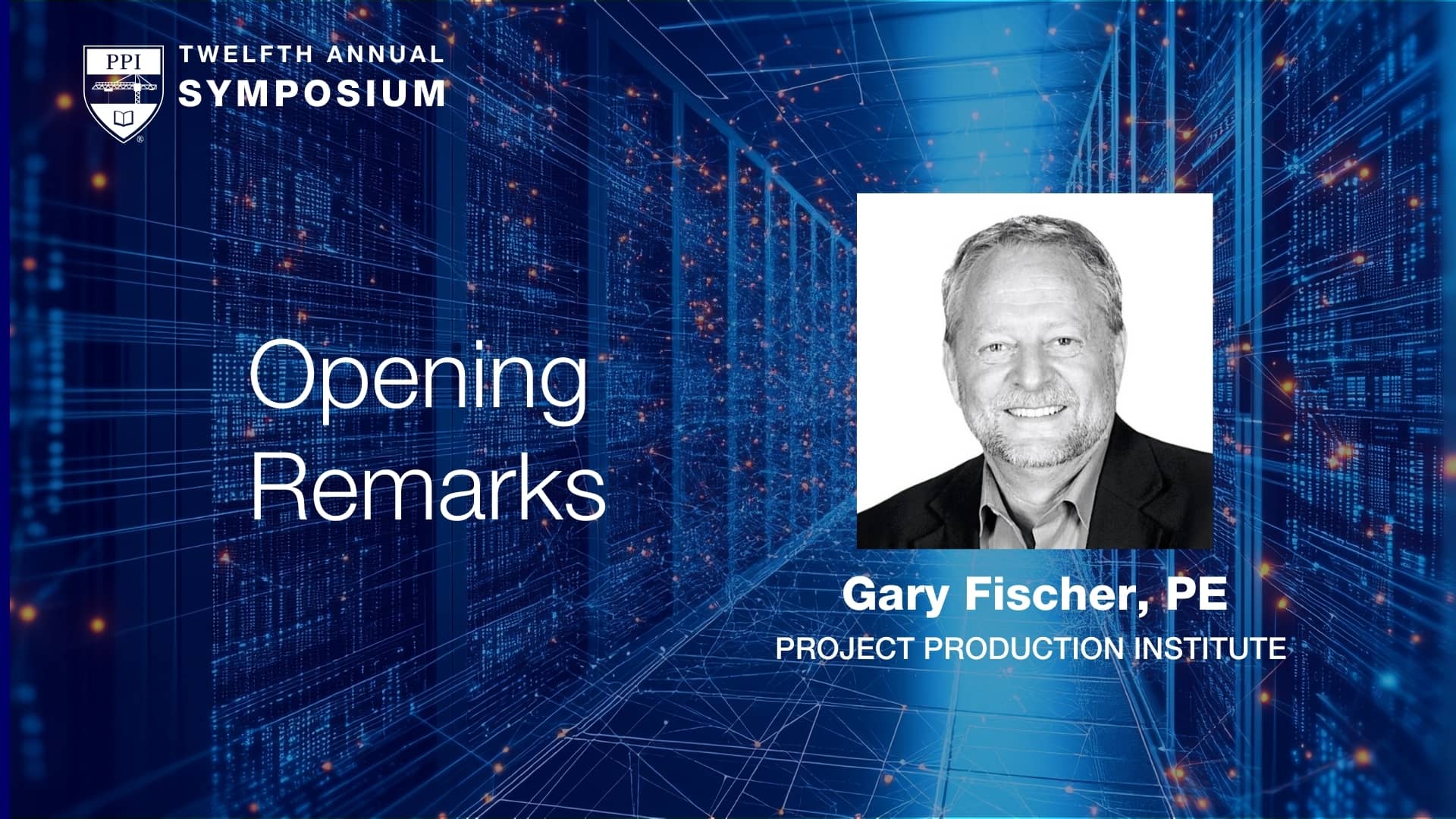
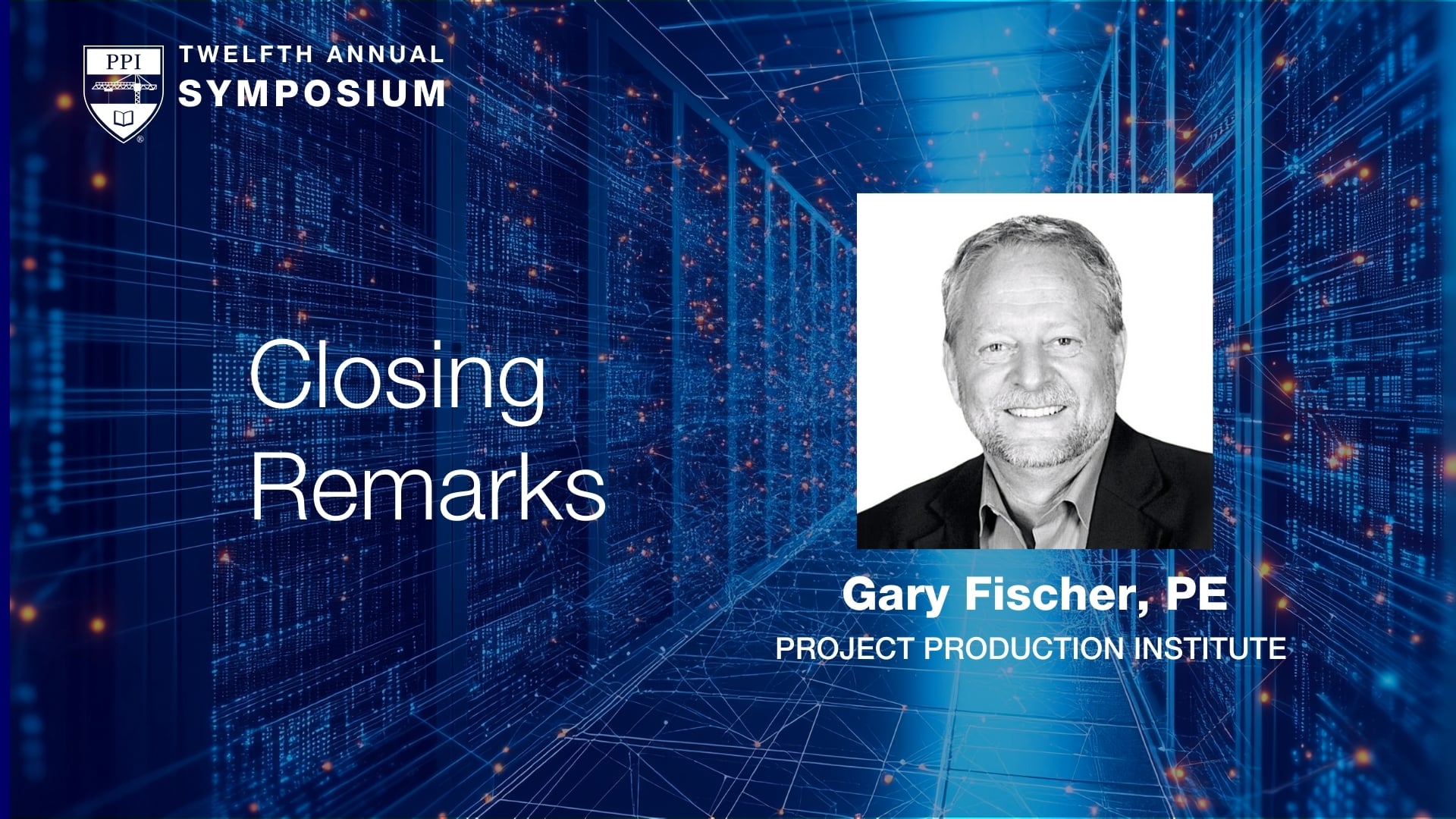
Gary Fischer opens the 12th Annual PPI Symposium by framing unprecedented infrastructure investment demands and introducing PPI’s educational programs at Texas A&M and Stanford designed to prepare industry leaders for the coming transformation in construction.
Gary Fischer opens the 12th Annual PPI Symposium by framing the day’s context: unprecedented investment in digital infrastructure, power generation, and heavy civil projects is creating demand that the industry must meet. The symposium brings together practitioners who are on the ground delivering these projects, alongside the latest research keeping operations science and Project Production Management at the leading edge.
Traditional ways of doing project administration are not good enough for the future. The question for every organization is whether they’ll be ready when these changes arrive.
[00:00:00] Gary Fischer, PE: Hello everyone. I’m Gary Fisher with the Project Production Institute and great to see so many of you tuned in from all over the globe. We have a very special day in store for you and I’m confident it’s gonna be a great investment of your time. As you’re gonna hear shortly from our keynote, the world is rapidly changing and creating a huge demand for digital infrastructure, power generation, heavy civil.
[00:00:23] Gary Fischer, PE: The numbers on investment to meet these demands are just, uh, unprecedented and truly mind boggling. In response, we’ve hand selected a lineup of speakers that are involved in these types of projects. While they may not be at liberty to talk about their specific project, they certainly will be able to share their experiences in them.
[00:00:42] Gary Fischer, PE: We’ll also be updating you on the latest research that keeps Operation Science and Project Production Management on the leading edge. If you’ve attended a prior symposium, our desire for the day is that you deepen your understanding of project production management and learn some things you can take back and use on your projects.
[00:01:01] Gary Fischer, PE: And even though virtual, you may wanna follow up with a speaker. Or here at the PPI to go deeper on a topic. If this is your first symposium, our desire for the day is that you’ll be motivated to go deeper. Of course, our website is chock full of excellent materials, such as webinars, past symposiums and papers.
[00:01:22] Gary Fischer, PE: And of course, if you haven’t read Built To Fail like Todd Zabell, that’s a must read. If you do only one thing, pick up that book and read it. We’d also strongly encourage you to attend one of our educational venues. Pull up the slide for that. First, we offer the Next Generation Project Management course in collaboration with Texas A&M.
[00:01:49] Gary Fischer, PE: Here you’ll get the basics of Operation Science and Project Production Management methods. It starts with an intro course and provides an opportunity to go deeper into the elements of engineering and construction. And of course, a capstone project to research certification. It’s your call on how far to go in this program.
[00:02:07] Gary Fischer, PE: You can see the calendar here for this next year. We’re offering the intro course really focused on data center delivery in February. Then in the spring we have the specialty course going deeper into engineering construction. In the fall, we offer all three, uh, linked together. And again, it’s your choice on how far to go and how deep.
[00:02:27] Gary Fischer, PE: Next we have the modern construction program offered in collaboration with Stanford. This is something pretty special. Check this out. Everything is changing. AI, machine learning, robotics and automation are transforming construction. These technologies will result in new business models, changes to individual roles, and the arrival of new entrants.
[00:02:54] Gary Fischer, PE: Are you ready? That is why two leading educational organizations created a one-of-a-kind learning opportunity to attend the modern construction program. What is the modern construction program and why should someone attend today? We stand at the edge of what I consider the next industrial revolution.
[00:03:16] Gary Fischer, PE: And if I were an owner, if I were making investments, if I were a big construction company or an engineering company, I’d wanna anticipate what’s gonna happen. How’s the industry gonna change? And I’d be thinking about what strategies do I need to put in place? How do I position myself so that I’m still relevant in that new world?
[00:03:43] Gary Fischer, PE: Modern construction program is really a fresh look at how we should plan, manage, execute our physical asset projects. Because we’ve seen lots of innovation in the last few years, and we have to bring all of these innovations together into a comprehensive method that makes sense.
[00:04:08] Gary Fischer, PE: So traditional ways of doing project administration is not good enough for the future. If you wanna think about how that’s going to change your company and how do you remain competitive while the owners are starting to change how they interact with you, I think this might be an interesting program for you.
[00:04:24] Gary Fischer, PE: This unique program features the teaching and research of Stanford faculty who are internationally recognized leaders in this field. I think what a lot of people don’t understand about Stanford is pretty much any innovation related to construction or construction management has come from Stanford.
[00:04:43] Gary Fischer, PE: This is year two of the program. How have you pivoted based on new knowledge in your industry to crank up what participants will be learning?
[00:05:06] Gary Fischer, PE: I think we’re now going to have to incorporate more planning as to what they will go do. The modern construction program starts in the summer of 2026. Space is limited. Learn more at projectproduction.org.
[00:05:29] Gary Fischer, PE: It starts with one intensive week on the Stanford campus to help participants appreciate the coming changes, ground them in production science, and frame up the project that will be completed over the course of the following eight months.
[00:05:45] Gary Fischer, PE: As Todd just mentioned, we offer this once a year, starting in July. Enrollment is open for both the A&M and the modern construction programs.
[00:06:06] Gary Fischer, PE: So with that, let’s get the day rolling. We have a full day on the agenda, which you can find on our website. Everything is back to back, so take your breaks as needed. We’re recording all the sessions, so those recordings will also be available post-production. We want this to be as interactive as we can, so please drop your questions in the chat for us to address.

PPI works to increase the value Engineering and Construction provides to the economy and society. PPI researches and disseminates knowledge related to the application of Project Production Management (PPM) and technology for the optimization of complex and critical energy, industrial and civil infrastructure projects.
The Project Production Institute (PPI) exists to enhance the value Engineering and Construction provides to the economy and society. We are working to:
1) Make PPM the dominant paradigm for the delivery of capital projects,
2) Have project professionals use PPM principles, methods and tools in their everyday work,
3) Create a thriving market for PPM services and tools,
4) Fund and advance global PPM research, development and education (higher and trade), and
5) Ensure PPM is acknowledged, required and specified as a standard by government and regulatory agencies.
To that end, the Institute partners with leading universities to conduct research and educate students and professionals, produces an annual Journal to disseminate knowledge, and hosts events and webinars around the world to discuss pertinent and timely topics related to PPM. In order to advance PPM through access and insight, the Institute’s Industry Council consists of experts and leaders from companies such as Chevron, Google, Microsoft and Merck.
Join us in eliminating chronic poor project delivery performance. Become a member today.