Major capital projects (MCPs) are increasingly constrained by schedule pressure, supply-chain volatility, weather exposure, energy-performance requirements and the need to commit design earlier than traditional delivery models comfortably allow [1][2][3]. This paper proposes that artificial intelligence (AI) as an enabling tool in the Concurrent Digital Engineering framework [24] advanced by the Project Production Institute (PPI), when coupled with Project Production Management (PPM), can materially improve design-phase decision making by structuring alternatives, surfacing production constraints, comparing contracting models and continuously integrating product, process and resource considerations. This paper synthesizes the application of AI and PPM framework in a multi-step evaluation of an example data center exterior wall system. Then it shows how AI can support contracting strategy selection as it enables or constrains the design, optimization, monitoring and control of the project production system [22]; and demonstrates how standard work can be designed as part of an integrated production system rather than as a downstream field exercise. The article findings indicate the main value of AI is not replacing engineering judgment, but coupled with PPM, the two enable earlier and better integration of requirements, design options, production engineering, variability management and commercial strategy into a coherent production-based decision framework [2][3][5][6].
Keywords: Project Production Management; Concurrent Digital Engineering; Artificial Intelligence (AI); Data Centers; Advanced Technology Facilities; Exterior Wall Systems; Precast Concrete; Production System Design; Contracting Strategy; Design-build; Variability; Cycle Time; Capital Projects.

Stephanie has over fifteen years of experience in the delivery and optimization of major capital projects for global Fortune 50 customers. Collaborating with defense organizations, owner operators and service providers in defense, oil & gas, marine, health IT and technology industries across the US, Canada, Europe and Asia, Stephanie’s focus is o ...
For MCPs, including advanced technology facilities, optimizing decision-making from a production perspective is vital because design choices determine not only technical performance, but also throughput, variability, sequencing, fabrication strategy and the risk of schedule and cost overruns once construction begins [1][5][3]. PPM frames projects as a production system and Operation Science (OS) indicates how the production system will behave, which means early design decisions should be evaluated for their effects on flow, throughput, capacity, buffers, work-in-process (WIP) and bottlenecks [1][6]. In conventional project management, the project is a schedule of activities, defining what needs to be done, in what sequence and when. In contrast, the production system view sets forth [2]:
Simply put, the schedule dictates what the production system needs to do and PPM (the application of OS to projects) tells whether and how it can do it [2].
The production view is especially important in data centers because they are large-CapEx (and mega-CapEx such as the proposed $300B, 40,000-acre, 7.5 – 9-gigawatt Utah Stratos project), fast-growing assets whose economics depend on speed to energization, phased occupancy, and reliable execution under supply-chain and labor constraints [7][8][9]. McKinsey estimates that by 2030 data centers will require about $6.7 trillion in worldwide capital outlays, including about $5.2 trillion for AI-ready facilities, underscoring the scale of capital at risk when design decisions fail to align with production realities [7].
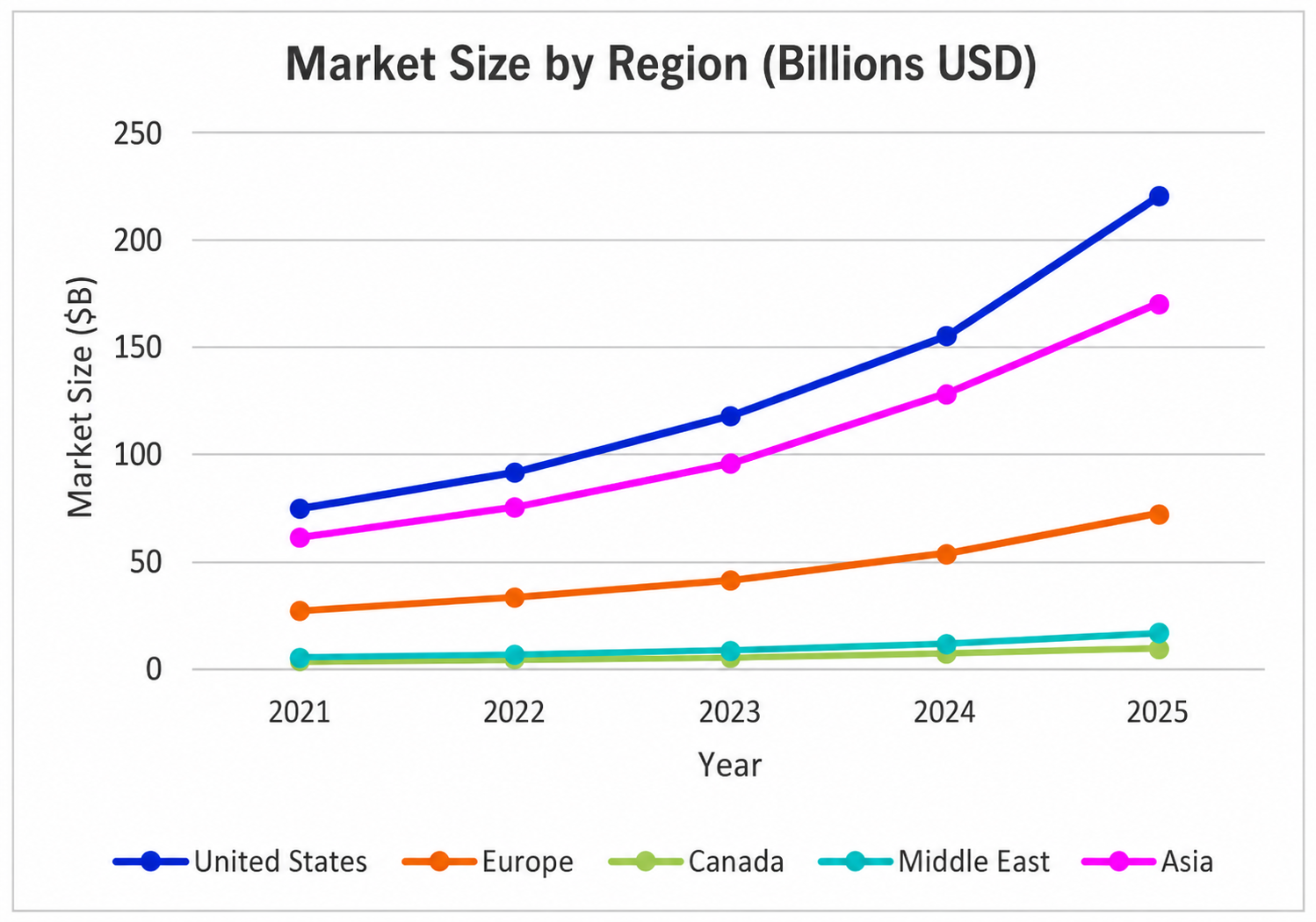
The below figure shows the directional estimates for total annual data center CapEx activity by region [7] [8] [12]. These directional figures align with the broad market evidence that annual spend has accelerated sharply since 2023, especially with AI-driven demand, and that the United States remains the primary investment market while Asia is the fastest-growing aggregate region by volume [11] [7] [8].
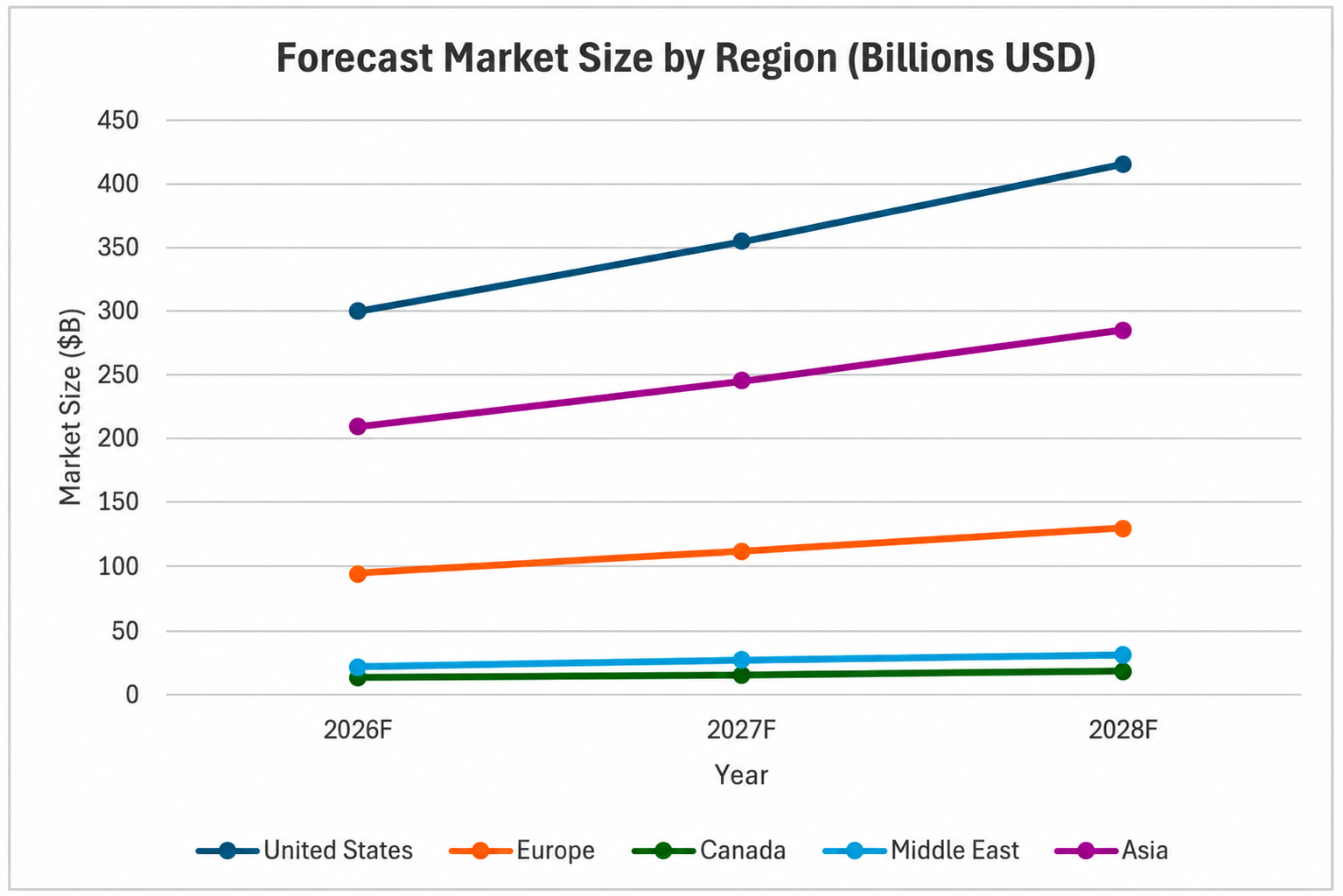
The forecast shown in the below figure indicates continued growth in every region over the next three years, with the strongest absolute gains in the United States and Asia and a notable acceleration in Europe and the Middle East as power, connectivity and sovereign compute initiatives mature [11] [7] [12].
Against that backdrop of expansive growth, this article walks through how AI coupled with PPM can evaluate and improve design decisions to optimize construction operations, using an example data center exterior wall system. Beyond the example, the approach laid out herein serves as a model for applying AI and PPM to other data center scopes; extending the benefit for an overall holistic acceleration.
The methodology used a structured, AI-assisted sequence in which the design problem was progressively reframed from product selection to production-system design [1] [2] [5] as shown in the figure below.
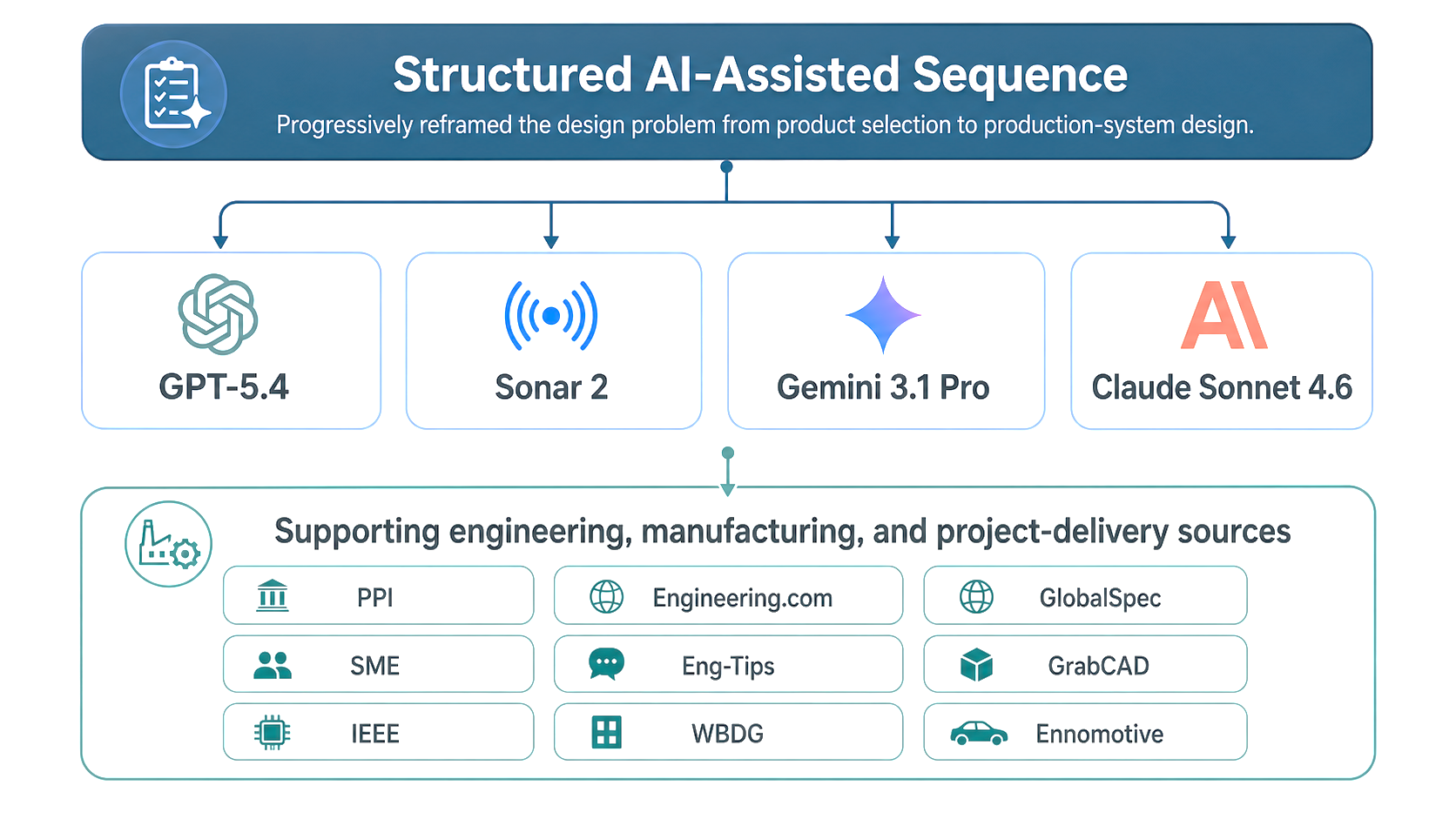
Four Large Language Models (LLMs) were used as source engines for article development and cross-checking perspectives: GPT-5.4, Sonar 2, Gemini 3.1 Pro and Claude Sonnet 4.6. The supporting source set also included PPI [13], Engineering.com [14], GlobalSpec [15], Society of Manufacturing Engineers (SME) [16], Eng-Tips [17], GrabCAD [18], IEEE [19], Whole Building Design Guide (WBDG) [20], and Ennomotive [21] to ground the discussion in engineering, manufacturing, and project-delivery practice.
The figure below summarizes the prompts used in each step of the AI-assisted analysis.
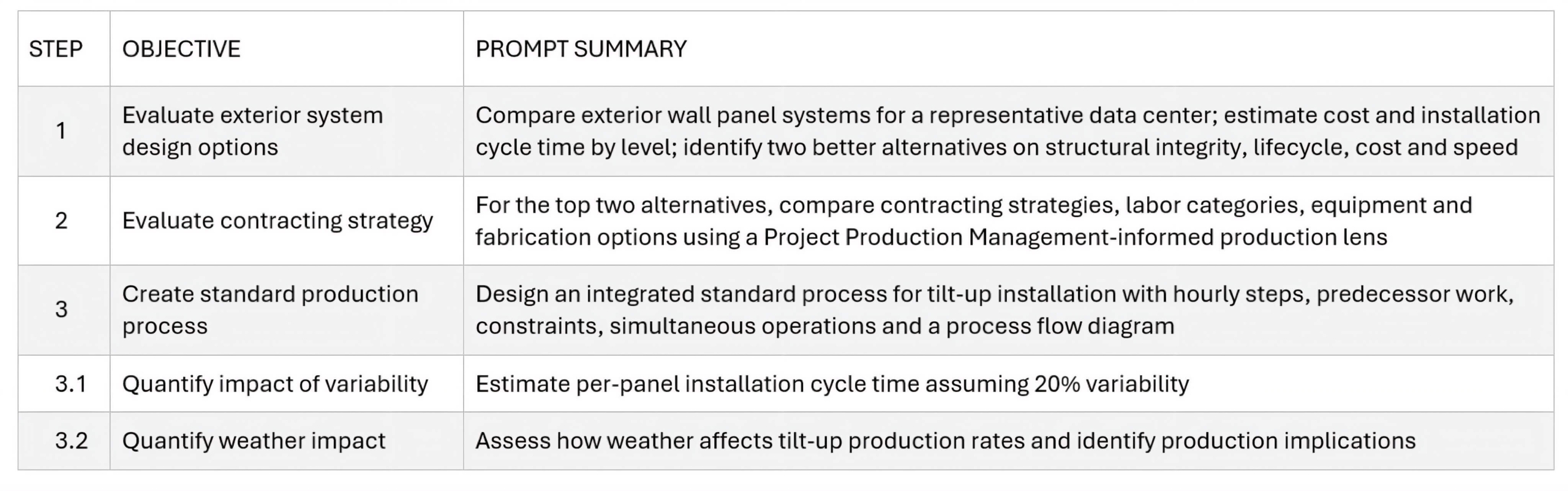
Following is a description of each sequential step, prompts and selected AI-generated outputs for reference.
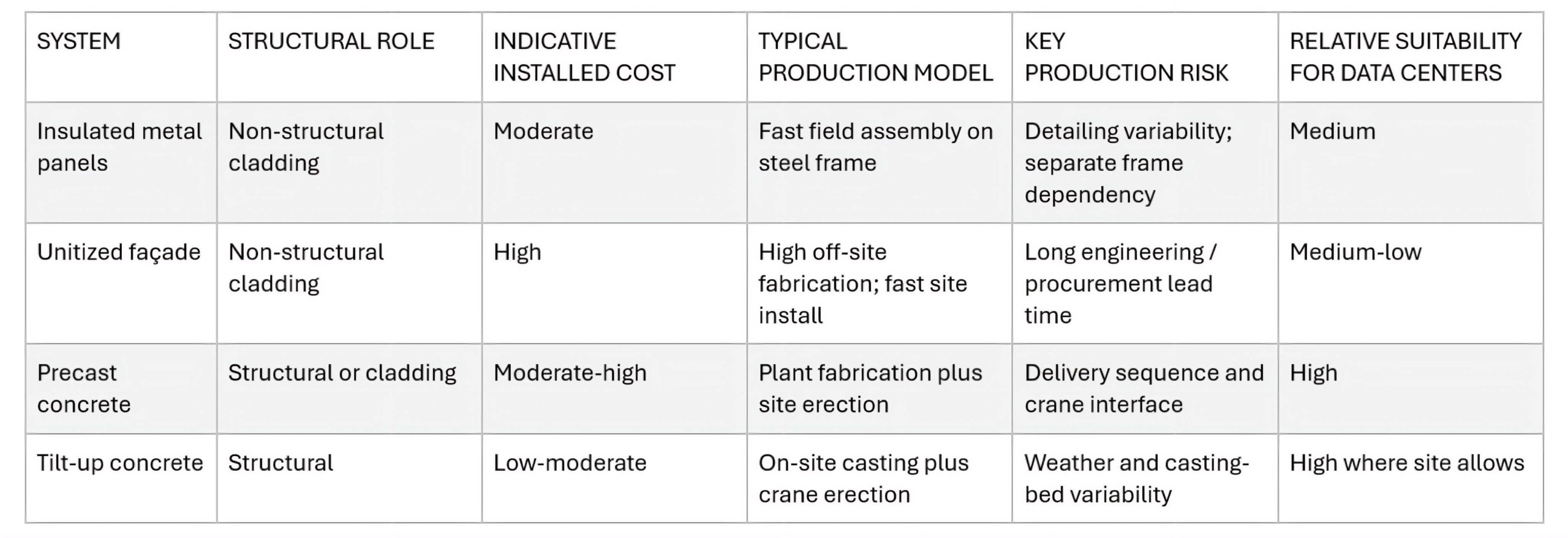
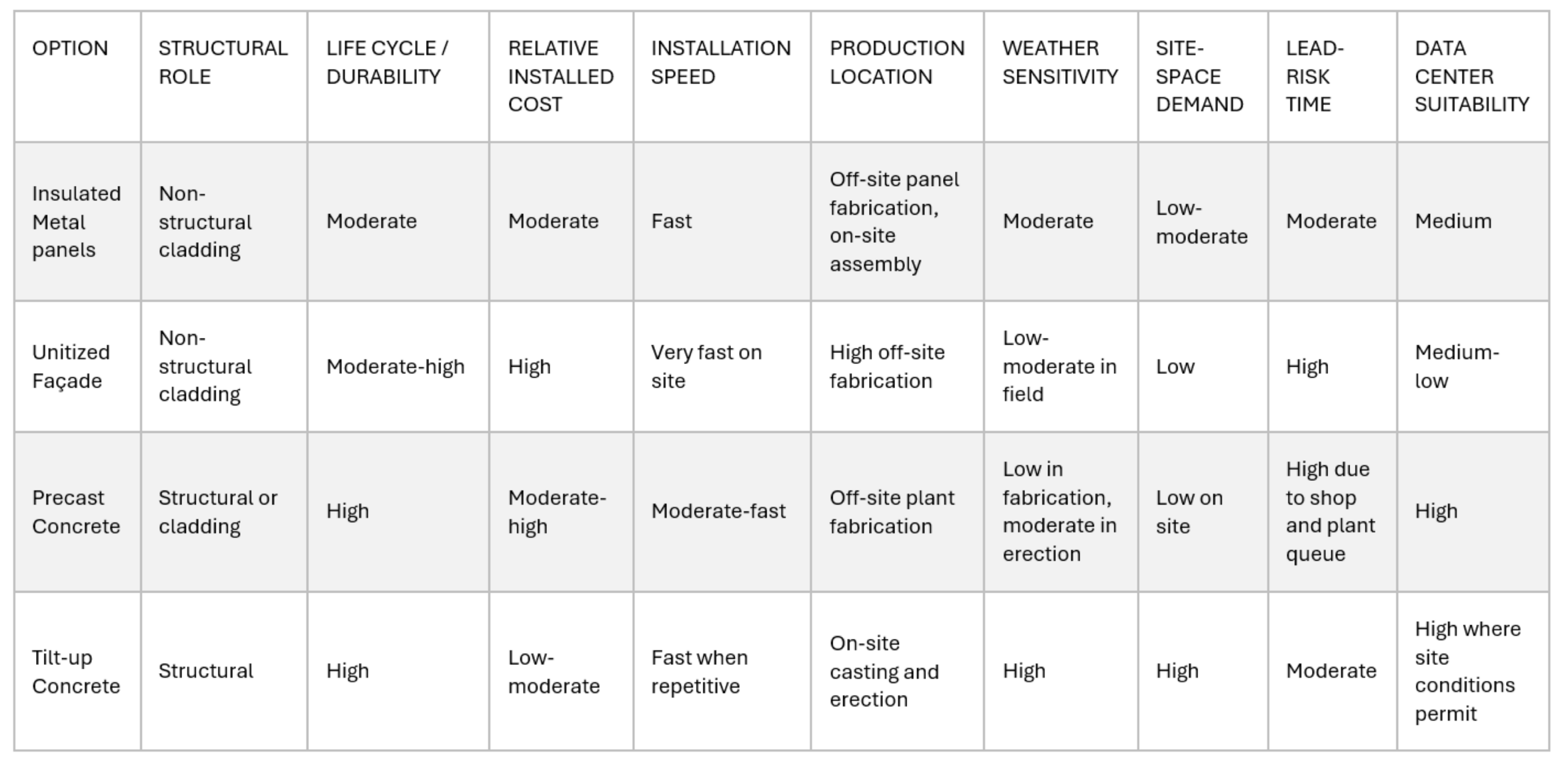
The first step established the basis for candidate data center exterior wall systems using a prompt that asked for a design-engineer-style comparison of different exterior wall panel systems based on a photograph of a representative building, including estimated material, labor, and equipment costs, total installation cycle time by level and production rates. The same step also required identification of two alternatives with better structural integrity, longer lifecycle, lower cost and faster installation than the other exterior wall panel systems. The resulting analysis compared insulated metal panels, precast concrete panels, tilt-up conrete and unitized facade systems, and then elevated tilt-up concrete walls and pre-cast concrete as the strongest alternatives from a structural and production standpoint. The figure below shows the AI-generated analysis output in a summary table.
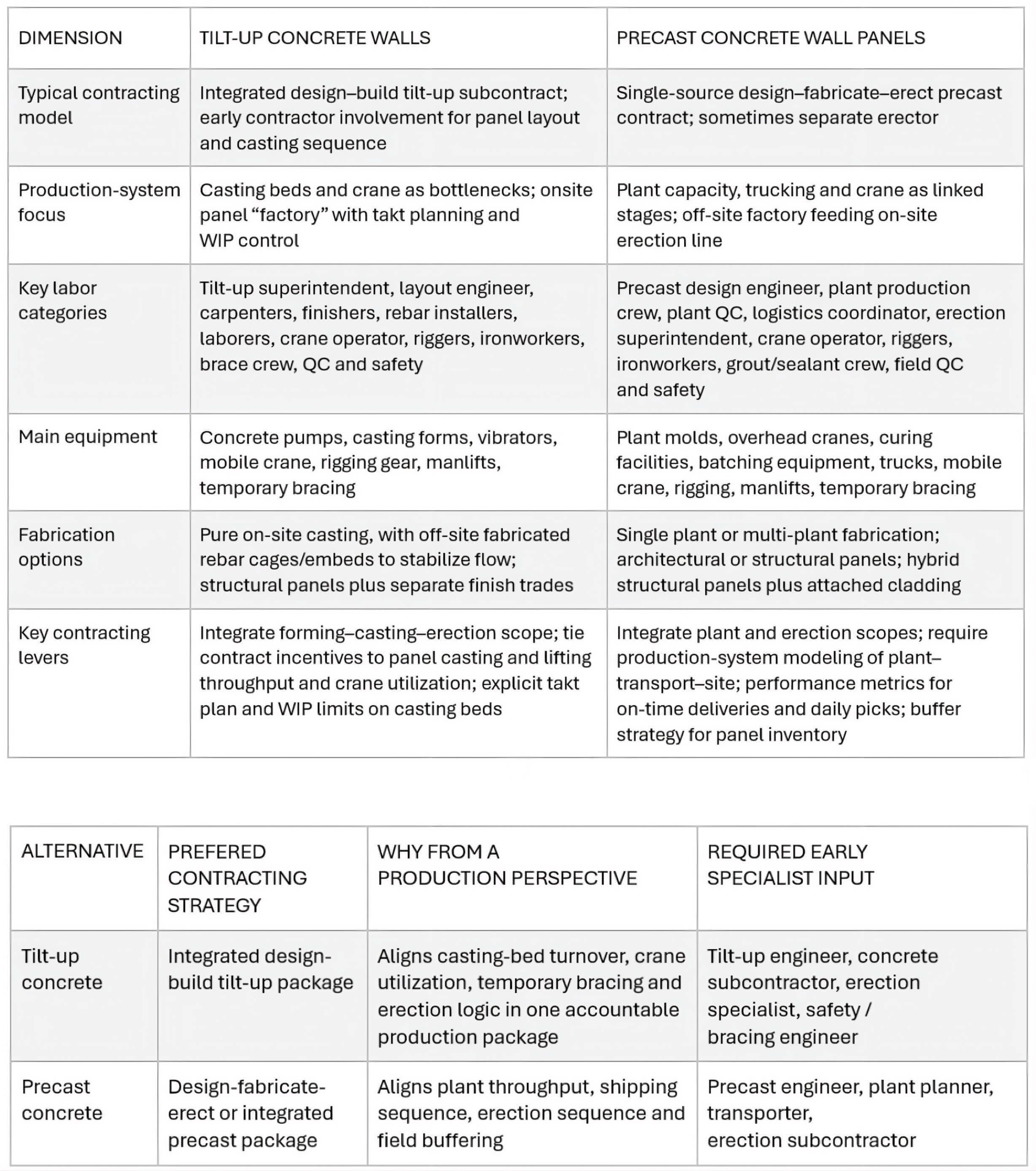
The second step used the leading alternatives (precast concrete and tilt-up concrete) from Step 1 and asked from a project-manager persona applying PPM thinking for the exterior-wall work scope to analyze contracting strategies for installation, including labor categories, equipment and fabrication options. This step compared integrated design-build, design-bid-build and more collaborative delivery strategies for tilt-up and precast systems, then interpreted each system as a production network with specific bottlenecks, interfaces and sources of variability. Two owner postures were distinguished: Owners primarily seeking predictability through transactional agreements, and owners seeking predictability plus lower cost, shorter duration, and lower use of unproductive capital through more relational forms of agreement [22]. That distinction is useful in AI-assisted design evaluation because it forces the analysis to ask not only which facade system is technically superior, but which system and delivery strategy pair best fit the owner’s desired production outcome. The output emphasized that tilt-up behaves like a short-duration on-site factory centered on casting beds and crane time, while precast behaves like an off-site manufacturing system feeding field erection through logistics and sequence control. The figure below summarizes the AI-generated output in table formats.
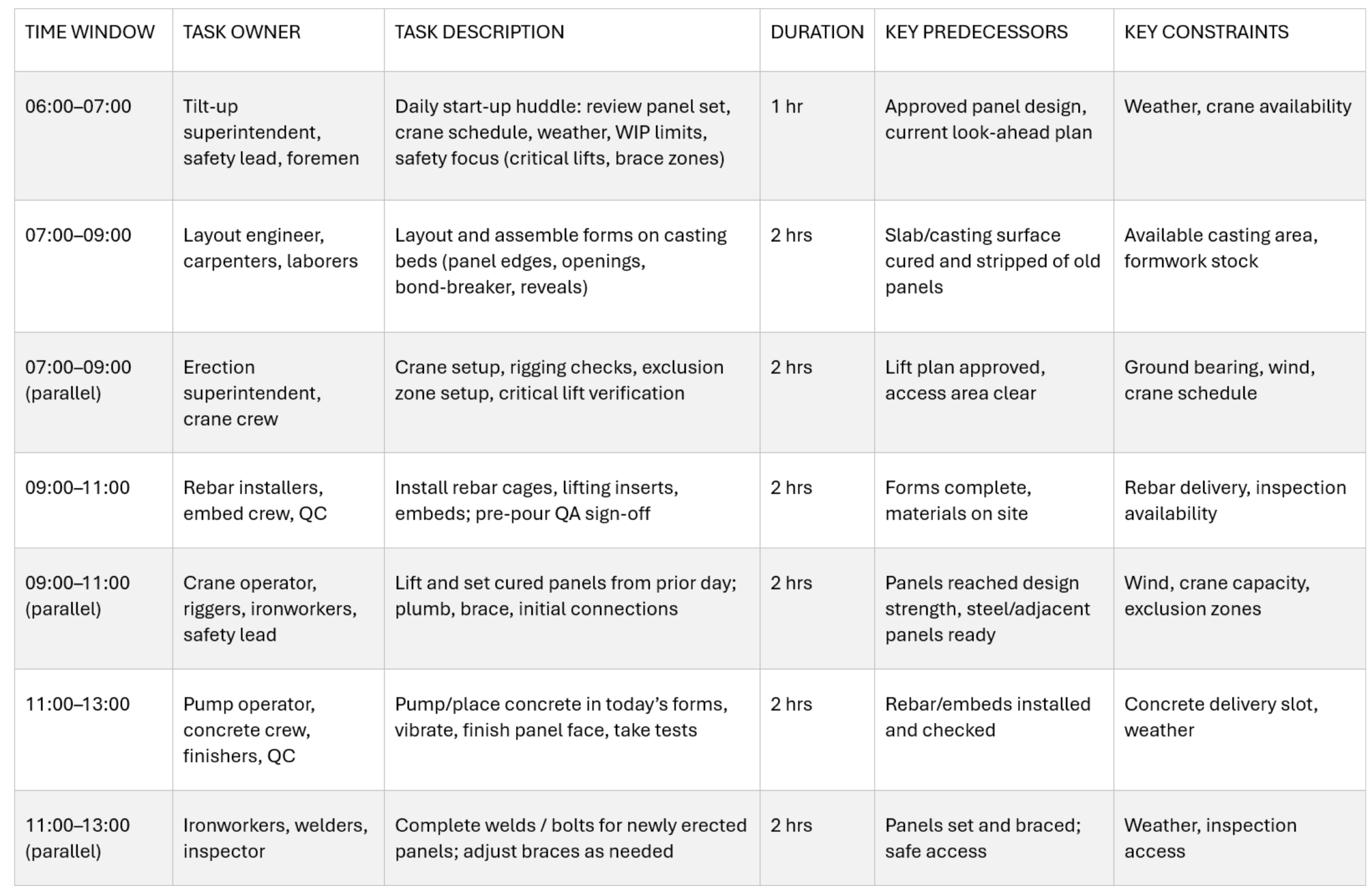
The third step asked for an integrated standard process for installing a tilt-up concrete wall system, formatted by task owner, task description, and task duration in hourly increments, with predecessor work and constraints explicitly identified. The AI-generated process organized the work as a daily production cycle: startup and make-ready, formwork and layout, rebar and embeds, concrete placement and finishing, curing, lifting and bracing, final connections, sealing, patching and next-day readiness checks.
Conventional project management practices tend to reward starting work rather than completing work, encourage excess work-in-process and optimize local activities at the expense of the whole production system. By contrast, a PPM-centric standard process intentionally defines sequence, rate, capacity constraints and completion logic so a wall system could be planned and controlled as a flow system. The standard process(es), integrated along with a defined scope’s activities and constraints, makes up the detailed production schedule for that specific scope. It can then be integrated with other scopes’ production schedules to create the robust network flow of work of how the project will be delivered. This in turn forms the foundation for Project Production Control (PPC) to occur (the policies, protocols and mechanisms to control production along with the accompanying use of resources and variability levels) [30], one of the PPM components, and the use of a Production Control Solution enabling tool.
The target of this step was to translate a conceptual material decision into a detailed integrated cross-functional operational production-centric design. The figure below shows the output in a tabular format for a one-day production cycle. Two areas stood out where AI results were suboptimal from a production perspective. First, the inclusion of a ‘time window,’ did not reflect true production in terms of capacity availability, work occurring in parallel and the release of work in batches to downstream successor(s) among others. Second, the AI output was linear and the LLM struggled to produce an integrated cross-functional process flow network diagram format through multiple follow-up prompting – that output is shown in the Findings section. However, there is value in the output as a starting point for the cross-functional production team to develop a robust production-based standard process, which can then be integrated into the team’s production schedule and controlled through PPC along with the use of a Production Control Solution enabling tool.
A follow-up prompt asked for the total installation cycle time per panel assuming 20% variability. The resulting analysis estimated a planned effective installation time of about 3 hours per panel through initial bracing and 4 hours per panel including early finishing activities, which translated to roughly 3.6 to 4.8 hours per panel when a 20% variability allowance was applied. This directly reflected PPM’s emphasis on understanding cycle time as the sum of effective processing plus waiting and planned buffers (when necessary) [6] [23]. The variabilityadjusted cycle time calculation treated capacity utilization implicitly rather than explicitly, by assuming a realistic, subcritical utilization level for the crane and key crews and then applying a 20% variability factor to the effective process time. By assuming sustainable production rates and not pushing the crane /crew to theoretical capacity, the standard day bakes in a capacity buffer [2]. That buffer keeps utilization below the level where queue times explode, so the raw 3–4 hour perpanel estimate already includes realistic waiting and microidle time consistent with moderate utilization [23].
The distinction between how this is differentiated from PERT, where activity duration often absorbs all variability into a single task estimate, should be made explicit. Under PPM, cycle time is understood as a function of effective processing time, waiting time and the placement of planned buffers across the system, rather than as a single probabilistic task duration estimate inside a precedence network. PERT typically treats variability as an attribute of individual activities to improve schedule prediction, while PPM treats variability as a property of the production system that can be reduced, buffered or absorbed through design of flow, capacity, WIP and control [23][3][2]. While AI can be used for estimating durations, coupled with PPM, the value increases in the ability understand the impact of variability and to help redesign the system that generates them.
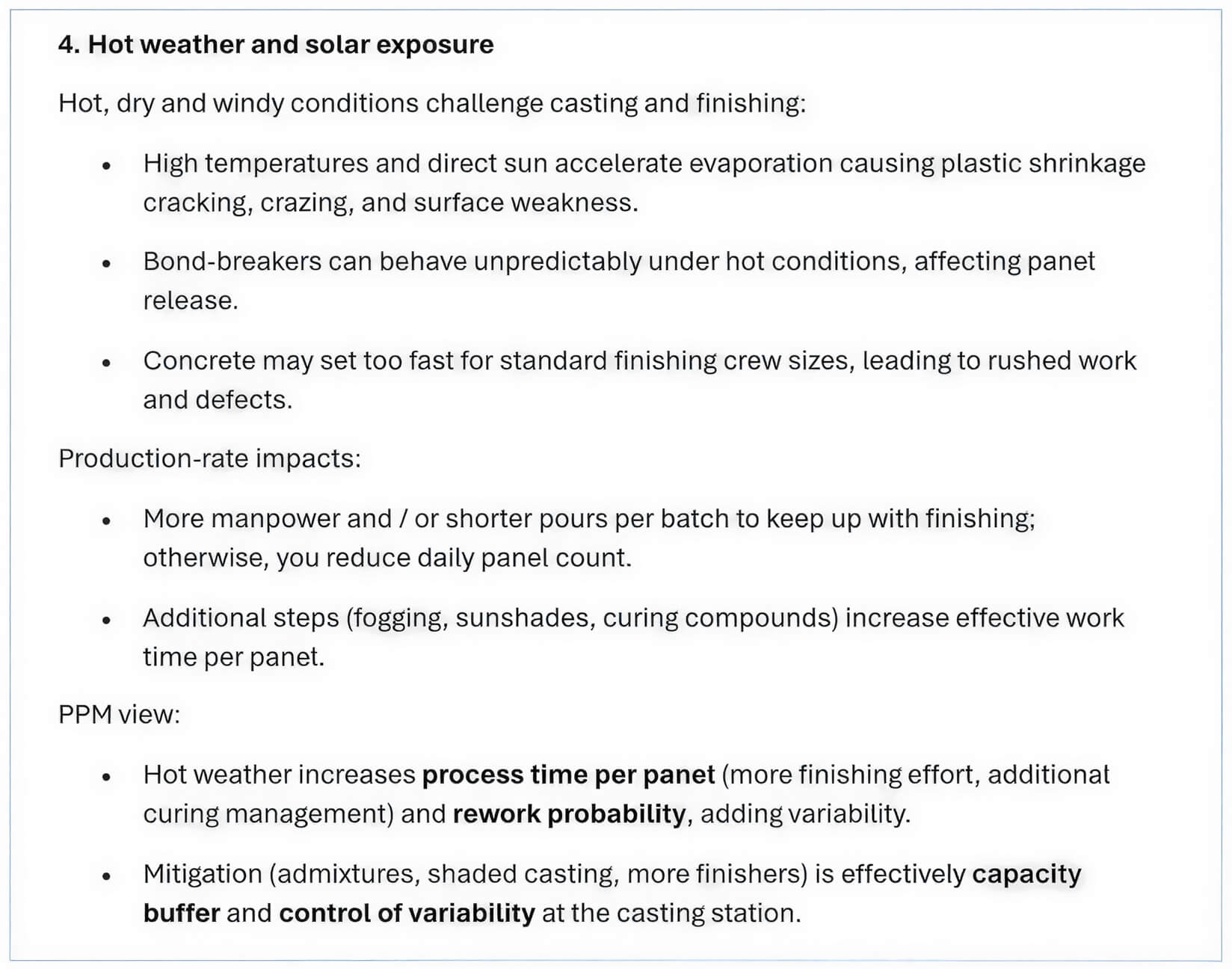
A final follow-up evaluated the effect of weather events on tilt-up panel production rates. While specific weather, climate and location for the data center was not input into the prompt, the LLM made assumptions on the potential impact of weather on the panels as show in the figure below for hot weather and sun exposure. In summary, rain, cold, heat and wind were shown to affect throughput differently, with weather reducing workable hours, slowing strength gain or shutting down crane operations, leading to seasonal production losses on the order of 15% to 30% without mitigation. The analysis therefore reinforced the need for effective control of time, capacity and inventory in the production system [3] and the value of implementing PPC and Production Control Solution enabling tool to achieve that.
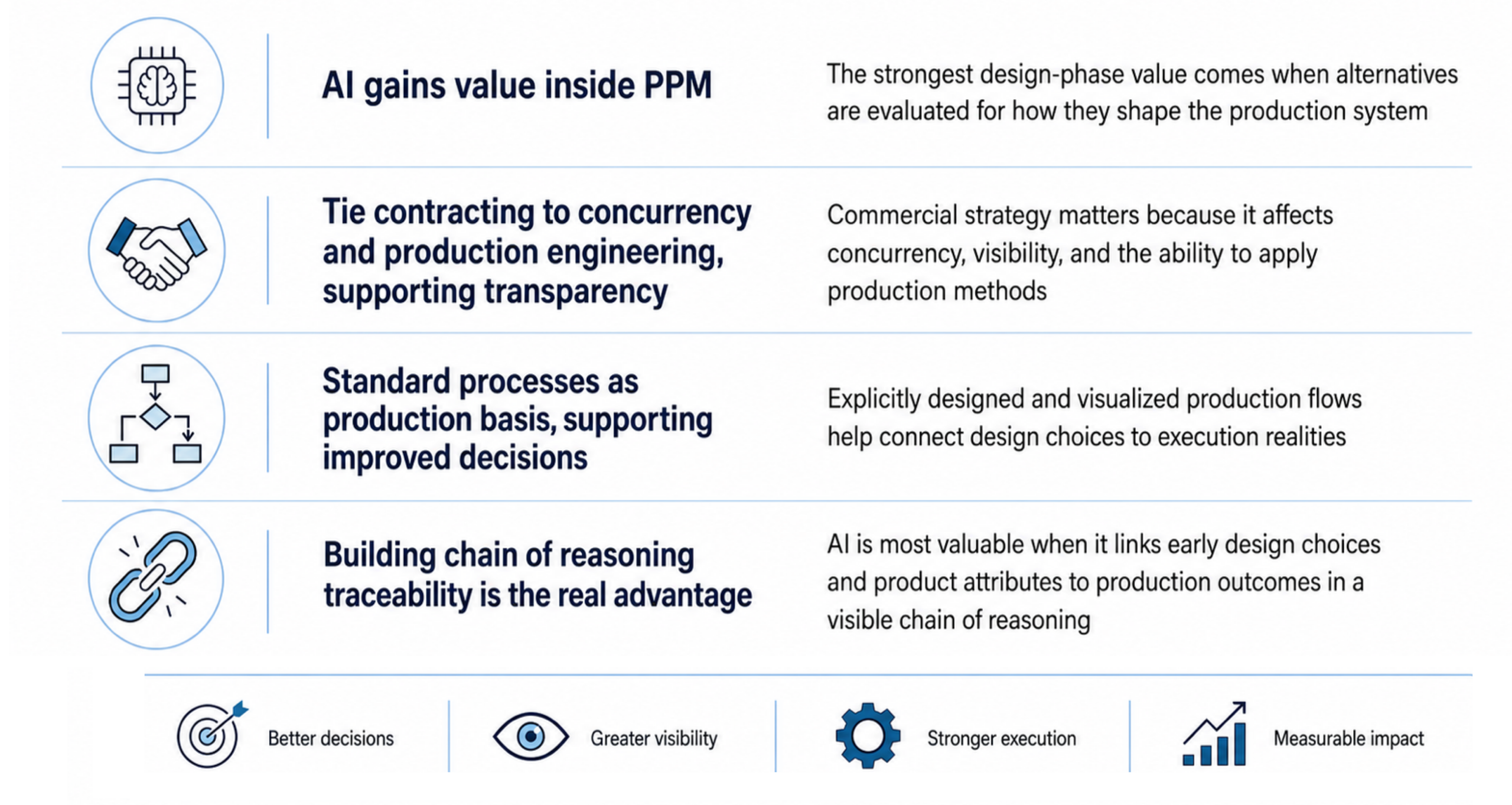
It is worth noting that the evaluation of wall system alternatives using AI coupled PPM may appear to be similar to Choosing by Advantages (CBA) on the surface. CBA is a structured lean decision-making system that identifies alternatives, compares attributes, identifies advantages, and assesses the importance of those advantages before considering cost separately [25][26][27][28]. While the approach in this paper has some overlaps with CBA in that it compares alternatives against explicit criteria and makes trade-offs visible, it goes beyond a static choice architecture in three ways through its PPM-centered focus:
Readily available AI tools are therefore not the only difference; the more important distinction is that the method is embedded in PPM and Concurrent Digital Engineering logic, where product choice, process design, resource strategy and control logic are developed together rather than treating the decision as a one-time selection exercise.
Contract strategies that preserve transparency into production rates, WIP, sequence and bottlenecks rather than relying on commercial pressure alone best support effective project delivery [ 22]. Owners and contractors are not inherently misaligned, but many traditional contract forms, particularly lump-sum turnkey variants, intensify conflict when variability emerges because lump-sum structures often create the illusion of risk transfer while reducing owner visibility into how the work is actually executed, especially as work is pushed through tiers of subcontractors [22]. If the owner seeks not only predictability but also lower cost, shorter duration and lower cash tied up during execution, then more relational contracting forms combined with PPM components: Production System Optimization (PSO), PPC (+Production Control Solution enabling tool) and Supply Flow Control become more appropriate.
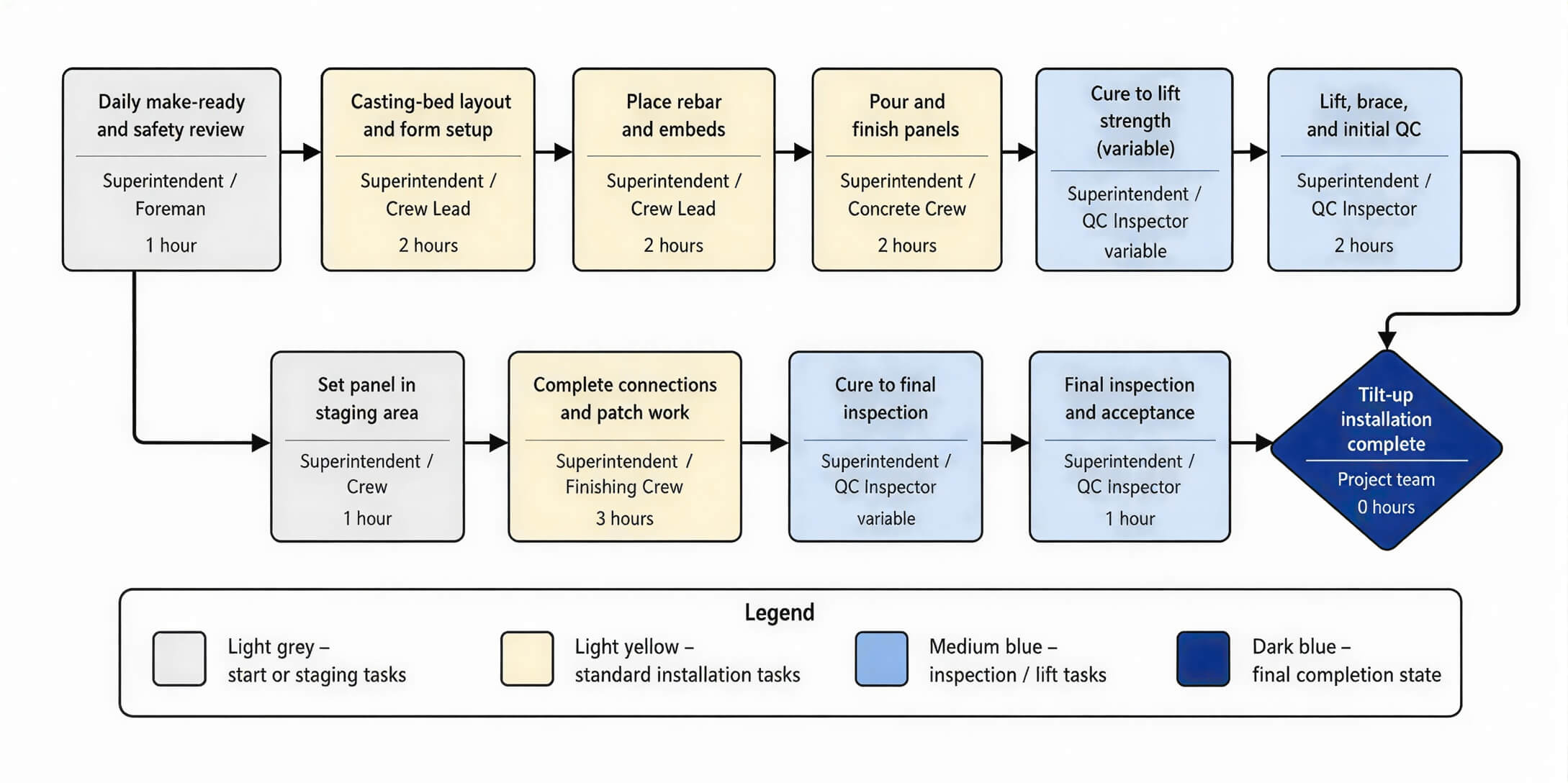
*The AI-generated standard process provided an initial starting basis for a cross-functional production team to develop a robust integrated production workflow with batching, sequencing and integration amongst the trades along with constraints as predecessor activities to associated tasks.
The variability and weather follow-ups showed that AI coupled with PPM can also help convert nominal rates into realistic planning assumptions. Importantly, production system throughput can be degraded without an effective means for control through a Production Control Solution where root causes of variability are not effectively identified and mitigated. In PPM terms, these are not side issues but central design concerns, because the choice of system determines how much variability must be buffered in time, capacity, inventory and commercial structure [6].
Along with the need for effective production system control through a Production Control Solution, in the tiltup example, the standard process represents one of the five PPM levers [29] of production-system optimization because it explicitly defines how work is done and then ties that definition to product, capacity, inventory and variability decisions. Panel geometry, embed layout and repetition reflect product design choices; the hourbyhour task sequence for layout, forming, rebar, pours, curing, lifting, bracing and finishing represents process design; the number and configuration of cranes, casting beds and crews set available capacity; limits on panels in casting and staging control inventory / WIP; and makeready checks, weather windows, inspection slots and planned buffers act on variability so that residual variation is absorbed with minimal impact on throughput and cycle time.
From a PPM perspective, the value of AI coupled with PPM in the design phase of major capital projects is that it makes production consequences visible before the design is fixed and procurement begins [1] [2] [3], while there is still freedom to change the design, the production system and the contracting strategy. For advanced technology facilities such as data centers, that capability is especially important because wall-system decisions drive fabrication strategy and routes, bottleneck locations, weather exposure, labour loading, cycle time and commercial risk, not just cost and appearance.
The exterior wall example shows that AI as a Concurrent Digital Engineering enabling tool, when explicitly positioned through the PPM framework can help teams move from a static product comparison to a production-based decision architecture. It can rapidly compare alternatives, identify stronger structural and lifecycle options, recommend delivery models that enable concurrency, transparency and reduce interface risk, draft standard work that integrates trades and quantify the effects of variability and weather on throughput. AI creates the most value when prompts are structured around PPM concepts including the five levers: product and process design, capacity, inventory / WIP and variability – so that it supports both design choices and parallel design of the production system and its enabling commercial framework rather than acting as a stand-along analytic tool.
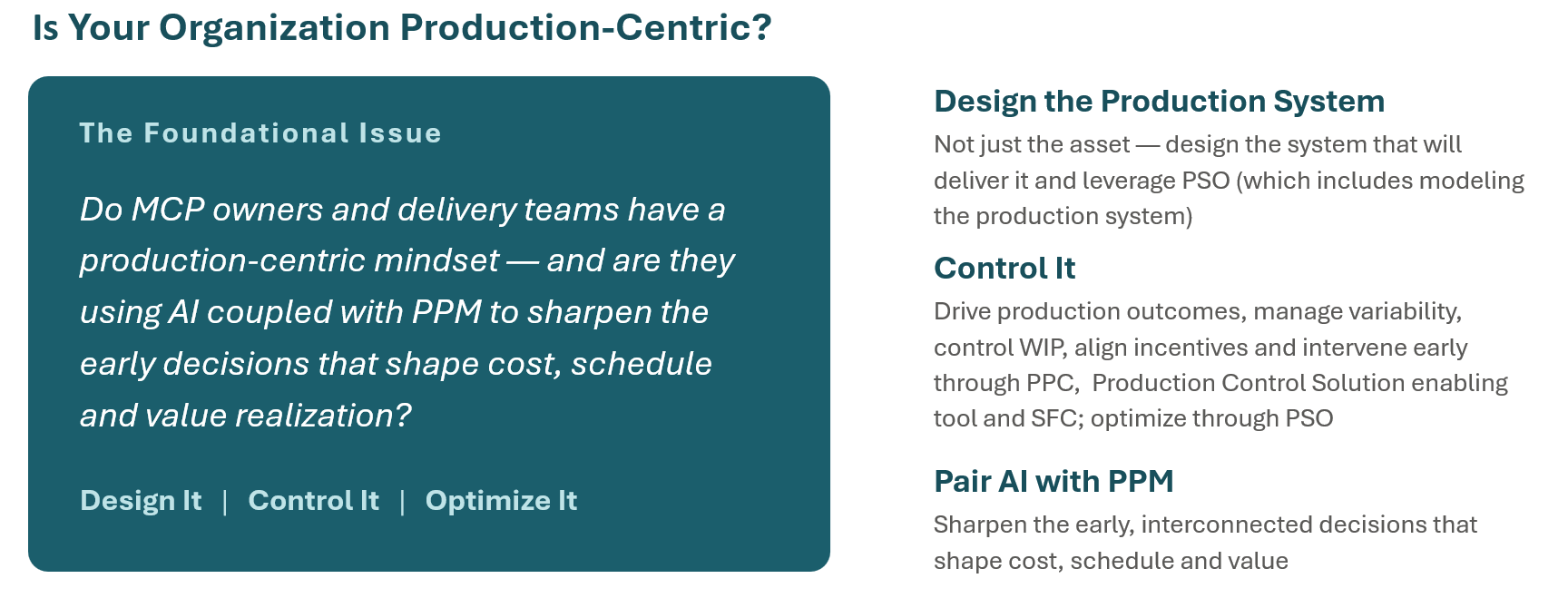
This means the key question is does the capital asset owner and delivery team have a production-centric mindset to effectively design the production system and then effectively control it – understanding how work will be done, manage rates and variability, control WIP, align incentives and intervene early when the production system drifts away from the desired outcome [2] [3] [5]. And are owners and delivery teams using AI coupled with PPM to optimize construction operations by improving the quality of early, interconnected decisions that shape cost, schedule and value realization.
When AI and PPM are used together to connect design, process, variability and commercial strategy, they become invaluable instruments for better capital allocation and better project outcomes [1] [4] [5], not just a means for AI to quickly generate content, process data, summarize text and automate repetitive tasks.